
The most common types of wounds in elderly adults are pressure ulcers, skin tears, diabetic foot ulcers, and venous or arterial leg ulcers.
A small scrape on a younger person closes up in a few days. On an aging parent or grandparent, that same scrape can stay open for weeks, weep fluid, and quietly turn into something serious. Families often notice the pattern too late: a heel that stays red after a nap, a shin that never fully heals, a foot sore that goes unfelt because of nerve damage.
Part of what makes senior wounds so frustrating is how ordinary the causes seem. Sitting too long, a knock against a coffee table, a snug sock, or a missed meal can all set one off. The wounds themselves are not always dramatic, but they behave differently in older bodies, and the wrong response can make them worse.
Knowing which wounds most often affect seniors, why they form, and what each one signals gives caregivers a real head start. That head start is often the difference between a sore that heals at home and one that leads to a hospital stay.
Key Takeaways
- Older skin is thinner and heals more slowly, so a minor bump or a few hours of pressure can turn into a wound that lingers for weeks.
- Chronic conditions like diabetes and poor circulation cause many senior wounds and raise the risk of infection and amputation.
- Warning signs such as redness, swelling, drainage, and odor mean a wound needs prompt medical attention.
- Good nutrition, a clean living space, regular movement, and daily skin checks prevent most wounds before they start.
Why Older Adults Are More Prone To Wounds
Aging changes the skin and the body’s repair system in ways that make wounds both easier to get and harder to close. These changes are gradual, which is why many families miss them until a wound appears and refuses to heal on the usual timeline.
Thinner, More Fragile Skin
With age, skin loses collagen, fat, and elasticity, leaving it thin and prone to tearing. The layer of cushioning fat under the skin shrinks, so bony areas like elbows, hips, and heels have less natural protection. A grip that helps a senior out of a chair can bruise or tear skin that once would have been fine.
Slower Healing and Weaker Circulation
Blood carries the oxygen and nutrients a wound needs to rebuild, and circulation naturally slows with age. Conditions common in seniors, such as diabetes and peripheral artery disease, narrow blood vessels even further. Reduced blood flow means wounds sit in the early, inflamed stage far longer than they should.
Slower Healing and Weaker Circulation
Seniors who spend long stretches sitting or lying down place constant pressure on the same spots, cutting off the blood supply to that tissue. Nerve damage can also dull sensation, so a wound on the foot may go unnoticed for days. Reduced movement and time spent alone can compound the problem, and the signs of loneliness in a homebound senior often overlap with the same isolation that leaves wounds undiscovered.
Many families first weigh their options here, sorting through the difference between companion care and personal care when a loved one needs both supervision and hands-on help with skin and hygiene.
6 Common Types of Wounds in Elderly Adults
Most wounds seen in seniors fall into a handful of categories, each with its own causes and risks. Telling them apart matters because a skin tear and a pressure ulcer that look similar at first can need very different care.
1. Pressure Ulcers (Bedsores)
Pressure ulcers form when constant pressure on one area cuts off blood flow, causing skin and tissue to break down. They tend to appear over bony areas such as the tailbone, hips, heels, and ankles. Seniors who are bedbound, use a wheelchair, or have incontinence are most at risk, and these sores can deepen to muscle or bone if ignored.
2. Skin Tears
Skin tears happen when fragile skin catches, rubs, or gets pulled, separating the top layers. They are extremely common among older adults, and research shows that about 70% of skin tears occur in patients over 75. Arms, hands, and lower legs are the usual sites, often from transfers, bumps, or even adhesive bandages.
3. Diabetic Foot Ulcers
High blood sugar damages nerves and blood vessels, which is a dangerous combination for the feet. A senior with diabetes may not feel a blister or cut, and poor circulation keeps it from healing. Left untreated, these ulcers are a leading cause of infection and lower-limb amputation.
4. Venous Leg Ulcers
When leg veins struggle to push blood back to the heart, blood pools and pressure builds in the lower legs. That pressure damages the skin and creates shallow, slow-healing ulcers, usually around the ankles. They are the most common chronic leg wounds in seniors and tend to return even after they close.
5. Arterial Ulcers
Arterial ulcers stem from the opposite problem: too little blood reaching the legs and feet due to narrowed arteries. Starved of oxygen, the tissue dies, forming a deep, painful wound, often on the toes, heels, or outer ankles. These wounds are typically dry and slow to heal, and they signal serious circulation trouble.
6. Surgical Wounds
Older adults recovering from surgery have incisions that require careful monitoring. Slower healing and a higher risk of infection mean that a surgical wound that separates or drains needs quick attention. Post-hospital recovery at home is often a time when families realize they need extra support.
| Wound type | Common cause | Where it appears | Key concern |
| Pressure ulcers | Constant pressure, immobility | Tailbone, hips, heels | Can deepen to muscle or bone |
| Skin tears | Friction, bumps, fragile skin | Arms, hands, lower legs | Very common in adults over 75 |
| Diabetic foot ulcers | High blood sugar, nerve damage | Feet, toes | High amputation risk |
| Venous leg ulcers | Poor vein circulation | Ankles, lower legs | Frequent recurrence |
| Arterial ulcers | Reduced arterial blood flow | Toes, heels, ankles | Painful, very slow to heal |
| Surgical wounds | Post-operation incisions | Surgery site | Elevated infection risk |
Warning Signs a Senior’s Wound Needs Medical Care
Not every wound calls for a doctor, but seniors have less margin for error. Because their wounds heal slowly and can hide infection, families should watch for specific red flags and act early rather than wait to see if things improve on their own.
- Spreading redness or warmth: Skin around the wound that becomes red, hot, or swollen can indicate infection.
- Drainage or odor: Yellow or green fluid, pus, or a bad smell are signs the wound is not healing cleanly.
- Increasing pain: A wound that becomes more painful rather than less over several days needs evaluation.
- No progress in two weeks: Any wound that shows no sign of closing within a couple of weeks is considered chronic.
- Fever or confusion: Systemic signs like fever or sudden confusion can mean an infection has spread and require urgent care.
Chronic, non-healing wounds are far more widespread than most families realize. One recent analysis found that chronic wounds affect roughly one in six Medicare beneficiaries, which underscores how routine these problems have become among older adults.
How Nutrition Supports Wound Healing in Seniors
Wounds rebuild tissue, and tissue is built from what a person eats. A senior who skips meals or lives on tea and toast simply does not have the raw material to close a wound, no matter how good the dressing is. Protein, vitamin C, zinc, and steady hydration all feed the repair process.
Poor appetite, difficulty cooking, and eating alone contribute to undernutrition among older adults living at home. Planning ahead helps, and the benefits of meal prep become clear when a fridge is stocked with ready, protein-rich options a senior can actually manage on a tired day.
For families building a routine, practical meal preparation for seniors support takes the pressure off, and a rotation of healthy meal ideas keeps meals varied enough that a loved one keeps eating. Consistent, nourishing food is one of the most overlooked wound treatments.
Preventing Wounds in Elderly Loved Ones at Home
Most senior wounds are preventable, and prevention costs far less than treatment in both money and suffering. A few habits, kept up consistently, protect fragile skin and catch small problems before they grow.
- Reposition often: Help seated or bedbound seniors shift position every couple of hours to relieve pressure.
- Check skin daily: Look over the heels, hips, tailbone, and feet for redness or breaks.
- Keep skin moisturized: Well-hydrated skin tears less easily than dry, flaky skin.
- Reduce hazards: Clear clutter and sharp edges that cause bumps and falls.
- Manage moisture: Address incontinence promptly, as trapped moisture breaks down skin quickly.
A clean home matters more than it seems, because dust, clutter, and unwashed surfaces raise infection risk for open skin. Steady light housekeeping for seniors keeps the living space safe, and many families are surprised to learn what Medicare cover cleaning services can and cannot include. When the need is ongoing, choosing the right light housekeeping agency ensures the home stays a place that supports healing rather than working against it.
Why All Heart Care is the right partner for senior wound prevention
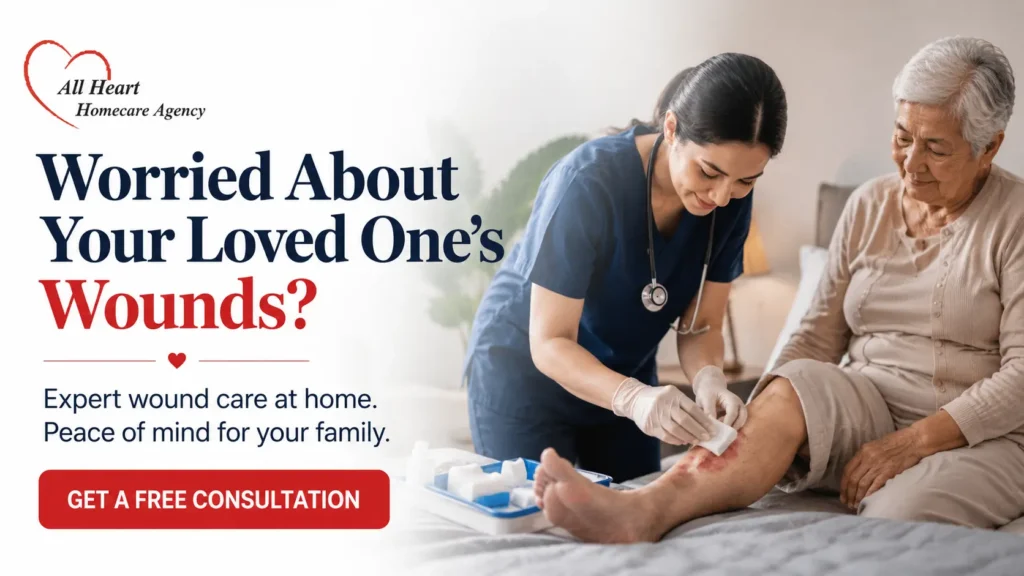
Wound prevention is not a one-time fix; it is a daily rhythm of repositioning, nutrition, skin checks, and a clean, safe home. Holding that rhythm together while managing a career, a family, and your own well-being is where most caregivers burn out. That is the gap All Heart Homecare Agency was built to fill.
Our aides bring the consistency fragile skin depends on, watching for early redness, keeping loved ones nourished and moving, and flagging problems before they become emergencies. With two NYC offices, caregivers who speak English, Spanish, and Russian, and more than 500 positive reviews, we have earned the trust of over 1,000 families across Brooklyn, Manhattan, Queens, Staten Island, and the Bronx.
Contact us today for a free consultation. Give your loved one care that protects their skin and their peace of mind. Reach out to All Heart Care today.
Frequently Asked Questions About Wounds in Elderly Adults
What is the most common wound in elderly adults?
Pressure ulcers, often called bedsores, are among the most common wounds in seniors, especially those who are bedbound or use a wheelchair. Skin tears are also extremely frequent because aging skin is thin and fragile. Both can worsen quickly, so daily skin checks and repositioning are important preventive steps.
How long do wounds take to heal in the elderly?
Wounds in older adults often take two to four times longer to heal than in younger people, and some chronic wounds last months. Slower circulation, thinner skin, and conditions like diabetes all delay repair. A wound showing no progress within two weeks is considered chronic and should be seen by a medical professional.
What deficiency causes slow wound healing in seniors?
Low protein is the most common culprit, since the body needs protein to rebuild tissue. Deficiencies in vitamin C, zinc, and vitamin A also slow healing, and dehydration worsens it. Many seniors eat too little to support recovery, so balanced, protein-rich meals are a key part of wound care.
Can wounds in the elderly heal at home?
Many senior wounds heal well at home with proper cleaning, dressing changes, good nutrition, pressure relief, and management of conditions like diabetes. Home care aides and visiting nurses often support this. Deep, infected, or non-healing wounds, however, require professional medical treatment and should not be managed at home.
When is an elderly person’s wound an emergency?
Seek urgent care if a wound shows spreading redness, warmth, pus, a foul odor, or increasing pain, or if the person develops a fever or sudden confusion. These can signal a serious infection. Exposed bone, rapid worsening, or a wound that will not stop bleeding also requires immediate medical attention.
What is the difference between a skin tear and a pressure ulcer?
A skin tear is a sudden injury caused by friction, a bump, or pulling that separates the skin’s layers, usually on the arms or legs. A pressure ulcer develops gradually from sustained pressure that cuts off blood flow, typically over bony areas. Skin tears are traumatic; pressure ulcers build slowly over time.