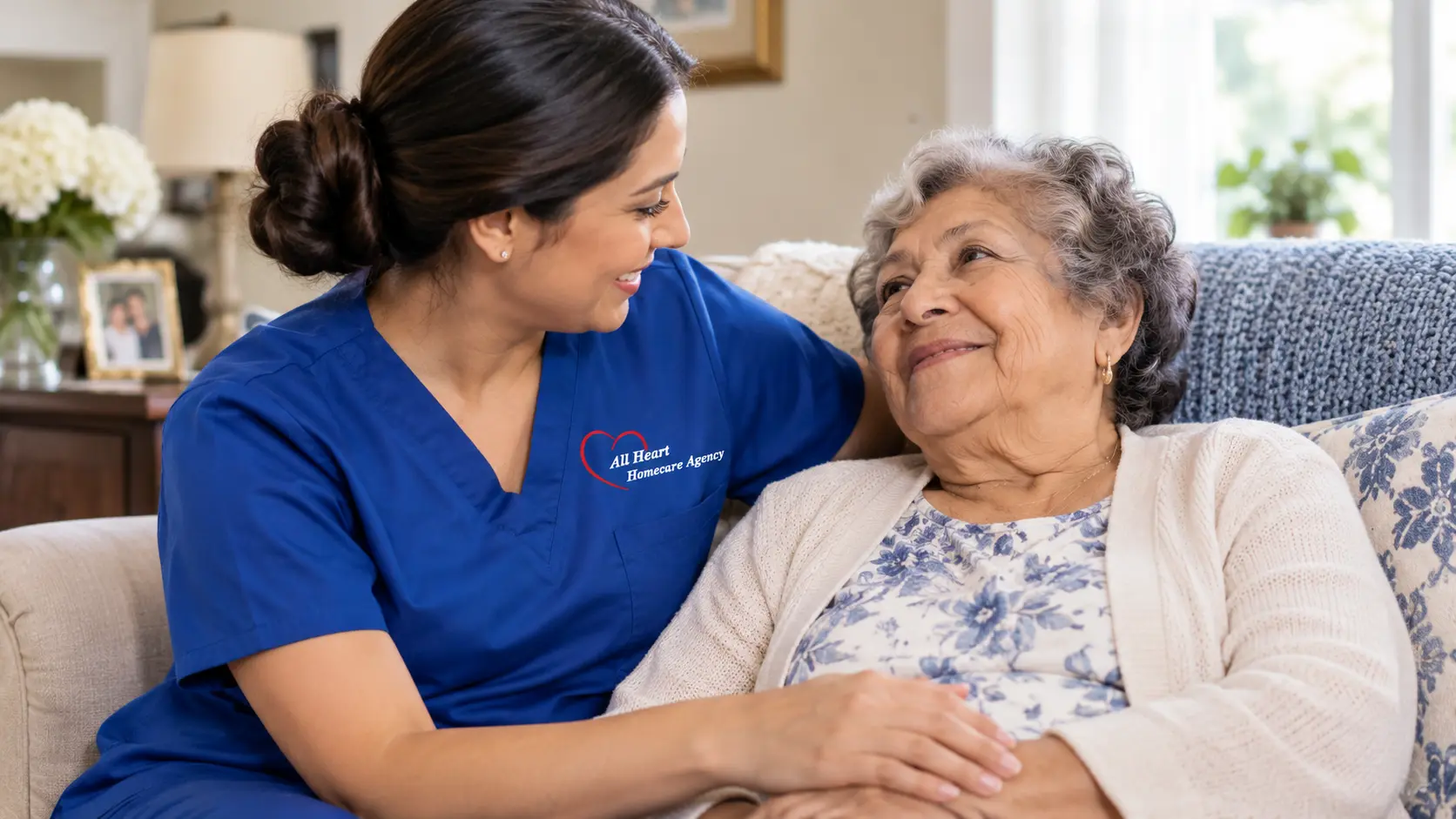

Home care after dental implant surgery focuses on protecting the implant site while it begins healing: bite gently on gauze to control bleeding, ice the cheek in 15-minute intervals, eat only soft and cool foods for the first days, and avoid rinsing, spitting, straws, and smoking for at least 24–72 hours.
Most soreness and swelling peak around day 2–3 and ease within one to two weeks, while the implant quietly fuses with the bone over the following months. Seniors, sedation patients, and anyone recovering alone benefit most from short-term help at home.
Key Takeaways
- The first 24 hours protect the blood clot: no rinsing, spitting, straws, or smoking; suction and smoke are the two biggest threats to early healing.
- Swelling and soreness peak around days 2–3, then fade; most people return to normal routines within a few days to a week.
- Soft, cool foods for the first days, then a gradual progression; chewing on the implant side is delayed until your surgeon clears it.
- If you had IV sedation or general anesthesia, you cannot drive yourself home and shouldn’t be alone for the first 24 hours.
- Healing is slower and riskier for smokers and people with diabetes; extra vigilance (and sometimes extra support) protects the investment.
What To Expect After Dental Implant Surgery
Dental implant placement is typically an outpatient procedure under local anesthesia, sometimes with sedation. Expect some bleeding for the first few hours, swelling that peaks around the second or third day, bruising along the jaw or cheek in some patients, and soreness that’s usually well controlled with the medication plan your surgeon prescribes.
Most patients feel themselves largely within a few days; full fusion of the implant with the bone (osseointegration) continues quietly for roughly three to six months before the final crown or bridge is placed.
One rule sits above all the others in the first days: protect the surgical site. Nearly every instruction below- the gauze, the no-straws rule, the soft foods- exists to keep the healing clot and the implant undisturbed.
This guide covers typical aftercare; your surgeon’s written instructions always come first.
Dental Implant Recovery Timeline at a Glance
| Stage | What’s typical | Home care focus |
| First 24 hours | Gauze pressure for bleeding; ice 15 min on / 15 min off; rest with head elevated; no rinsing, spitting, straws, or smoking | Someone drives you home (mandatory after sedation) and stays nearby; soft cool meals ready; medications on schedule |
| Days 2–3 | Swelling and soreness peak; begin gentle warm saltwater rinses after 24 hours as instructed; soft foods only | Meal prep, cold compresses, medication reminders, watching the site and overall comfort |
| Days 4–7 | Swelling fades; energy returns; careful brushing away from the site; most people resume normal routines | Gradual return to independence; transportation to the follow-up visit |
| Weeks 2–6 | Gums heal over; sutures dissolve or are removed; chewing gradually normalizes per surgeon guidance | Support tapers off; keep soft-food staples handy for comfort days |
| Months 3–6 | Osseointegration completes; final crown, bridge, or denture is placed | Routine; plus transport to restoration appointments if needed |
Dental Implant Aftercare: Dos and Don’ts
| Do | Don’t |
| Bite gently on gauze for the first few hours, changing it as directed. | Rinse, spit, or drink through a straw for at least the first 24 hours; suction can dislodge the healing clot. |
| Ice the cheek in 15-minute intervals for the first day or two. | Smoke or vape: smoking is one of the leading causes of implant failure; every smoke-free day protects the investment. |
| Start gentle warm saltwater rinses after 24 hours, as instructed. | Poke the site with your tongue, fingers, or toothbrush bristles in the first days. |
| Keep brushing and flossing your other teeth — clean mouths heal faster. | Do strenuous exercise or heavy lifting for the first 48–72 hours; exertion increases bleeding and throbbing. |
| Sleep with your head slightly elevated the first nights. | Drink alcohol while healing begins or while taking prescribed pain medication. |
| Take all medications exactly as prescribed, including any antibiotics to completion. | Chew hard, crunchy, or hot foods on the implant side until your surgeon clears it. |
What To Eat After Dental Implant Surgery
Food is where recovery is won or lost at home and where a helper earns their keep.
The progression:
| Stage | Good choices | Avoid |
| Day 1 (cool & soft) | Yogurt, applesauce, smoothies eaten with a spoon, lukewarm broth, pudding, mashed potatoes (cooled) | Anything hot, spicy, crunchy, or requiring chewing; straws of any kind |
| Days 2–7 (soft) | Scrambled eggs, oatmeal, soft pasta, well-cooked vegetables, soft fish, cottage cheese, protein shakes | Chips, nuts, seeds, crusty bread, popcorn, sticky candy; chewing directly on the site |
| Weeks 2+ (gradual) | Progressively normal textures as comfort allows, still favoring the other side | Very hard foods (ice, hard candy) on the implant side until cleared |
Protein and hydration drive tissue healing, so soft doesn’t mean skimpy: eggs, fish, Greek yogurt, and blended soups keep nutrition up while the site heals.
For stocked-fridge strategies, our meal prep for seniors guide applies perfectly to implant recovery weeks.
Warning Signs After Dental Implant Surgery
Call your surgeon promptly if you notice:
- Bleeding that doesn’t slow with gauze pressure after the first several hours
- Swelling or pain that worsens after day 3 instead of improving
- Fever, bad taste or pus at the site, or increasing redness — signs of infection
- A loose-feeling implant or exposed threads
- Numbness or tingling in the lip, chin, or tongue that persists beyond the anesthesia wearing off
Our after-surgery home care cost guide breaks down current rates and who pays.
Seek emergency care for:
- Heavy bleeding that won’t stop, difficulty breathing or swallowing, or a fever with spreading facial swelling
When Home Care Helps: Seniors, Sedation, and Full-Arch Recovery
Honest answer first: a healthy adult getting a single implant usually recovers with nothing more than a ride home and a stocked fridge.
Home care earns its place in the heavier scenarios:
- Sedation or general anesthesia: you cannot drive yourself home, and you shouldn’t be alone for the first 24 hours. For seniors especially, sedation can cause lingering grogginess and fall risk that deserves supervision.
- Full-arch or multiple implants (All-on-4-type procedures): a bigger surgery with more swelling, stricter diets for longer, and real fatigue; days of soft-meal preparation and support make the difference.
- Seniors living alone: managing gauze changes, medication schedules, ice rotations, and soft meals solo on a groggy day is exactly how instructions get skipped.
- Diabetes or slower healing: elevated blood sugar slows tissue healing and raises infection and implant-failure risk; recovery weeks are when consistent routines matter most. See our guide to diabetes management in seniors for the daily-routine playbook that protects healing.
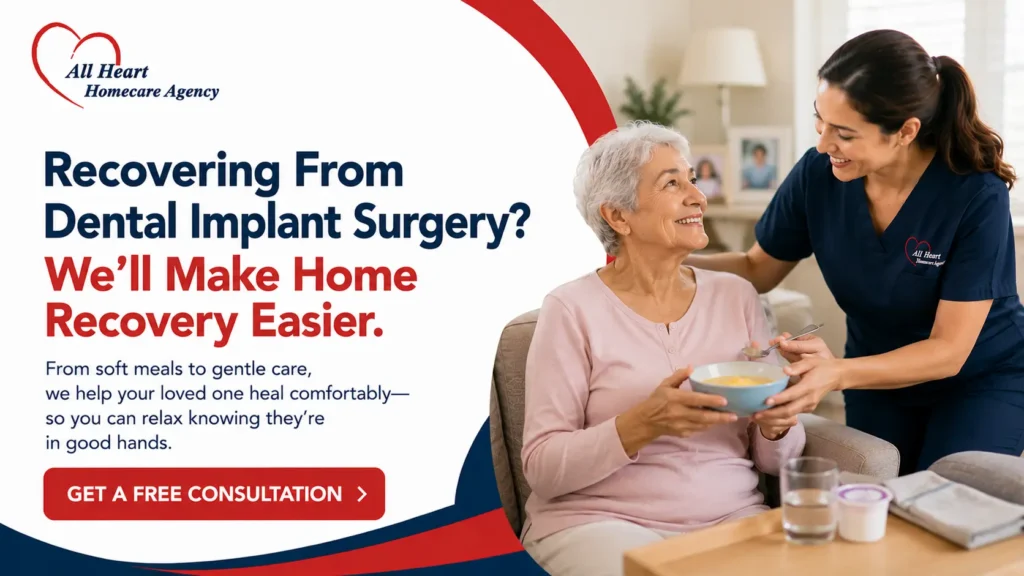
- A home caregiver covers the gap: transportation and escort home after sedation, the first-24-hours supervision, soft-meal preparation, medication reminders, ice-pack rotations, and a second set of eyes on the warning signs above.
All Heart Homecare arranges exactly this kind of short-term recovery support across NYC — from a single discharge-day visit to daily help through the first week, through our home health care services. Wondering what a few days of support costs?
Contact us for a free consultation: same-week arrangements are usually possible.
Frequently Asked Questions About Home Care After Dental Implant Surgery
How long does it take to recover from dental implant surgery?
Most people return to normal routines within a few days to a week — soreness and swelling peak around days 2–3 and fade over one to two weeks. The implant itself continues fusing with the jawbone for roughly three to six months before the final crown is placed, but daily life feels normal long before that. Multi-implant and full-arch procedures run heavier and longer.
What can you not do after dental implant surgery?
For at least the first 24–72 hours: no rinsing, spitting, or straws (suction disturbs the healing clot), no smoking or vaping (a leading cause of implant failure), no alcohol, no strenuous exercise, and no chewing on the implant side. Hot, crunchy, and sticky foods wait until your surgeon clears them.
What should you eat the first week after a dental implant?
Cool, soft foods on day one — yogurt, applesauce, spoon-eaten smoothies, lukewarm broth — then soft proteins through the first week: scrambled eggs, oatmeal, soft fish, cottage cheese, well-cooked vegetables. Prioritize protein and hydration for healing, chew away from the site, and skip anything crunchy, spicy, or hot.
Do you need someone with you after dental implant surgery?
If you receive IV sedation or general anesthesia, yes — you cannot drive yourself home and should have someone nearby for the first 24 hours. With local anesthesia only, most adults manage alone, though seniors, patients having multiple implants, and anyone with slower healing benefit from a helper for the first day or two.
When should a senior consider home care after dental implants?
When sedation is involved, when the procedure is full-arch or multiple implants, when they live alone, or when conditions like diabetes slow healing. Short-term home care, a discharge-day escort plus a few days of meals, medication reminders, and monitoring — covers the risky window without a long commitment.