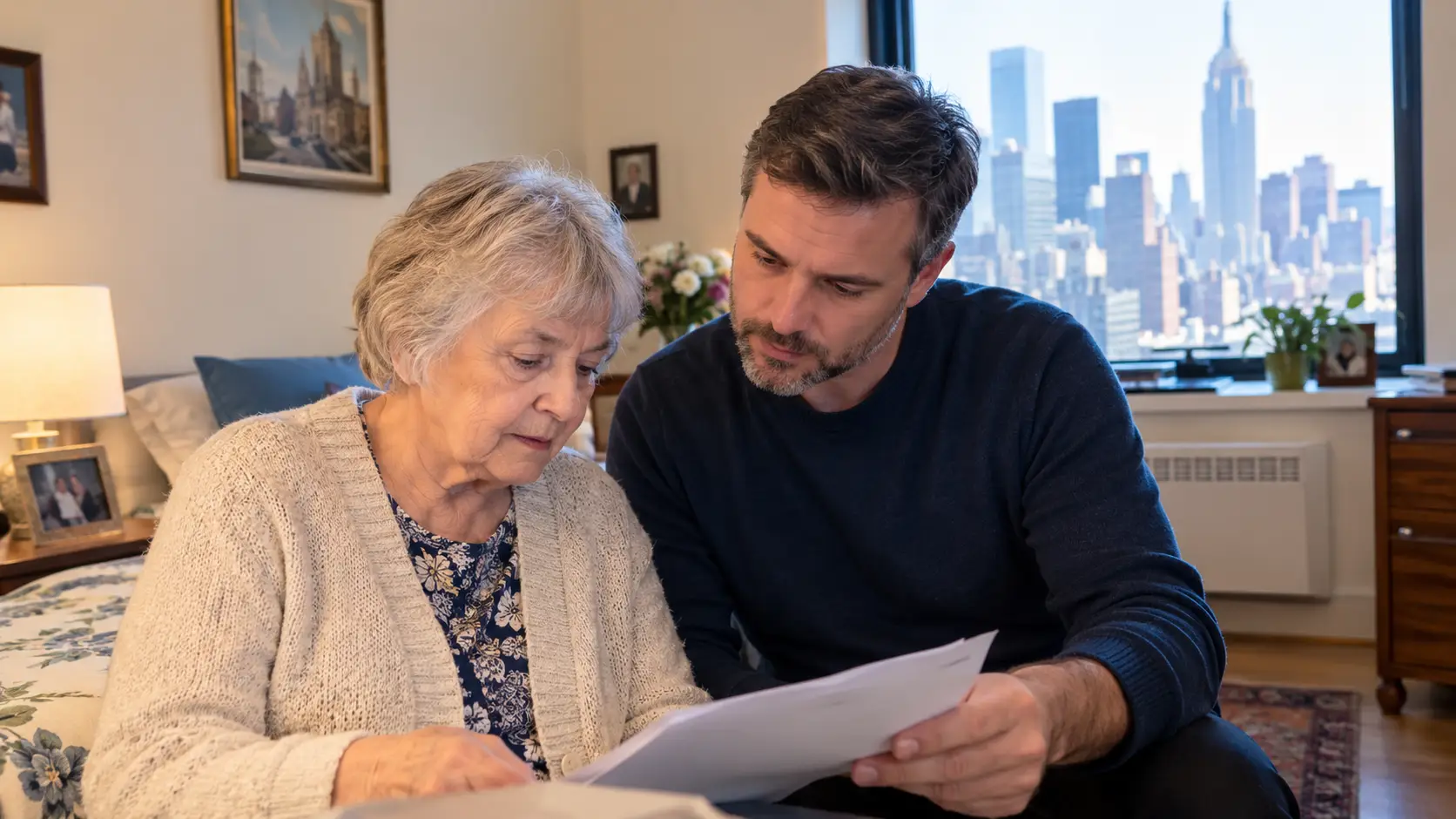



Holiday visits are often when families first notice that an aging parent may need help. If you only see your parents once or twice a year, changes that crept in slowly can suddenly stand out, and the noise, holiday stress, and broken routines of the holidays tend to magnify memory loss or cognitive decline.
Paying gentle attention during your visit and in the weeks after can help you catch concerns early, when support matters most. Here is what to watch for, what is normal, and what to do next.
Key Takeaways
- Holiday gatherings often make cognitive changes in seniors more visible.
- Watch for memory gaps, trouble with familiar tasks, disorientation, sundowning, self-care slips, and mood shifts.
- Some memory change is normal with age; changes that disrupt daily life are not.
- Keep a simple written log of what you notice to share with a doctor.
- Many causes of confusion are treatable, so a medical evaluation is the right first step.
- This article is for awareness only and is not a diagnosis
Why the Holidays Reveal Cognitive Changes in Seniors
The holidays combine everything that can expose cognitive decline: unfamiliar crowds, disrupted routines, late nights, and complex tasks like cooking or hosting.
For a parent who copes well in their quiet daily routine, these demands can reveal struggles that are otherwise hidden. If your visit involves travel, our guide on holiday travel with an elderly parent explains how to ease that strain.
That is why so many families first notice something has changed during a holiday visit, not over the phone.
Warning Signs Self-Check
Check any changes you noticed in your parent during your holiday visit.
This self-check is for awareness only and is not a medical test or a diagnosis. Only a doctor can diagnose dementia or other conditions. If you have concerns, please speak with a physician.
Warning Signs To Notice During Holiday Visits
No single sign means dementia, but a pattern is worth noticing. Common changes families observe during the holidays include:
- Memory and communication gaps: Forgetting recent events, repeating questions, losing track of conversations, or struggling with names and places.
- Difficulty with familiar tasks: Trouble cooking traditional recipes, wrapping gifts, handling money, or decorating.
- Overstimulation and disorientation: Becoming quiet, confused, agitated, or lost in crowded or unfamiliar settings.
- Sundowning and fatigue: More confusion or restlessness in the late afternoon and evening as routines break down.
- Self-care and medication slips: Forgetting daily medications, neglecting hygiene, or wearing clothing unsuited to the weather.
- Personality and mood shifts: Uncharacteristic irritability, anxiety, apathy, or withdrawing from activities they usually enjoy.
Post-Holiday: Watching for Signs of Decline After the Visit
Some changes are easier to spot once the celebration settles. In the days and weeks after a visit, notice whether your parents seem more exhausted or confused than the holidays alone would explain, whether the home is less tidy or the fridge is bare, and whether they keep up with calls, bills, and appointments.
If you are worried, short-term holiday home care can provide extra support right away while you sort out next steps.
These post-holiday signals can be just as telling as what you saw at the table.
Does Some Memory Change Normal With Age?
Yes, a little slowing is normal. Occasionally misplacing keys or taking longer to recall a name is a typical part of aging. What is not typical is memory loss that disrupts daily life, such as getting lost in familiar places, struggling with once-routine tasks, or repeating the same question within minutes.
When changes interfere with safety or independence, it is time to look closer.
What to do if you notice these signs
- Write it down: Keep a short, specific log of what you observed and when.
- Talk gently: Raise concerns with care and without alarm, focusing on helping them stay independent.
- See a doctor: Many causes of confusion, from medication interactions to infections or thyroid issues, are treatable. A medical evaluation comes first.
- Consider support at home: A caregiver can help with medications, meals, hygiene, and companionship while you sort out next steps.
How Home Care Helps With Holiday Cognitive Signals
If your parent could use a hand, in-home support can keep them safe and comfortable while easing worry for the whole family. All Heart Homecare offers home health aide services in NYC and specialized Alzheimer’s and dementia care.
If cost is a concern and your parent has dementia, our guide on whether Medicare covers dementia home care can help, and flexible private pay home care can start right away.
Contact us for a free consultation whenever you are ready.
This article is for general information and awareness only. It is not medical advice or a diagnosis. Please consult a physician about any health concerns.
Frequently Asked Questions About Holiday Visit Guide
What are the most common types of cognitive decline in the elderly?
The most common types range from normal age-related changes, which are mild, to mild cognitive impairment (MCI), which is more noticeable but does not fully disrupt daily life, to dementias. Among dementias, Alzheimer’s disease is the most common, followed by vascular dementia, Lewy body dementia, and frontotemporal dementia. Only a doctor can determine which, if any, applies.
What are some surprising habits linked to dementia?
Beyond memory loss, early signs can be subtle: losing interest in favorite hobbies, declining personal hygiene, repeating stories, misjudging the weather when dressing, trouble managing money or bills, getting lost on familiar routes, and changes in sense of humor or social withdrawal. Any of these alone can have other causes, but a cluster is worth discussing with a doctor.
Is cognitive decline at 70 normal?
Some mild cognitive slowing is normal at 70, such as occasionally forgetting a name or needing a moment longer to recall something. Memory loss is not normal when it interferes with daily life, like getting lost in familiar places or struggling with once-routine tasks. Significant changes should be evaluated by a physician.
What are some effective cognitive exercises for seniors?
Helpful activities include puzzles and word games, reading, learning a new skill or language, playing music, and staying socially engaged. Regular physical exercise and good sleep also support brain health. The most effective routines combine mental, physical, and social activity, though exercises do not replace medical care when there are concerns.