

Giving up the car keys is one of the hardest transitions of later life. Suddenly, a routine doctor visit depends on a daughter’s work schedule, and a simple grocery run turns into a favor you have to ask for. Many older adults respond by skipping trips altogether, which puts both health and social life at risk.
The good news is that seniors who can’t drive have more choices today than ever before. Reduced-fare public transit, paratransit services, Medicaid-covered medical rides, volunteer driver programs, phone-friendly rideshare bookings, and caregivers who drive can all keep appointments and errands within reach. The right mix depends on mobility, budget, and where you live.
This guide walks through each option, including real costs and eligibility details, and takes a close look at what works in New York City. It also covers a strategy that most transportation guides skip: reducing the number of trips a senior needs to make in the first place.
Key Takeaways
- Seniors who no longer drive can rely on reduced-fare public transit, Access-A-Ride paratransit, Medicaid-covered medical rides, volunteer driver programs, rideshare services, and home care aides who drive.
- In New York City, adults 65 and older qualify for half-price subway and bus fares, and Access-A-Ride serves those who cannot use standard transit.
- Medicaid pays for non-emergency medical transportation in New York, covering rides to doctor visits, dialysis, and therapy at little or no cost.
- Home care aides offer the most flexible solution because they combine door-through-door rides with hands-on help during the outing itself.
- Cutting down the number of weekly trips through in-home support for meals, errands, and housekeeping makes any transportation plan easier to manage.
Why Reliable Transportation Matters After Seniors Stop Driving
Losing the ability to drive does not just change how someone gets around. It changes whether they get around at all, and that has direct consequences for health and independence.
The numbers show how common this problem is. According to a December 2025 West Health analysis, 21 percent of adults aged 65 and older who live alone lack a household vehicle, and 8 in 10 non-drivers say a lack of transportation keeps them from doing necessary activities. Missed medical appointments, skipped grocery trips, and canceled social plans follow quickly.
Families often absorb the burden first, but adult children have jobs and households of their own. A dedicated senior transportation service or a structured mix of public and community programs takes the pressure off everyone. The sections below break down each major option, its cost, and who qualifies.
8 Best Transportation Options for Seniors Who Can’t Drive
No single service covers every type of trip. Most seniors do best combining two or three of the options below, using cheaper programs for routine travel and assisted services for medical visits.
Comparing Transportation Options at a Glance
| Option | Typical cost in NYC | Assistance level | Best for |
| Home care aide | Hourly care rate | Door-through-door | Seniors needing help during trips |
| Reduced-fare transit | Half the standard fare | None | Mobile seniors near transit |
| Access-A-Ride | Same as a subway fare | Door-to-door | Riders who cannot use transit |
| Medicaid NEMT | Free with Medicaid | Curb or door service | Medical appointments |
| Volunteer drivers | Free or donation | Door-to-door | Occasional trips, tight budgets |
| Rideshare and taxis | Metered or per-mile | Curb-to-curb | Spontaneous or off-hour trips |
| Senior center shuttles | Free or low cost | Curb service | Social and shopping outings |
1. Home Care Aides Who Provide Transportation
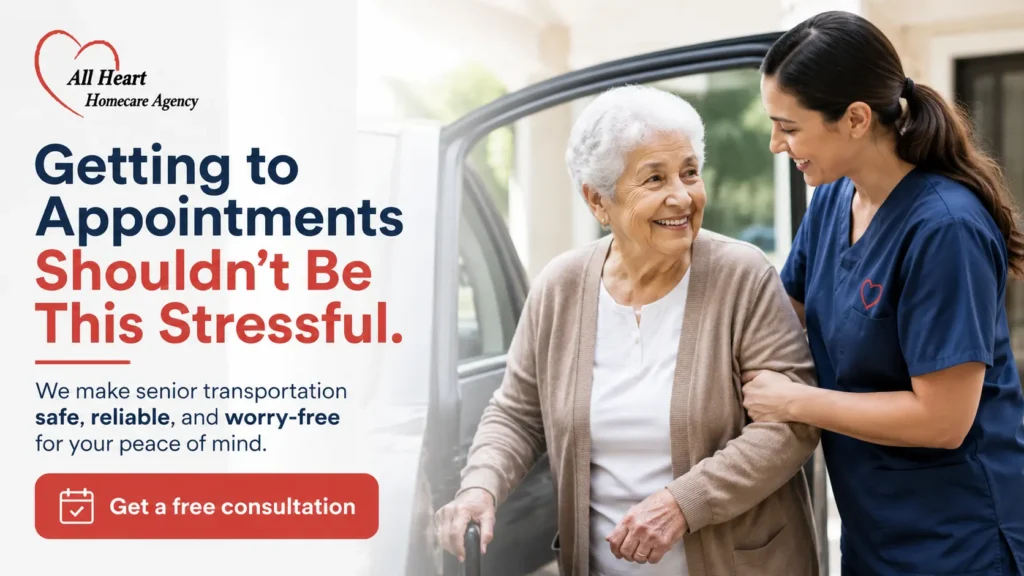
For seniors who need help beyond the ride itself, a home care aide who drives or escorts is the most complete option. Aides assist from inside the home to the vehicle, stay with the client through the appointment, help carry groceries, and watch for fatigue or confusion along the way.
According to a National Aging and Disability Transportation Center survey cited by NCOA, more than 40 percent of older adults and adults with disabilities depend on family, friends, or neighbors for rides. An aide replaces that patchwork with a consistent, trained companion who already knows the senior’s routines and needs.
This is exactly the gap All Heart Homecare Agency fills for families across New York City. As a licensed, BBB-accredited agency serving all five boroughs from offices in Brooklyn and Manhattan, All Heart pairs seniors with certified home health aides who assist with daily tasks and accompany clients wherever they need to go.
Free transportation to medical appointments is included as part of care, a benefit few agencies in the city match. With over 14 years of experience, 500+ positive reviews, and caregivers who speak English, Spanish, and Russian, All Heart builds care plans around each client’s schedule instead of forcing families to piece together rides. If getting a loved one to appointments has become a weekly struggle, there is a simpler way.
Contact us today for a free consultation and find out how a dedicated caregiver can keep your loved one moving. Get started here
2. Reduced-Fare Public Transit
Most major transit systems cut fares by half or more for riders 65 and older. In New York City, seniors can apply for a Reduced-Fare MetroCard or reduced-fare OMNY account and pay half the standard fare on every subway and local bus ride.
Public transit works best for seniors who walk comfortably and live near a stop. Accessible buses kneel toward the curb and include ramps, and a growing number of subway stations have elevators. The main drawbacks are stairs at older stations and long walks between platforms.
3. Access-A-Ride and Paratransit Services
The Americans with Disabilities Act requires transit agencies to run paratransit for people who cannot use regular buses and trains. In NYC, that program is Access-A-Ride, which offers shared door-to-door or feeder trips anywhere transit operates, 24 hours a day.
Riders apply through the MTA, complete an assessment, and then book trips 1 to 2 days in advance. The fare matches a standard subway ride, making it one of the most affordable assisted options in the city. The tradeoffs are advanced scheduling and shared vehicles that can add time to each trip.
4. Medicaid Non-Emergency Medical Transportation
New York Medicaid covers rides to and from covered medical services, a benefit called non-emergency medical transportation or NEMT. Depending on need, the trip may be by public transit, a livery car, an ambulette, or a wheelchair van, arranged through the state’s transportation broker.
For seniors already enrolled in Medicaid home care or an MLTC plan, this benefit often goes unused simply because families do not know it exists. Rides must be scheduled in advance and tied to a medical appointment, but the cost to the rider is little or none.
5. Volunteer Driver Programs
Community nonprofits, faith groups, and senior service agencies match older adults with vetted volunteer drivers for medical visits and errands. Many programs are free or donation-based, and drivers often help riders from the front door to the vehicle.
Availability varies widely by neighborhood, and most programs ask for several days’ notice. Your local Area Agency on Aging or a call to 211 can point you to active programs nearby.
6. Rideshare Apps and Phone-Based Booking
Uber and Lyft offer on-demand, door-to-door rides that cost less than most taxis, and family members can book and track rides remotely from their own accounts. Seniors without smartphones can use phone-based services like GoGoGrandparent, which arranges rideshare trips through a toll-free call for a monthly membership fee.
These services shine for spontaneous trips and social outings. They fall short for riders who need physical help getting in and out of the vehicle, since drivers are not trained caregivers.
7. Community Shuttles and Senior Center Vans
Many senior centers and older adult clubs run vans that pick members up for lunch programs, shopping trips, and group outings. NYC’s network of older adult centers, funded through the city’s Department for the Aging, is one of the largest in the country.
These shuttles are usually free or very low-cost. Routes and schedules are fixed, so they work best as a supplement for social and shopping trips rather than a primary medical transportation plan.
8. Taxis and Local Car Services
Traditional taxis and neighborhood car services remain a solid fallback because they require no app, membership, or advance booking. Wheelchair-accessible taxis can be requested in NYC through the citywide dispatch program.
The downside is price. Regular taxi use costs far more per month than transit or paratransit, so most families reserve cabs for urgent or off-hours trips.
How To Choose the Right Option for Your Needs
The best transportation plan starts with an honest look at mobility, budget, and trip frequency. A senior who walks well and takes two trips a week has very different needs from one who uses a walker and has three medical appointments on the calendar.
Work through these questions before committing to any service:
- Mobility: Can the senior walk to a bus stop, or do they need help from the front door to the vehicle?
- Trip type: Are most trips medical, social, or errand-based? Medical trips may qualify for Medicaid coverage.
- Scheduling: Can trips be planned days ahead, or does the senior need same-day flexibility?
- Technology comfort: Is a smartphone app realistic, or is phone booking a better fit?
- Cognitive needs: Does the senior need a familiar companion who stays through the trip?
Most families land on a layered approach. Reduced-fare transit or senior shuttles handle routine outings, Medicaid NEMT or Access-A-Ride covers medical visits, and an aide steps in for trips that require hands-on support.
Reducing the Number of Trips Seniors Need To Make
Transportation guides rarely mention the other half of the equation. Every errand that comes to the senior instead is one less ride to arrange, and that shift often matters more than the perfect transportation match.
Grocery and pharmacy runs are the easiest place to start. Professional errand services for seniors handle shopping, prescription pickups, and post office trips, and NYC families can compare the best options across the boroughs. Outsourcing these tasks can cut weekly trips in half.
Food is the next big category. In-home meal preparation for seniors removes the pressure to shop and cook every meal, and its benefits include better nutrition and fewer skipped meals. Caregivers can build menus around healthy meal ideas that match dietary restrictions without requiring a single store run by the senior.
Household upkeep rounds out the picture. A reliable light housekeeping agency keeps the home safe and manageable, and many families are surprised to learn how coverage works when they ask whether Medicare covers cleaning services for seniors. Fewer chores mean fewer trips for supplies and less physical strain between outings.
The result is a lighter transportation load overall:
- Fewer weekly rides to arrange, which lowers costs across every service type
- Less fatigue, since seniors save energy for the trips that matter most
- Lower fall and injury risk from rushed or unnecessary outings
- More consistent nutrition and medication routines at home
How All Heart Care Keeps Seniors Independent Without a Car
Losing the ability to drive should never mean losing access to doctors, groceries, or the community. All Heart Homecare Agency has spent over 13 years helping seniors across Brooklyn, Manhattan, Queens, the Bronx, and Staten Island stay mobile and independent, earning its place as the #1-ranked agency in Brooklyn along the way.
All Heart’s certified aides do more than drive. They escort clients door-to-door, stay through appointments, handle errands and meal preparation, and communicate with families every step of the way.
Free transportation to medical appointments comes standard, and multilingual caregivers serve clients in English, Spanish, and Russian. Whether care is covered through Medicaid, private pay, or a specialized program, the agency builds a plan around your loved one’s real weekly schedule.
Frequently Asked Questions About Transportation for Seniors Who Can’t Drive
Does Medicare pay for senior transportation?
Original Medicare does not cover routine transportation to medical appointments. Some Medicare Advantage plans include a limited number of rides to doctor visits as a supplemental benefit, and coverage varies by plan. Seniors with both Medicare and Medicaid can use New York Medicaid’s non-emergency medical transportation benefit, which covers rides to covered medical services.
What is Access-A-Ride, and who qualifies?
Access-A-Ride is the MTA’s paratransit program for New Yorkers whose disability or health condition prevents them from using the subway or bus on some or all of their trips. Applicants complete an application and an in-person assessment. Approved riders book shared door-to-door trips one to two days in advance and pay the same fare as a standard subway ride.
Can a home health aide drive a senior to appointments?
Yes, many home care agencies allow aides to drive clients or escort them in taxis and medical transport. Aides assist from inside the home to the vehicle, stay during the appointment, and help with anything the senior needs along the way. Some NYC agencies include transportation to medical appointments at no extra charge as part of a care plan.
What free transportation is available for seniors?
Free options include volunteer driver programs run by nonprofits and faith groups, senior center shuttles funded by local aging departments, and Medicaid non-emergency medical transportation for eligible enrollees. Many transit systems also offer steep senior discounts. Calling 211 or your local Area Agency on Aging is the fastest way to find free programs near you.
How do seniors without smartphones use Uber or Lyft?
Family members can book rides for a senior from their own app and track the trip in real time. Phone-based services like GoGoGrandparent arrange Uber and Lyft rides through a toll-free number for a monthly membership fee. Some healthcare providers also schedule rides for patients directly through Uber Health and Lyft Healthcare programs.
How much does senior transportation cost in NYC?
Costs range widely by service. Reduced-fare transit is half the standard fare, Access-A-Ride matches a regular subway fare, and Medicaid covers medical rides at no cost for eligible seniors. Rideshare trips run a few dollars per mile, while home care aides charge hourly rates that include assistance well beyond the ride itself.
Meta title: Transportation options for seniors who can’t drive Meta description: Compare safe transportation options for seniors who can’t drive, from reduced-fare transit to home care aides across NYC. Suggested URL slug: transportation-options-for-seniors-who-cant-drive