


The core difference: home health care is short-term skilled care that helps a person recover after an illness, injury, or surgery, while palliative care is ongoing comfort and symptom relief for someone living with a serious or chronic illness and can be given at any stage, even alongside treatments meant to cure the disease.
In short, home health helps you get better; palliative care helps you feel better and live well with a serious condition.
Families often confuse the two, or aren’t sure which their loved one needs, and the good news is that both can happen at home, and a person can even receive them together. This 2026 guide clearly explains the differences, answers the questions families ask most, and shows how in-home care supports a loved one on either path.
Key Takeaways
- Home health care is short-term, skilled care that helps you recover after illness, injury, or surgery; delivered at home by nurses and therapists.
- Palliative care provides ongoing comfort and symptom relief for a serious or chronic illness, delivered by a broad team at any stage, even alongside curative treatment.
- Different goals: home health aims to help you heal and regain independence; palliative care aims to relieve pain, symptoms, and stress and improve quality of life.
- You can have both at once. Home health supports recovery, palliative care manages comfort, and in-home caregivers support daily needs.
- Palliative care is not hospice. Hospice is palliative care for the final months of life; palliative care itself can start much earlier.
Palliative Care vs. Home Health: The Core Difference
Both can happen at home, but for different reasons.
Home health care is about recovery: skilled, time-limited help to heal and regain independence after a specific health event.
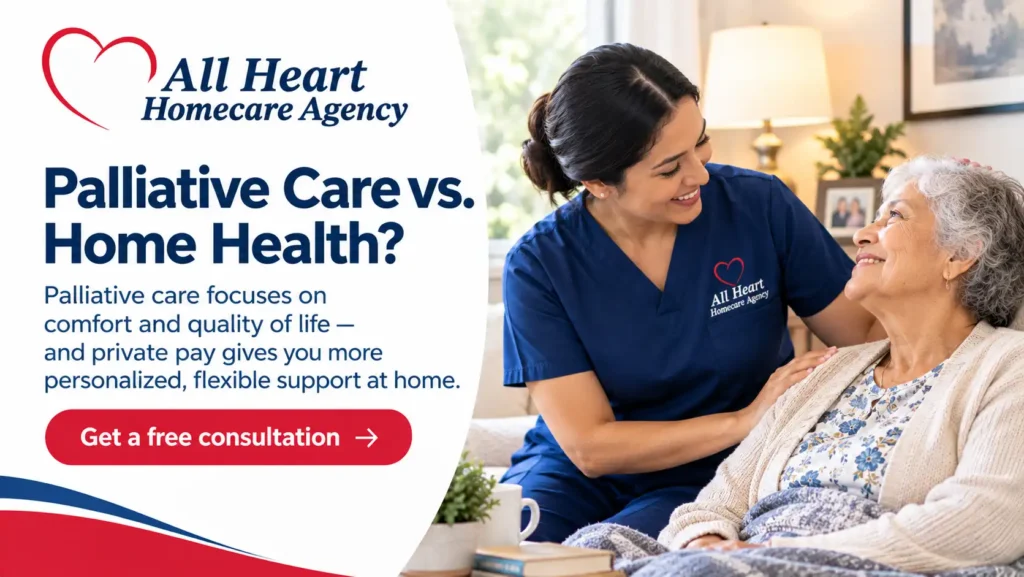
Palliative care focuses on comfort and quality of life: ongoing relief of pain, symptoms, and stress for a serious illness, delivered by a broad team that supports the whole person, not just the medical problem.
What Is Home Health Care?
Home health care is skilled, short-term medical care at home:
- Goal: help you recover, heal, and regain independence;
- Care team: skilled nurses and physical, occupational, or speech therapists;
- Duration: short-term and intermittent, tied to a recovery goal;
- Where: at home, and usually requires the patient to be “homebound.”
See our guide about Does Medicare Pay for Home Health Care for Seniors?.
What Is Palliative Care?
Palliative care is specialized care focused on comfort and quality of life for people with a serious illness (such as cancer, heart failure, COPD, or ALS):
- Goal: relieve pain, symptoms, and stress and improve quality of life;
- Timing: available at any stage, even alongside curative treatment;
- Duration: ongoing, often for a long period as a person lives with a chronic condition;
- Care team: a broad team; doctors, nurses, social workers, and counselors, addressing physical, emotional, and practical needs; and
- Where: at home, or in a hospital, clinic, or facility.
Learn more from the National Institute on Aging and GetPalliativeCare.org.
Is Palliative Care the Same as Hospice?
No; this is a common mix-up.
Palliative care can begin at any stage and can be given alongside treatment to cure or control the disease.
Hospice is palliative care for the final months of life, when curative treatment has stopped, and the focus is fully on comfort.
For families facing that stage, see our guide on caring for a patient with a terminal illness.
Palliative Care vs. Home Health: Side-By-Side
Here’s the comparison at a glance:
| Factor | Home Health Care | Palliative Care |
| Main goal | Recover & regain independence | Comfort & quality of life |
| For whom | After illness, injury, surgery | Serious or chronic illness |
| Alongside treatment? | Supports active recovery | Yes, at any stage |
| Duration | Short-term | Ongoing / long-term |
| Care team | Nurses & therapists | Doctors, nurses, social workers, counselors |
| Where | At home (homebound) | Home, hospital, clinic, or facility |
Can You Have Both Palliative Care and Home Health at the Same Time?
Yes and many people do. A person recovering from a serious event may receive home health for skilled rehabilitation while also getting palliative care to manage pain and symptoms from an underlying chronic illness.
The two complement each other. And because both are focused on specific medical needs, families often add in-home caregivers to handle the daily, hands-on support: bathing, meals, mobility, and companionship, that neither program fully covers.
The Four Types of Palliative Care
Palliative care is often described as addressing four areas of need: the whole person, not just the illness:
- Physical: relieving pain, breathlessness, nausea, fatigue, and other symptoms;
- Emotional and psychological: support for anxiety, depression, fear, and coping;
- Social and practical: help with daily needs, family support, and care planning; and
- Spiritual: support around meaning, beliefs, and finding peace.
In-home caregivers contribute most directly to the physical and social/practical needs, and their steady presence supports emotional well-being too; see our thoughts on mental health and home care.
How Home Care Supports Both
Whichever path your loved one is on, professional in-home care fills the daily gap:
- During home health recovery, caregivers help with personal care and mobility between skilled visits and support the rehab plan;
- During palliative care, caregivers provide comfort-focused personal care, help with medications and positioning, and give family caregivers respite; and
- For complex needs, our private duty nursing and around-the-clock care provide continuous support.
Explore our private pay home care and the benefits of in-home care for seniors.
For chronic conditions, see managing chronic illnesses for patients and caregivers and, for cancer specifically, home care for cancer patients.
Common Questions: How Long, and Disadvantages at Home
Two questions families often ask:
- How long does someone live on palliative care? There’s no set time because it can start early and continue alongside treatment; people may receive it for months or years. It focuses on quality of life for as long as needed, not a fixed prognosis like hospice.
- What are the disadvantages of palliative care at home? It relies heavily on family caregivers between team visits, may lack hospital-level equipment on hand, and can be demanding to coordinate; challenges that professional in-home caregivers and respite help ease.
How to get the right support
- Clarify the goal with the doctor. Recovery points to home health; ongoing comfort with a serious illness points to palliative care.
- Ask about combining them. A patient can receive both — request referrals for each.
- Add in-home caregiver support. For the daily hands-on help neither program fully covers.
- Plan for the family caregiver. Build in respite so you can sustain care over time.
Get a professional care assessment. All Heart Homecare will coordinate daily support alongside your medical teams. Contact us.
The Bottom Line for New York Families
Palliative care and home health aren’t competing choices; they answer different needs. Home health helps a loved one recover; palliative care helps them live comfortably with a serious illness, and the two can work side by side. What they share is that families still need daily, hands-on help at home.
That’s where All Heart Homecare comes in: providing the personal care, companionship, and skilled support that carry your loved one through, alongside their medical and palliative teams.
Let All Heart Homecare support your loved one through every stage.
From recovery care to comfort-focused support, our caregivers help families across NYC, Brooklyn, Manhattan, the Bronx, Queens, and Staten Island, with compassionate daily care at home, working alongside your medical and palliative teams.
Reach out for a free, no-pressure conversation.
Contact All Heart Homecare Today.
Frequently Asked Questions About Palliative Care vs Home Health
What is the difference between palliative care and home health?
Home health care is short-term skilled care that helps you recover after an illness, injury, or surgery, delivered at home by nurses and therapists. Palliative care is ongoing comfort and symptom relief for people with a serious or chronic illness, provided by a broad team and available at any stage, alongside curative treatment.
Is palliative care given at home?
Yes. Palliative care can be provided at home and in hospitals, clinics, or nursing facilities. At home, a palliative team manages symptoms and comfort while in-home caregivers provide the hands-on daily support, such as personal care and companionship.
Can a patient be on palliative care and home health at the same time?
Yes. A patient can receive both at the same time. Home health provides skilled recovery care while palliative care manages pain, symptoms, and stress from a serious illness. The two work together, and in-home caregivers can support the daily needs that neither program fully covers.
Is palliative care the same as hospice?
No. Palliative care can begin at any stage of a serious illness and can be provided alongside treatments meant to cure or control the disease. Hospice is a form of palliative care for the final months of life, when curative treatment has stopped, and the focus is entirely on comfort.
What are the four types of palliative care?
Palliative care addresses four main areas of need: physical (pain and symptom relief), emotional and psychological (anxiety, depression, coping), social and practical (family support, daily needs, planning), and spiritual (meaning, beliefs, and peace). A palliative team works across all four to improve quality of life.
How long does someone usually live on palliative care?
There is no set time. Because palliative care can begin at any stage of a serious illness and continue alongside treatment, people may receive it for months or many years. It focuses on improving quality of life for as long as needed, not a fixed prognosis like hospice.
What are the disadvantages of receiving palliative care at home?
At-home palliative care relies heavily on family caregivers between team visits, may lack immediate access to hospital-level equipment, and can be demanding to coordinate. Bringing in professional in-home caregivers for daily support and respite helps address these challenges and lightens the load on the family.