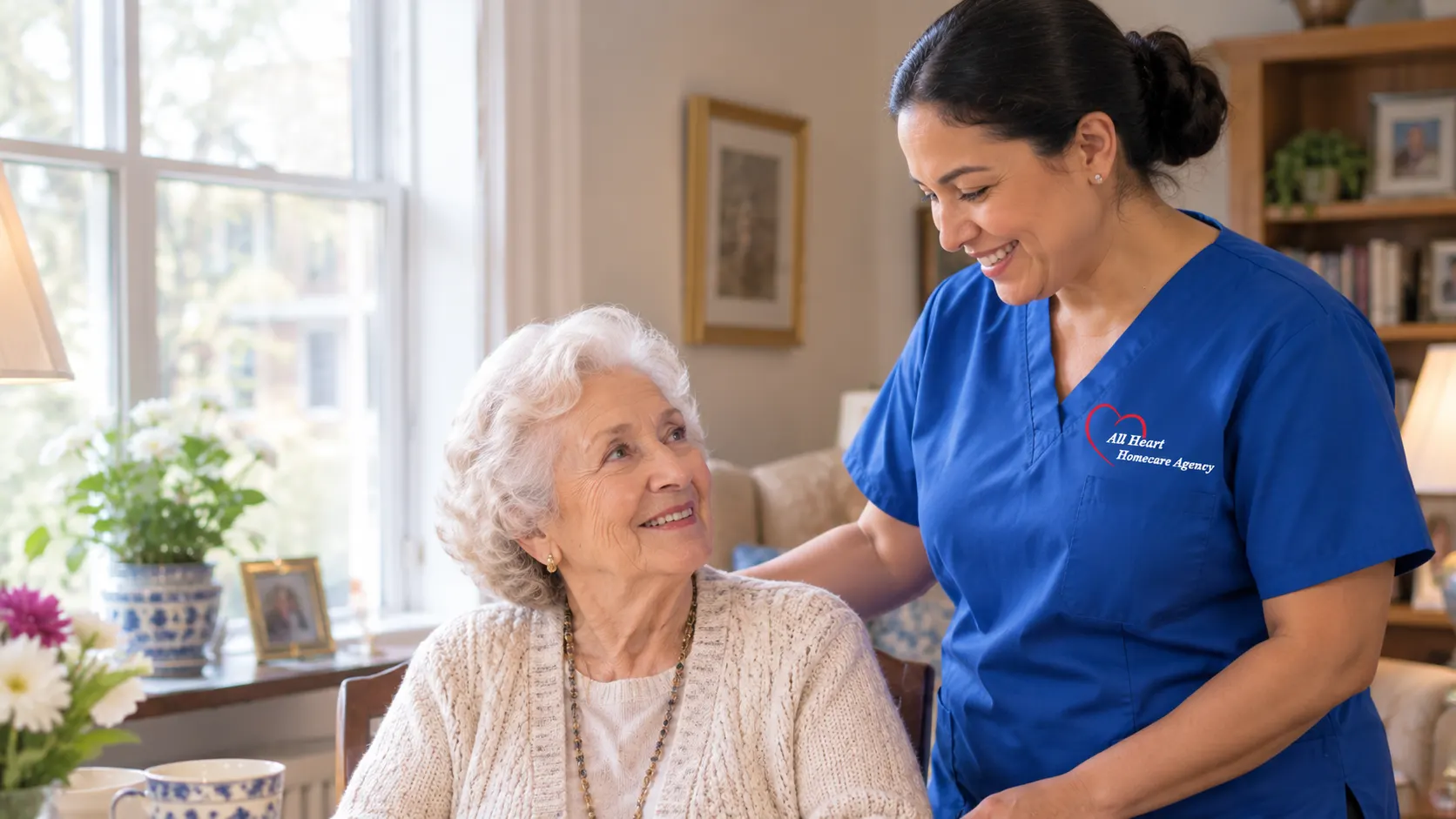
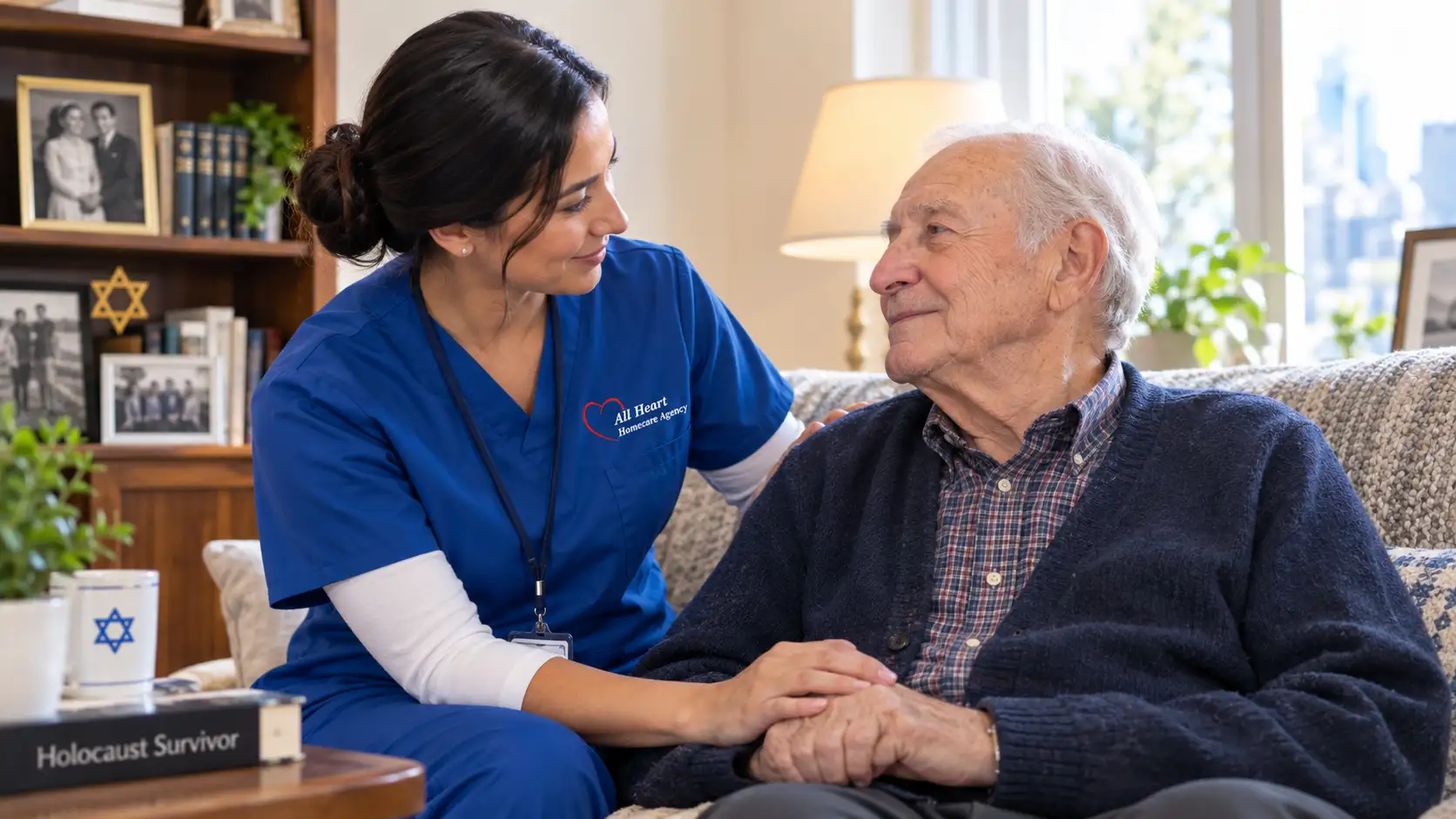
Home care supports mental health by providing consistent, one-on-one assistance in a familiar environment, where people feel safest and most at ease. For many seniors and adults managing illness, disability, or isolation, staying at home reduces anxiety, preserves routine, and protects a sense of independence.
Home caregivers don’t just help with daily tasks, they offer companionship, emotional reassurance, and stability, which can significantly ease feelings of loneliness, depression, and stress. When care happens at home, mental well-being becomes part of everyday life, not something addressed only during crises.
Mental health is just as crucial as physical health, especially for those receiving home care services. This guide explains how home care for mental health actually works: what caregivers do day to day, the signs families most often miss, how support works for more serious conditions, and how families pay for it.
Key Takeaways
- Mental health care at home runs on two layers: clinicians (doctors, therapists, psychiatrists) provide the treatment, and caregivers sustain it daily: routine, companionship, medication reminders, and a trained eye on changes.
- Depression is not a normal part of aging: it’s a treatable condition at every age, and in seniors it often hides behind physical complaints, irritability, or “I’m just tired.”
- Loneliness is a health risk in itself, and the steady presence of a caregiver is one of the most direct treatments for it.
- Home care also serves adults living with serious mental illness: structure, consistency, and coordination with the psychiatric care team make community living sustainable.
- Private care for mental health is paid for through private pay, long-term care insurance, and, for eligible New Yorkers, Medicaid programs and waivers; Medicare covers the clinical side but not daily support hours.
The Importance of Mental Health in Homecare
Mental health affects overall well-being and quality of life, influencing how individuals think, feel, and behave. In homecare settings, addressing mental health is crucial because it directly impacts a patient’s ability to manage physical health conditions, interact with caregivers, and engage in daily activities.
Common Mental Health Challenges Faced by Homecare Recipients
Many homecare recipients may experience the following:
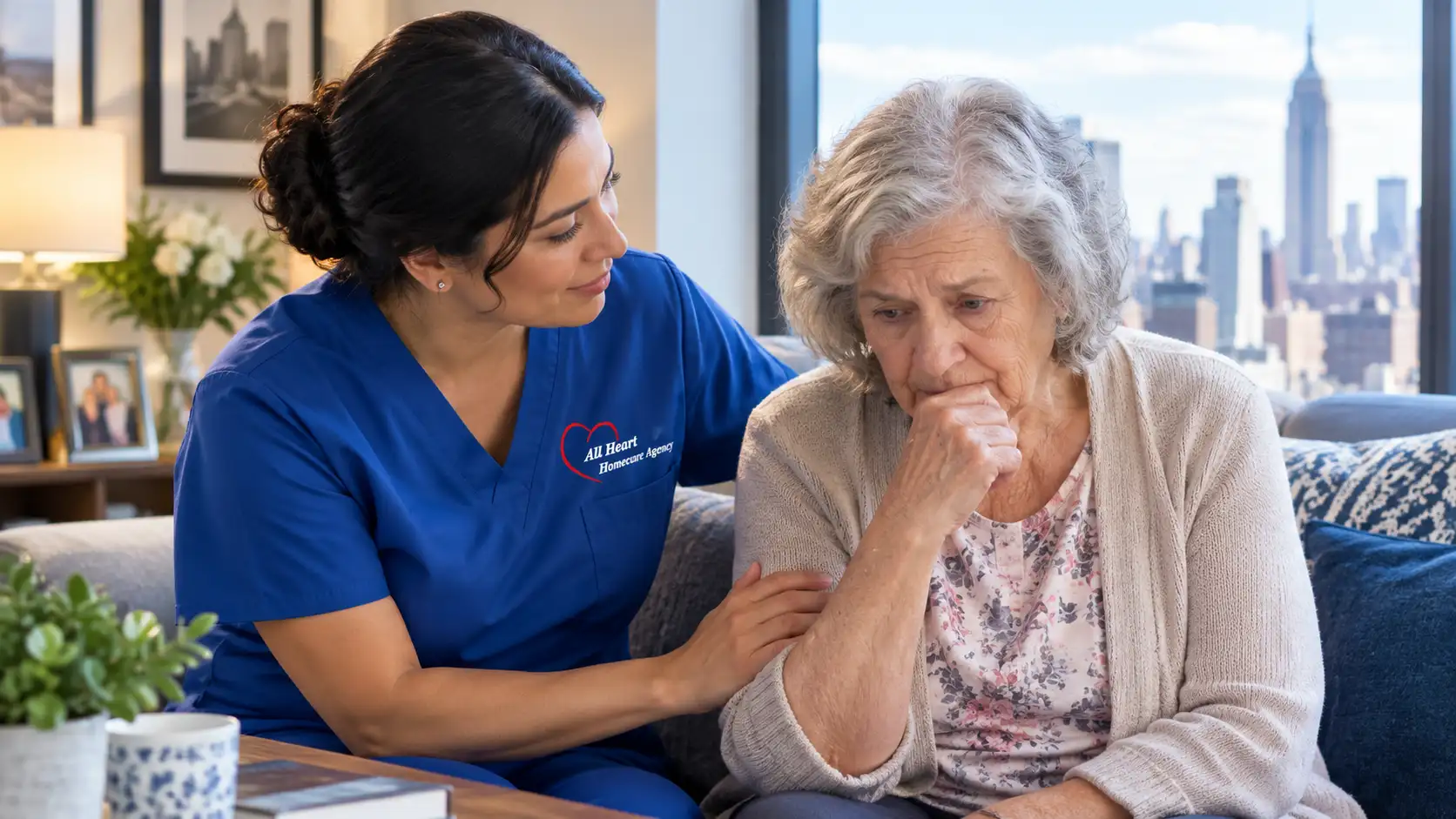
- Depression: This is especially prevalent among the elderly, who may feel isolated.
- Anxiety: Common in individuals who depend on others for care.
- Cognitive Decline: Including conditions like dementia and Alzheimer’s disease, which affect memory and reasoning skills.
- Loneliness and grief: Losing a spouse, friends, or mobility shrinks a senior’s world and chronic loneliness carries measurable health risks of its own, which is why our guide to managing loneliness in seniors treats it as a health topic, not a mood.
The Signs Families Miss: Depression Doesn’t Always Look Sad
In older adults, depression frequently wears disguises, which is why it’s underdiagnosed and undertreated. It is not a normal part of aging, and it’s treatable at every age National Institute on Aging — Mental Health and Older Adults. What to watch for:
| What families often see | What it may actually be |
| “I’m just tired” — low energy, sleeping too much or too little | Fatigue and sleep changes are among the most common depression signs in seniors |
| New aches, stomach trouble, or vague physical complaints | Depression in older adults often shows up physically before it shows up emotionally |
| Irritability, impatience, or “grumpiness” that’s new | In seniors, depression frequently looks like irritability rather than sadness |
| Dropping hobbies, skipping meals, declining invitations | Loss of interest and appetite changes are core warning signs, not “slowing down” |
| “I don’t want to be a burden” | Withdrawal language that deserves a caring conversation and a doctor visit — not reassurance alone |
A caregiver who sees someone daily is often the first to notice these patterns, one of the quiet ways home care protects mental health.
What Home Care Actually Does for Mental Health, Day to Day
Here’s the honest picture: home caregivers are not therapists, and good agencies never pretend otherwise. Mental health care at home runs on two layers: clinicians provide the treatment (therapy, medication management, psychiatric care), and caregivers sustain everything that makes treatment work:
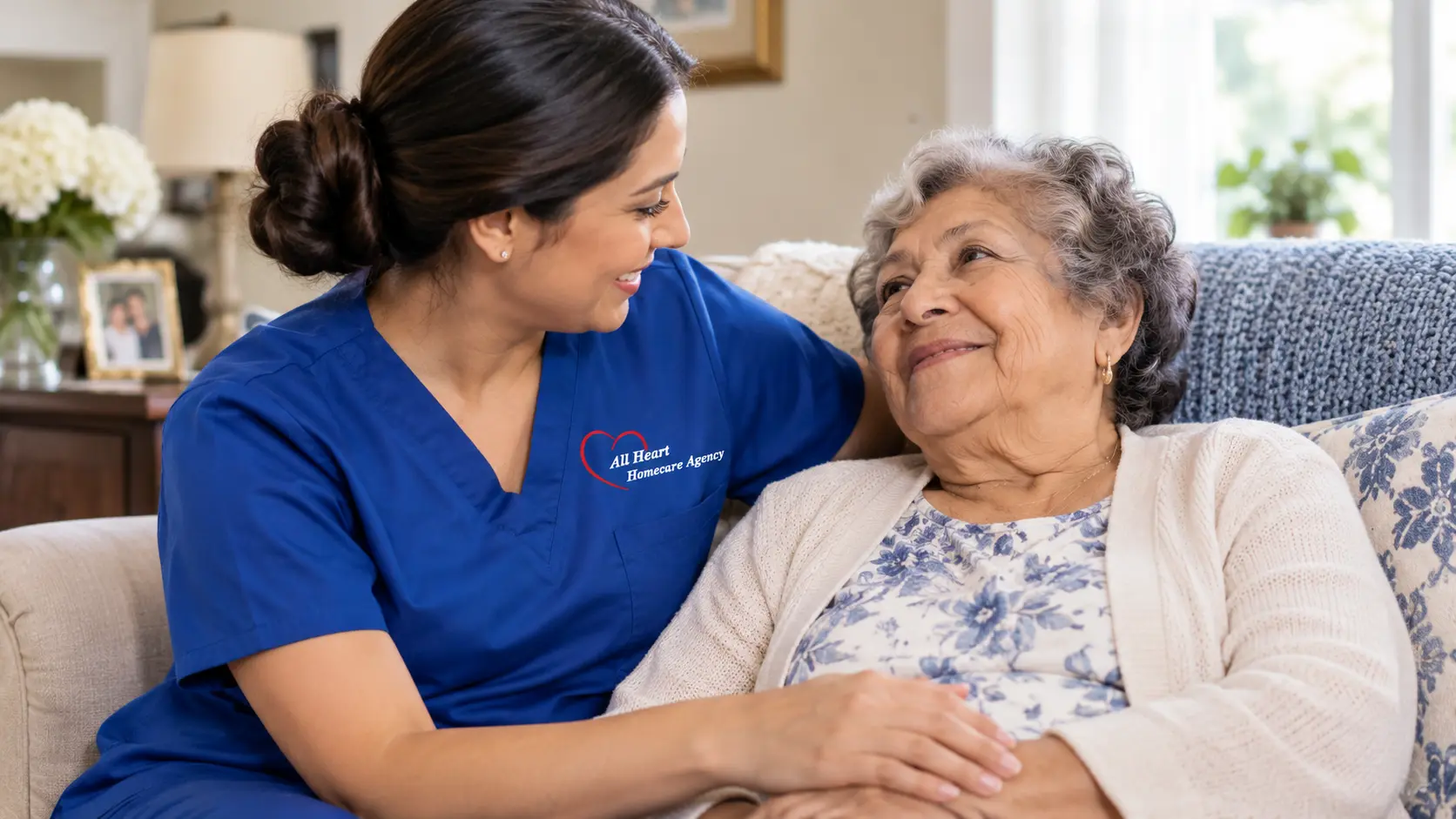
- Companionship on a schedule: a familiar face, conversation, shared meals, and shared activities; the most direct daily counter to isolation.
- Routine and structure: consistent wake, meal, activity, and sleep rhythms, which stabilize mood and are often the first thing depression and anxiety erode.
- Medication reminders: mental health medications only work when taken consistently; caregivers keep the schedule honest (and licensed nurses can administer where needed).
- The basics that regulate mood: regular meals, hydration, daylight, and gentle movement; our exercises for seniors guide doubles as mood care, and games and mental stimulation keep the mind engaged.
- Transportation and follow-through: rides to therapy and psychiatry appointments, which quietly determines whether treatment continues.
- Observation and reporting: a trained eye that notices appetite, sleep, mood, and behavior changes early and tells the family and care team while changes are still small.
Strategies for Mental Health Care at Home
Effective mental health care strategies include:
- Regular Assessments: Mental health screenings should be a routine part of homecare assessments to identify needs early.
- Personalized Care Plans: Tailored to address specific mental health conditions, incorporating activities that promote mental wellness.
- Professional Support: Involvement of mental health professionals when necessary and ensuring caregivers are trained in mental health first aid.
Involving Families and Communities
Support from families and community resources can enhance mental health care:
- Family Education: Teaching families about mental health conditions and how to engage positively with their loved ones.
- Community Resources: Connecting clients with local mental health programs, support groups, and activities — in New York, NYC Aging’s Older Adult Centers and their free social programs are a mental health resource hiding in plain sight; see our guide to free activities for seniors in Brooklyn and NYC.
The Role of Technology
Technology can also support mental health care through:
- Telemedicine: Providing access to psychiatrists and therapists via online platforms, especially valuable for homebound seniors, and a caregiver can handle the setup that often stands between a senior and the appointment.
- Apps and Monitoring Tools: Helping clients manage their mental health through reminders, mood tracking, and stress management techniques.
Home Care for People Living With Serious Mental Illness
Home care isn’t only for mild worry or age-related loneliness. Adults and seniors living with serious mental health conditions — including schizophrenia, bipolar disorder, and severe depression are aging in the community in growing numbers, and consistent in-home support is often what makes that possible. What changes with more serious conditions is the depth of the care plan, not the dignity of the approach:
- Consistency becomes clinical: the same caregivers, the same routines, and calm, predictable days reduce the stress that destabilizes symptoms.
- Coordination deepens: caregivers work alongside the psychiatric care team, family, and case managers, reporting changes early — and for medication administration and complex needs, licensed private duty nursing adds the clinical layer.
- Community programs help carry the plan: for eligible New Yorkers, Medicaid waivers like NHTD fund home- and community-based services precisely so that institutional care isn’t the default — mental health support included.
Families searching for “home care for mentally ill patients” are usually asking one anxious question: can my person live safely at home? With the right layers, clinical treatment, daily support, and honest communication, the answer is very often yes.
Private Care for Mental Health: How Families Pay for Support
The clinical layer (therapy, psychiatry, medications) is typically covered by Medicare and health insurance. The daily-support layer — caregiver hours, companionship, routine, supervision, is funded differently:
- Private pay: the most flexible path: hours scale from a few visits a week to around-the-clock support, starting and adjusting on the family’s timeline.
- Medicaid programs: for eligible New Yorkers, Medicaid home care and waiver programs fund substantial support hours.
- What Medicare does and doesn’t do: Medicare covers clinical treatment and time-limited skilled home health, but not ongoing daily support hours; two useful adjacent benefits are covered in our guides to Medicare and respite care and Medicare and adult day programs.
When To Seek Help Right Away
Most mental health support is a marathon of small consistent days — but some moments call for immediate professional help. Contact the doctor promptly for sudden confusion, marked personality change, refusal to eat or drink, or rapid decline.
And if someone talks about not wanting to live, feeling like a burden others would be better off without, or giving up, take it seriously every time: the 988 Suicide & Crisis Lifeline (call or text 988) connects to trained counselors 24/7, and 911 is the right call for any immediate danger. Asking directly and kindly about these feelings does not plant them, it opens the door to help.
Caring for the Mind, Every Day
Caring for the mind is integral to effective home care. By understanding and addressing the mental health needs of homecare recipients, caregivers can significantly improve the overall care experience, leading to better health outcomes and enhanced quality of life.
If you or your loved one requires home care that focuses on both physical support and mental health, All Heart Homecare is an excellent choice. As members of the Alzheimer’s Association, we tailor our services to meet our patients’ mental, physical, and emotional needs, from companionship visits to specialized dementia care and licensed nursing.
Frequently Asked Questions About Home Care for Mental Health
How does home care help seniors with mental health issues?
Home care sustains the daily conditions mental health depends on: companionship that counters isolation, consistent routines that stabilize mood, medication reminders that keep treatment on track, nutrition and gentle activity, transportation to therapy and psychiatry appointments, and a trained daily observer who notices changes early. Caregivers work alongside — never instead of — the clinical treatment team.
What does a caregiver actually do for someone with a mental health condition?
The concrete list: shared meals and conversation on a reliable schedule, help maintaining wake, meal, and sleep routines, medication reminders (with licensed nurses available for administration), encouragement into daylight, movement, and activities, rides to appointments, and daily observation reported to family and the care team. It’s unglamorous, consistent work — which is exactly what recovery and stability are built from.
Is there home care for mentally ill patients with serious conditions?
Yes. Adults and seniors living with serious mental illness — schizophrenia, bipolar disorder, severe depression — can live at home with the right layered support: clinical treatment from the psychiatric team, consistent daily caregiving for structure and routine, licensed private duty nursing where medication administration or complex needs require it, and coordination among everyone involved. Medicaid waiver programs in New York can fund community-based support precisely for this purpose.
What is private care for mental health?
Private care means directly arranged, privately funded in-home support — caregiver hours, companionship, routine management, and optionally licensed nursing — scaled to the person’s needs from a few visits weekly to around-the-clock. It complements clinically treated care (which insurance typically covers) by funding the daily-support layer insurance typically doesn’t, with maximum flexibility over schedule and caregiver matching.
When should a family seek professional mental health help for a senior?
Promptly, whenever you see persistent changes: two or more weeks of low mood, withdrawal, appetite or sleep disruption, new irritability, or physical complaints without clear cause — start with their doctor, and remember depression is treatable at every age. Seek immediate help for sudden confusion, refusal to eat or drink, or any talk of not wanting to live: call or text the 988 Lifeline anytime, and 911 for immediate danger.