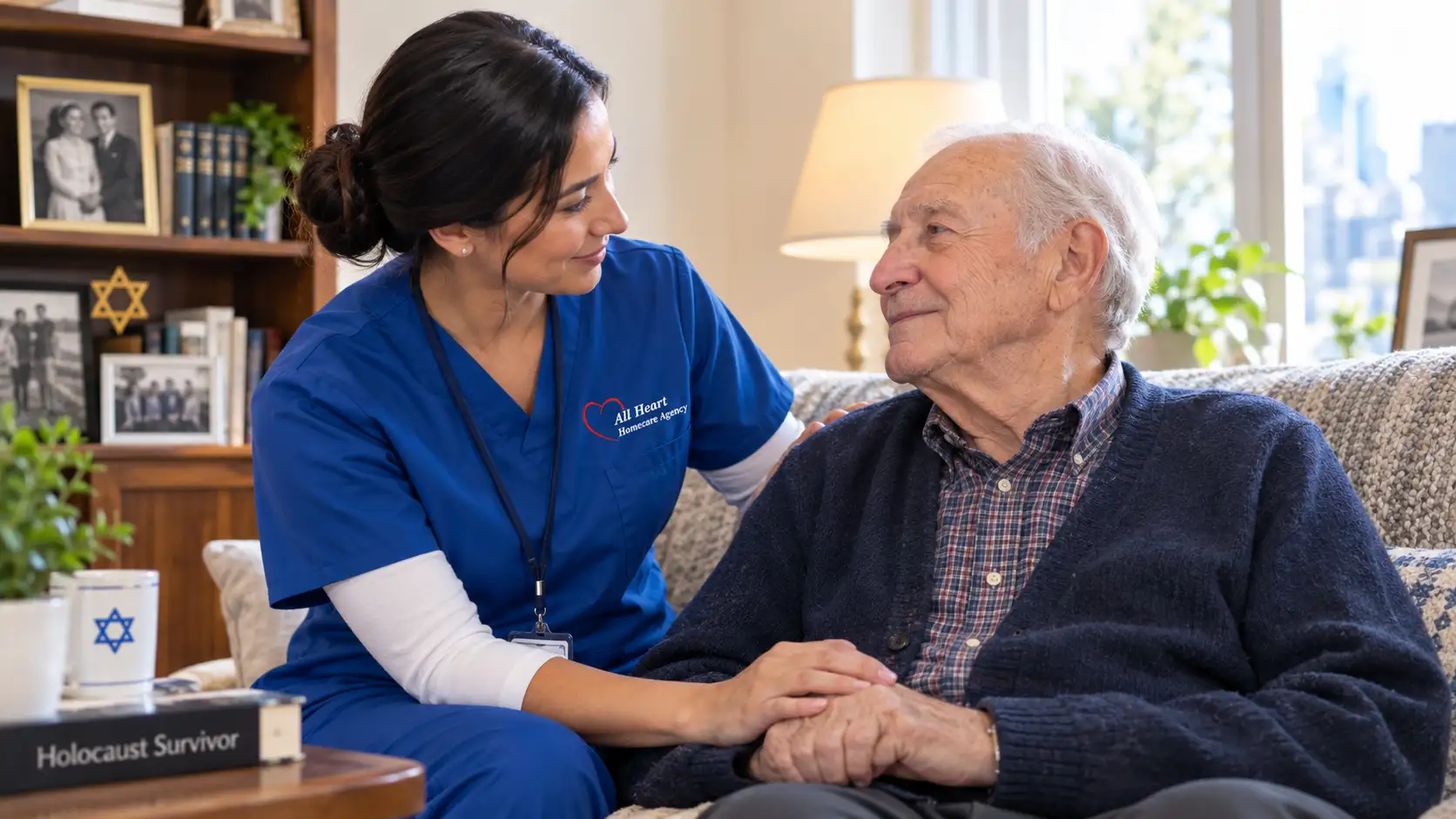

Shoulder surgery changes your daily life in ways most people don’t fully anticipate until they’re home, arm in a sling, and realizing they can’t open the refrigerator, shower without help, or sleep in their usual position. The surgery itself is the easy part. What happens in the weeks after is where recovery is actually won or lost.
Whether you’re recovering from a rotator cuff repair, shoulder replacement, or labral surgery, the path home looks similar: a sling you’ll wear longer than you expected, a list of movements to avoid, and a slow, carefully staged return to normal life.
Research shows that sleeping, dressing, and bathing consistently rank as the hardest daily tasks during immobilization, with most patients needing external help for nearly two weeks before managing independently. What makes the difference between a smooth recovery and a frustrating setback is almost always the quality of care in those first critical weeks.
This guide walks through what shoulder surgery after care actually looks like: day by day, week by week, so you or your loved one knows exactly what to prepare for.
Key Takeaways
- Most patients go home the same day or within 24 hours of shoulder surgery, but daily tasks like dressing, bathing, and cooking require significant help for the first two to four weeks.
- Pain management, wound care, and sling compliance are the three most critical components of early recovery.
- A structured nursing care plan for shoulder surgery dramatically reduces the risk of complications and rehospitalization.
- Physical therapy typically begins within two weeks, but what happens between therapy sessions at home is just as important.
- Professional in-home care can fill the gap between hospital discharge and full independence, particularly for seniors and those living alone.
What Shoulder Surgery After Care Actually Involves
When people search for aftercare for shoulder surgery, they often expect a short list of dos and don’ts. The reality is more involved. Shoulder surgery after care is a structured, multi-week process that includes wound management, pain control, positioning support, physical therapy compliance, and close monitoring for complications.
The shoulder is one of the most complex joints in the body, and surgeries that address it, whether rotator cuff repairs, total or reverse shoulder replacements, labral repairs, or fracture repairs: all require a period of enforced immobility followed by a carefully controlled reintroduction of movement. Rushing either phase leads to poor outcomes.

What Happens Immediately After Shoulder Surgery
Most patients spend one to two hours in a recovery room before being cleared to go home. For many shoulder procedures today, same-day discharge is standard. Your care team will place your arm in a sling before you leave, and you’ll receive instructions covering wound care, pain management, activity restrictions, and follow-up appointments.
The first 24 to 72 hours are dominated by residual anesthesia effects, acute pain management, and the early inflammatory response. An interscalene nerve block is commonly used at discharge and provides pain relief for up to 72 hours. When it wears off, pain levels can spike significantly if oral medications aren’t already in place.
This is also the moment where post-hospitalization care becomes critical: the hours right after discharge set the tone for everything that follows.
Why The Home Environment Matters So Much
What’s rarely emphasized enough before discharge is how dependent patients become on their home environment and the people in it. Research published in PMC found that over 71% of shoulder surgery patients required help with dressing while immobilized, and more than half needed assistance with bathing. On average, patients needed nearly two weeks of external help before they could manage these basic tasks independently.
This is not a minor inconvenience. For someone living alone, or for an elderly patient whose spouse or adult child cannot be present full-time, this level of dependency is a real care gap.
The Sling: Longer Than Most Patients Expect
One of the most common sources of frustration after shoulder surgery is the duration of sling use. Depending on the procedure, patients may be required to wear a sling anywhere from two weeks to six weeks or longer. Removing the sling too early places undue stress on the repaired tissue and can compromise the entire surgical result.
Sleeping is consistently rated the most difficult challenge by patients. Finding a position that keeps the shoulder supported while allowing rest is a skill that takes several days to develop. Recliners are commonly recommended over beds in the first few weeks, particularly after rotator cuff repair.
Week-by-Week Breakdown of Recovery At Home
Recovery from shoulder surgery doesn’t happen all at once. It follows a fairly predictable arc, with each week presenting different challenges and milestones. The specifics vary depending on the type of surgery, but the general pattern holds.
Weeks One and Two: Immobilization and Pain Management
The first two weeks are about protecting the surgical site, managing pain, and preventing complications. Physical activity is minimal. The focus is on following wound care instructions, taking medications on schedule, keeping the sling on as directed, and attending follow-up appointments.
During this period, the tasks that feel impossible: putting on a shirt, washing hair, preparing food, require either significant adaptations or help from another person. This is where home health care becomes one of the most practical tools available, bridging the gap between what a patient can do independently and what their recovery plan actually requires.
Occupational therapists often recommend specific techniques, such as using a long-handled sponge in the shower or wearing button-front shirts instead of pullovers, but these workarounds take time to learn and execute safely.
Pain is typically at its highest during this window. Ice therapy is one of the most effective non-pharmacological tools available and should be applied regularly, typically 15 to 20 minutes at a time, throughout the day.
Key priorities for weeks one and two:
- Wound care: keep incisions clean and dry, watch for signs of infection (redness, warmth, discharge, fever)
- Medication compliance: take prescribed medications on schedule, not only when pain becomes severe
- Sling compliance: wear the sling consistently, including during sleep if directed
- Positioning: sleep in a recliner or propped at a 45-degree angle if lying flat causes pain
- Gentle pendulum exercises if directed by the surgeon, begin passive shoulder movement without placing stress on the repair
Weeks Three and Four: Early Mobility and Transitional Tasks
By weeks three and four, most patients are more comfortable managing pain and have adapted somewhat to life with one arm. Swelling begins to decrease, and early physical therapy exercises, still gentle, still passive or assisted, introduce controlled movement.
This is often when patients begin attempting more tasks independently. That ambition is healthy, but it needs to be channeled carefully. Reaching overhead, lifting even light objects, and pushing up from a chair using the affected arm are all movements that remain restricted.
For seniors or patients with pre-existing conditions like arthritis or heart disease, this transitional phase is when overexertion risks tend to peak. They feel better, so they do more and sometimes do too much.
Weeks Five Through Eight: Progressing Into Active Therapy
Most patients transition from passive to active physical therapy between weeks 4 and 8, depending on the surgery. Rotator cuff repairs typically require the longest period of passive rehabilitation before active strengthening begins. Shoulder replacement patients often progress faster in terms of daily function, though strength gains come later.
By this stage, dressing and light cooking are generally manageable with adaptations. Driving is usually still restricted if the surgery was on the dominant arm. Return to work is possible for sedentary jobs, though those involving physical activity remain off limits.
For patients who still need help a few hours a day but no longer require intensive daily care, private pay home care offers the flexibility to dial support up or down without being locked into a rigid insurance-approved schedule.
The physical therapy program becomes the central organizing structure of daily life. What patients do between sessions: the prescribed home exercises, the rest protocols, the movement restrictions, has as much impact on outcomes as the sessions themselves.
Months Two Through Six: Strength Recovery and Return To Activity
Research in PMC found that rotator cuff repair patients achieve roughly 40% of their total recovery at the three-month mark and about 70% by six months. Shoulder replacement patients recover faster, reaching over 90% of total improvement by six months. This long arc means that patience is not optional; it’s built into the biology of healing connective tissue.
During this phase, the support needs shift. The hands-on daily assistance required in weeks one and two gives way to more of a supervisory and encouragement role. Patients need accountability partners more than caregivers, and family members or professional aides can serve this function.
| Phase | Timeframe | Primary Focus | Assistance Level | Key Restrictions |
| Acute recovery | Days 1–14 | Pain control, wound care, sling | High — daily ADL help needed | No active arm use; sling at all times |
| Early mobility | Weeks 3–4 | Passive PT, light task adaptation | Moderate — help with hygiene, meals | No lifting, no overhead reach |
| Active therapy | Weeks 5–8 | Active PT, increasing independence | Light — supervision and transport | No driving (dominant arm); no heavy lifting |
| Strength phase | Months 2–3 | Strengthening, return to ADLs | Minimal — check-ins only | No strenuous activity or heavy work |
| Full recovery | Months 4–6 | Return to work/sport | Independent | Cleared by the surgeon for full activity |
Building a Nursing Care Plan For Shoulder Surgery
A nursing care plan for shoulder surgery provides structure to the recovery process. Without one, patients and their families are essentially improvising, making decisions about activity levels, wound care, and pain management based on guesswork. With one, every caregiver in the patient’s orbit is working from the same script.
If you want a broader look at how this applies beyond the shoulder, the post-surgery home care guide covers a general framework that families can adapt to any procedure.
A formal care plan addresses five core domains.
Pain management: Scheduled medications, ice therapy protocols, positioning recommendations, and clear guidance on when to contact the medical team for breakthrough pain or signs of nerve damage.
Wound care: How often to inspect incisions, what normal healing looks like versus signs of infection, when to change dressings, and when sutures or staples come out.
Mobility and positioning: Specific instructions for how to safely help the patient in and out of bed, how to support the arm during transfers, what movements are and are not permitted, and how to correctly position for sleep.
Activities of daily living: Which tasks the patient can attempt with modification, which require assistance, and which to avoid entirely. Dressing, hygiene, meal preparation, and toileting each have specific protocols after shoulder surgery.
Follow-up and escalation: Scheduled appointment dates, what symptoms warrant calling the surgeon versus going to urgent care, and who the primary point of contact is for non-emergency questions.
For families managing care at home, this type of structured plan is the difference between reactive fire-fighting and proactive management.
How All Heart Homecare supports shoulder surgery recovery in NYC
Recovering from shoulder surgery alone — or asking a family member to be a full-time caregiver on top of their other responsibilities — creates real strain. For many patients, particularly seniors and those with limited mobility or pre-existing conditions, that gap between hospital discharge and independent functioning is where things break down.
All Heart Homecare Agency has been providing certified in-home care across all five NYC boroughs for over 13 years. Their certified home health aides are trained to support post-surgical patients with the daily tasks that become difficult during shoulder recovery: dressing and grooming assistance, meal preparation, mobility support, medication reminders, and wound observation. All Heart also provides free transportation to medical appointments, which matters during a recovery phase when patients can’t drive.
For patients who need more intensive support, All Heart offers around-the-clock care and private-pay LPN nursing — skilled nurses who can implement and monitor a full nursing care plan for shoulder surgery in the home setting. Services are available in English, Spanish, and Russian, and caregivers are matched to clients based on language, cultural background, and care needs.
Contact us today for a free consultation.
Frequently Asked Questions About Shoulder Surgery After Care
How long does shoulder surgery recovery typically take?
Recovery length depends heavily on the procedure. Rotator cuff repair patients typically need 6 months to a year to reach full function, with about 70% of recovery by the 6-month mark. Shoulder replacement patients often see faster improvements in daily function, with over 90% of recovery achieved by six months. Minor arthroscopic procedures may resolve in two to four months.
When can I shower after shoulder surgery?
Most surgeons allow sponge bathing or a careful shower with the incision covered and protected within a few days of surgery. Full showers without wound protection are typically allowed once the incision is fully closed and dry, usually within one to two weeks. Your surgeon will give you specific guidance at your first follow-up appointment.
Is it normal to need help with basic tasks after shoulder surgery?
Yes. Studies consistently show that over half of shoulder surgery patients require help with bathing and dressing during the immobilization period, often for up to two weeks. The loss of one functional arm, combined with the pain and fatigue of the acute recovery phase, makes many tasks that are normally automatic genuinely difficult for a period.
Can I sleep in a bed after shoulder surgery?
Many patients find sleeping in a bed too painful or difficult during the first two to four weeks, particularly after rotator cuff repair or replacement. Sleeping in a recliner or in a propped, semi-reclined position at 30 to 45 degrees tends to reduce shoulder pain and makes it easier to maintain the arm in a supported, neutral position. A good sleep setup is one of the most important yet often overlooked aspects of early recovery.
What is a nursing care plan for shoulder surgery used for?
A nursing care plan for shoulder surgery is a structured document that outlines the patient’s recovery goals, pain management protocols, wound care instructions, mobility restrictions, and daily assistance needs. It ensures that everyone providing care — whether a professional aide, a family member, or a home nurse — follows the same guidelines and monitors for the same warning signs. It reduces guesswork and helps prevent complications during the recovery period.
When does physical therapy start after shoulder surgery?
The timing varies by procedure. For total shoulder replacement, physical therapy often begins during the hospital stay or within the first one to two weeks. For rotator cuff repair, passive therapy typically begins within the first two weeks, but active strengthening may not start until six to eight weeks post-surgery to protect the repaired tissue. Your surgeon and physical therapist will coordinate the specific timeline for your case.
What foods help shoulder surgery recovery?
Nutrition plays a meaningful role in tissue healing. Protein supports muscle repair and soft tissue healing — aim for adequate intake through sources like eggs, lean meats, legumes, and dairy. Vitamin C supports collagen synthesis, which is important for tendon and ligament repair. Omega-3 fatty acids from fish and flaxseed help moderate the inflammatory response. Staying well-hydrated and avoiding alcohol during the early recovery period also supports healing.