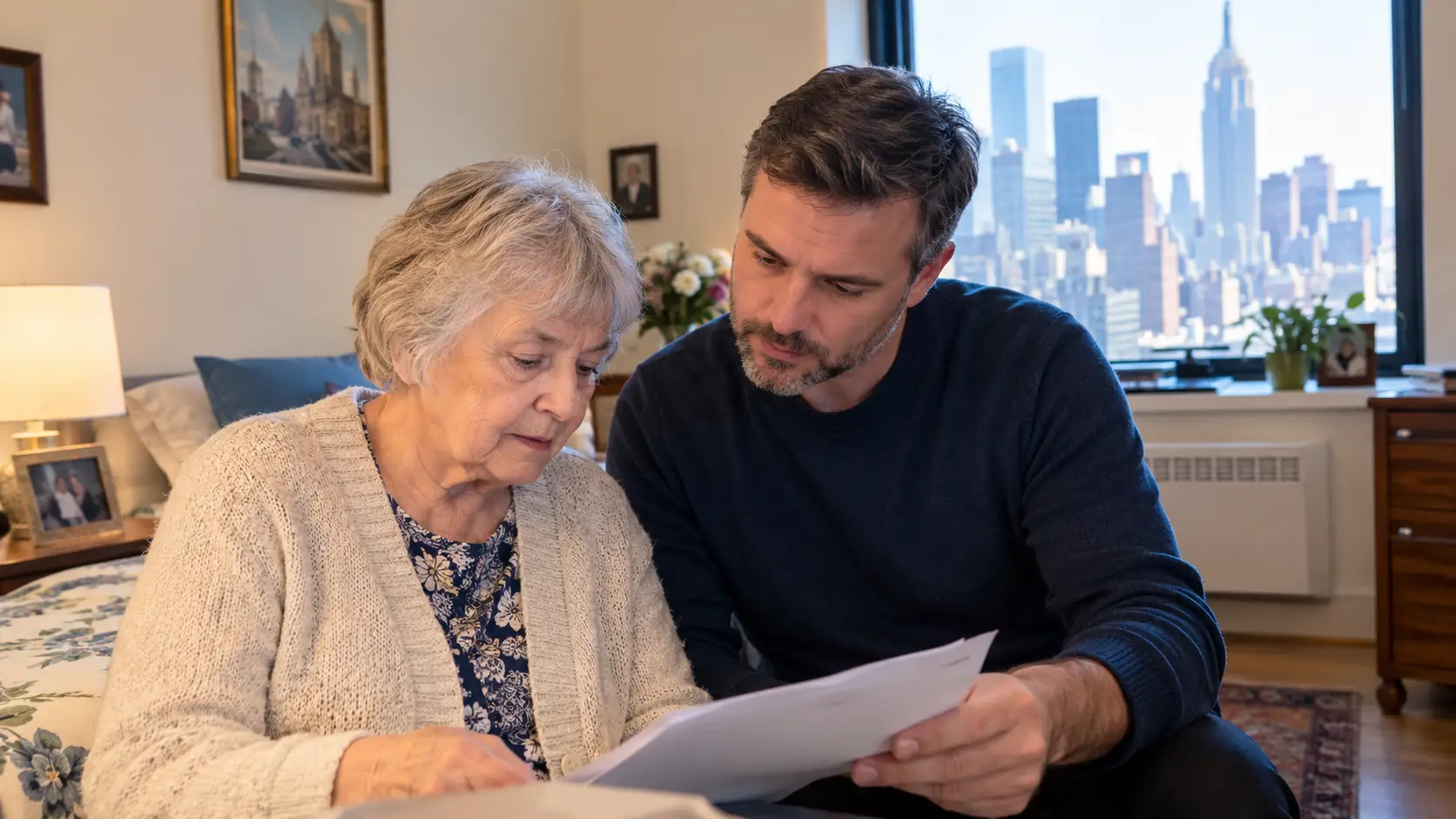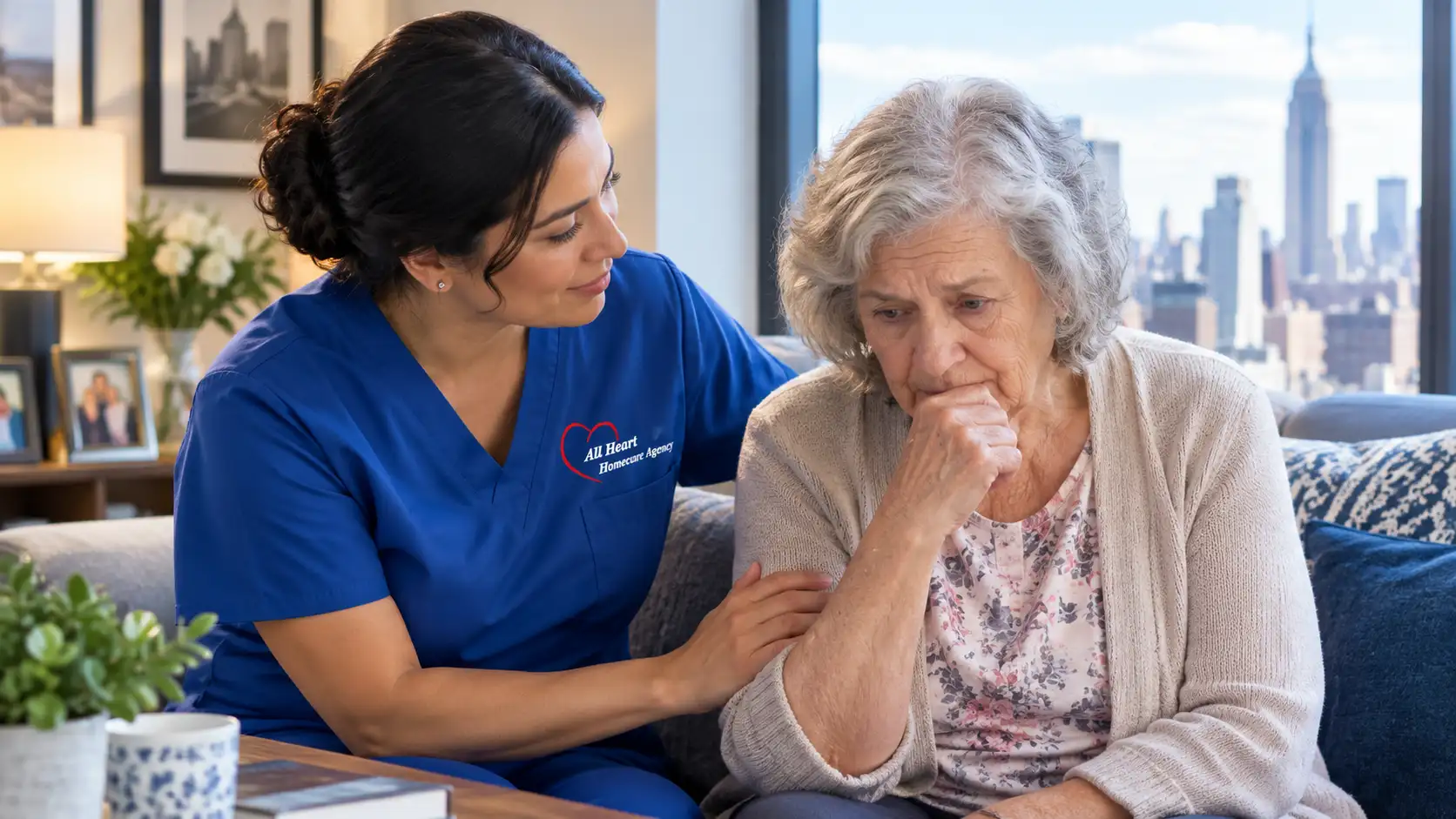



Finding care for an aging parent rarely starts with a clear plan. It usually starts with a worry: a missed medication, a slip in the bathroom, a phone call that rings out for too long. By the time most families start searching, they already feel behind.
The best senior home care in NYC comes down to a few things working together. You want a properly licensed agency, caregivers who are trained and screened, and a care plan built around your loved one’s real day, not a generic checklist. Price matters, but it is rarely what separates good care from poor care.
What makes the search hard is the sheer number of choices. Across the five boroughs, you will find hundreds of agencies, dozens of service labels, and insurance rules that feel like a second language.
Families also carry guilt, time pressure, and the fear of handing a parent’s safety to a stranger, and that weight is real: 39% of family caregivers report high emotional stress from the role.
This guide breaks the decision into parts you can actually weigh. It covers what home care entails, how the services differ, and the specific signals that indicate an agency is worth trusting with someone you love.
Key Takeaways
- The best senior home care in NYC pairs a properly licensed agency with trained, background-checked caregivers and a plan shaped around one person’s daily needs.
- Care types range from a few hours of help each week to live-in and around-the-clock support, plus skilled nursing for medical needs.
- Language and cultural fit at home is a real quality factor, not a nice-to-have, especially across NYC’s multilingual neighborhoods.
- How care gets paid for, through Medicaid, private pay, or veteran and workers’ compensation benefits, shapes which agencies you can realistically choose from.
- Matching the agency to a specific situation, such as fall risk or recovery after a hospital stay, leads to better outcomes than relying on price alone.
What is Senior Home Care in NYC
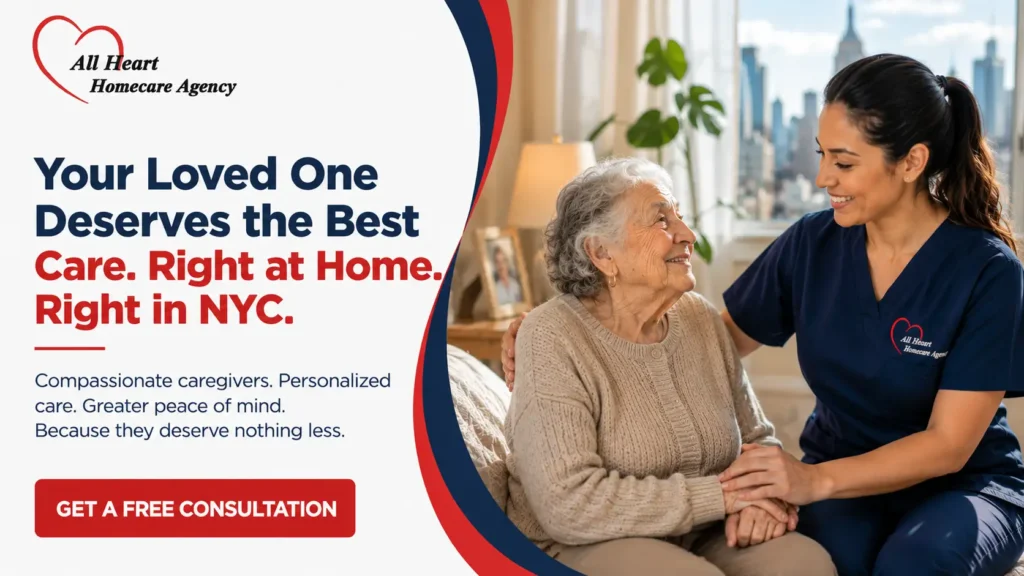
Senior home care is non-medical and medical support delivered in a person’s own home, allowing them to stay there safely instead of moving to a facility. It is the most direct answer to a simple wish that most older adults share.
According to AARP, 75% of adults aged 50 and older want to remain in their current homes as they age.
Who Senior Home Care is For
Senior home care fits a wider range of people than most families expect. It is not only for someone who can no longer walk or speak.
- Seniors who need help with daily living: bathing, dressing, meals, and light housekeeping, while staying independent at home.
- Older adults recovering from surgery or a hospital stay who need short-term support during recovery.
- People living with Alzheimer’s, dementia, Parkinson’s, or other chronic conditions that change slowly over time.
- Families who want a trusted set of eyes in the home and regular contact when they cannot be there themselves.
What a Home Health Aide Does Each Day
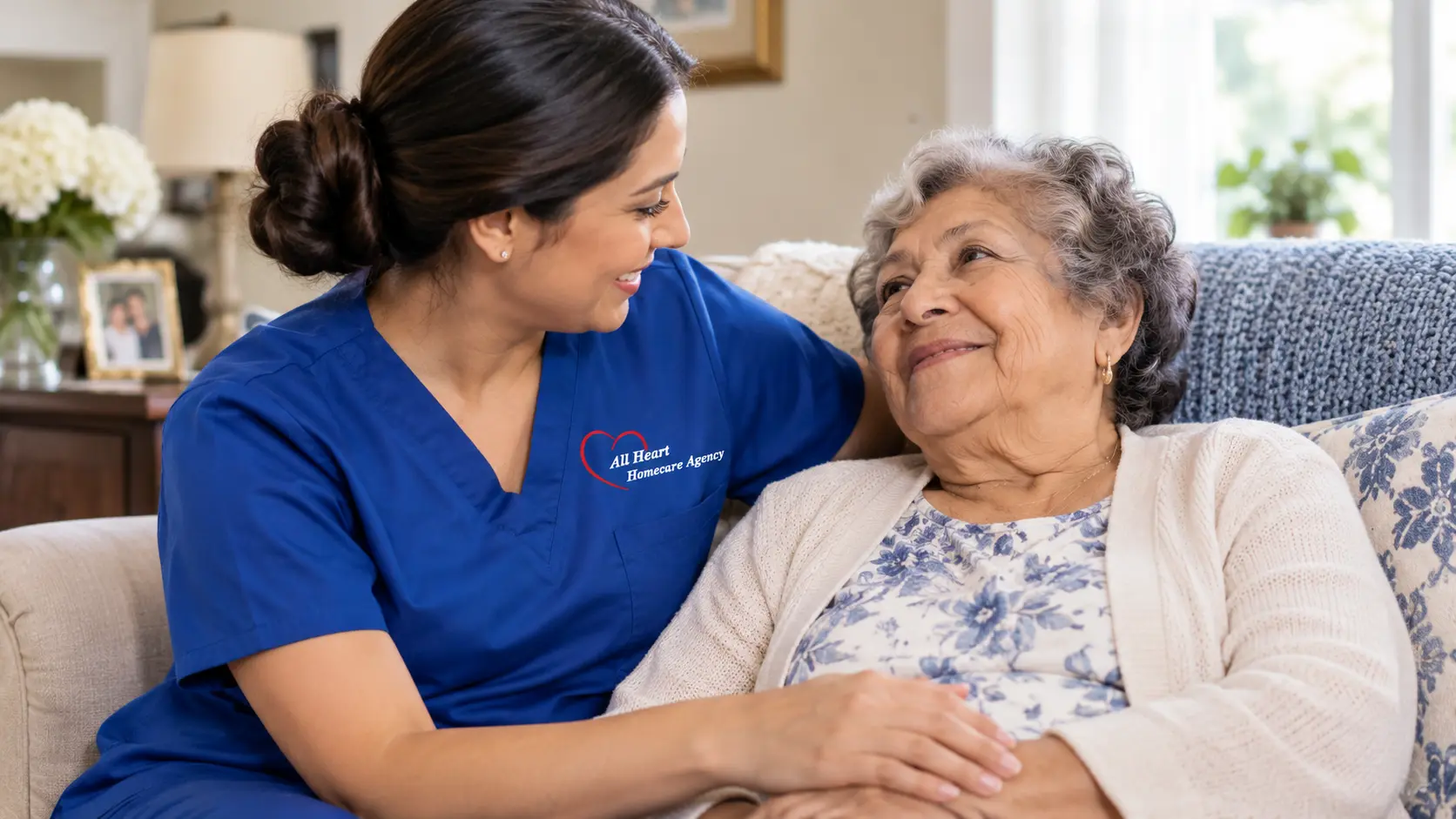
A certified home health aide handles the tasks that keep a household running and a person safe. The work is practical, and it adapts as needs shift. Good home health care is built around the person, not a fixed menu.
A typical day might include help with grooming and getting dressed, preparing meals that fit a doctor’s guidance, and reminders to take medication on schedule. Aides also assist with mobility around the home, light chores, and accompanying a client to appointments.
Many families find that this steady routine protects more than physical safety. It supports mood, dignity, and mental well-being, which often decline fastest when an older adult feels isolated.
Types of Senior Home Care Services in NYC
Home care is not one product. The right fit depends on how many hours of help a person needs, whether any of that help has to be medical, and how those hours are scheduled. The labels below sort out the most common options.
Hourly, Live-in, and Around-The-Clock Care
Most families start with hourly care and scale up as needs grow. The intensity of supervision is what really changes from one tier to the next, so knowing the difference between 24-hour, live-in, overnight, and hourly care helps you match the schedule to the need.
- Hourly care: A caregiver comes for set blocks of time, from a few hours a week up to most of the day.
- Live-in care: A caregiver stays in the home and is present overnight, with built-in rest periods.
- Around-the-clock care: Continuous coverage where aides rotate in shifts so someone is awake and attentive at all hours.
Families also turn to private pay home care when they want fully customizable hours without insurance limits on what a plan can include.
Skilled Nursing Care at Home
Some needs go beyond what an aide can do. When a senior requires wound care, injections, IV management, or close monitoring of a serious condition, that is skilled nursing, not personal care. This work is done by a licensed nurse, not a home health aide.
NYC families often arrange private duty nursing for adults in complex medical situations that still belong at home. Pairing skilled nursing with daily personal care allows a single team to cover both the medical and everyday aspects of recovery.
Specialized Care For Memory Loss and Chronic Conditions
Caring for someone with dementia is a different skill set than general elder care. Routines, communication, and safety all have to be backed by training. The same is true for conditions like a traumatic brain injury or advanced Parkinson’s.
Dedicated Alzheimer’s and dementia care focuses on managing symptoms, reducing agitation, and helping a person hold on to independence for as long as possible.
For people at risk of being placed in a nursing home, nursing home transition and diversion services exist specifically to keep them in their own community instead.
5 Best Senior Home Care Agencies in NYC
A short list only helps if it is built on the things that actually predict good care. The agencies below have an established NYC presence and a track record families can check, drawn from the providers covered in this roundup of top home care agencies in New York.
They are ranked on caregiver quality, reliability, and how well they handle long-term and complex needs.
| Agency | Best for | Standout strength |
| All Heart Homecare | Personalized, long-term, and complex care | Caregiver continuity plus specialized NYC programs |
| Synergy HomeCare | Standardized non-medical support | National brand consistency |
| Comfort Keepers | Companionship and daily engagement | Engagement-focused caregiving |
| Select Care | Flexible or transitional care | Scheduling flexibility |
| Link Homecare | Lighter, non-complex daily help | Accessible entry-level service |
1. All Heart Homecare: Best Overall Senior Home Care in NYC
The hardest part of home care is consistency: the right caregiver who shows up and actually fits your loved one. All Heart Homecare Agency has built its reputation on exactly that across all five boroughs for over 13 years.
The family-owned, BBB-accredited agency is ranked #1 in Brooklyn and a Best of Brooklyn winner, with more than 1,000 clients and 500-plus positive reviews, backed by a simple promise to care for one as you would care for your own loved one.
That Brooklyn presence runs deep, with neighborhood coverage that includes senior care in Williamsburg, Bushwick, and Bedford-Stuyvesant.
Care plans are fully customized and scale from a few hours a week to 24/7 support, with multilingual caregivers matched to your family, rigorous background screening, free transportation to appointments, and round-the-clock on-call help. It also runs dedicated programs for veterans, Holocaust survivors, and people managing dementia.
Your loved one deserves care that feels personal, not transactional. Contact us today for a free consultation!
2. Synergy HomeCare
Synergy HomeCare is a national brand with an NYC footprint and standardized service models. It focuses mainly on non-medical support, such as companionship, personal routines, and light household help. Families who prefer a well-known name and predictable care often find it a comfortable fit for short to medium-term needs.
3. Comfort Keepers
Comfort Keepers is known for an engagement-first style that keeps seniors active in daily life rather than only completing tasks. Caregivers support both physical needs and emotional well-being, which suits older adults who value companionship and routine. Its broad availability across New York makes it easy to start for aging-in-place situations.
4. Select Care
Select Care offers flexible in-home services across New York, with a focus on availability and scheduling. It handles both short-term and ongoing needs, making it an option for transitional periods, such as recovery after a hospital stay. Coverage and caregiver consistency can vary by neighborhood and demand.
5. Link Homecare
Link Homecare provides entry-level help with daily activities across parts of NYC. It tends to fit seniors with lighter needs who do not require complex medical support or long-term care coordination. Families looking for straightforward daily assistance often use it as a practical starting point.
How Much Does Senior Home Care Cost in NYC
Cost is the question almost every family eventually reaches, and in NYC, the numbers are higher than the national average.
What you pay comes down to three things: how many hours you need, whether any of the care has to be medical, and whether you pay privately or through a program.
Typical 2026 Rates by Care Type
In 2026, private-pay home care from a licensed NYC agency generally runs about $28 to $40 an hour for personal care and home health aide support, close to the 2025 national median of $35 an hour. Skilled nursing by a licensed nurse sits far higher, often $75 to $150 an hour, because it is medical work.
Hiring an aide privately off the books can look cheaper on paper. In practice, it usually means no insurance, no backup when the caregiver is sick, and no screening of the person you let into the home.
- Part-time (about 20 hours a week): roughly $2,400 to $3,500 per month.
- Full-time (about 44 hours a week): around $5,000 to $7,000 per month.
- Live-in or 24/7 care: commonly $12,000 to $20,000 or more per month, depending on shift versus live-in arrangements.
| Care type | Typical 2026 NYC rate | Best suited for |
| Personal care/home health aide | $28 to $40 per hour | Daily living help and companionship |
| Part-time (about 20 hrs/week) | $2,400 to $3,500 per month | A few hours of support most days |
| Full-time (about 44 hrs/week) | $5,000 to $7,000 per month | Heavy daily needs at home |
| Live-in or 24-hour care | $12,000 to $20,000+ per month | Continuous supervision |
| Skilled nursing (RN/LPN) | $75 to $150 per hour | Wound care, injections, monitoring |
How to Choose the Best Senior Home Care Agency in NYC
This is where most families get stuck, because every agency claims to be caring and reliable. The way to tell them apart is to check a small set of factors that actually predict quality. Work through each one before you sign anything.
Licensing, Insurance, and Accreditation
Start here, because nothing else matters if the agency is not properly authorized to operate. In New York, a legitimate agency is licensed, fully insured, and able to show it. Accreditation from the Better Business Bureau is a useful extra signal of accountability.
Ask directly whether caregivers are employees of the agency or independent contractors. Employees are covered by the agency’s insurance and supervision, which protects them if something goes wrong in the home.
Caregiver Screening and Training
The person who shows up at the door is the service. An agency’s hiring standards tell you far more than its marketing does. Look for documented background checks, reference verification, and a real training program for certified aides.
The best home care for seniors comes from agencies that screen rigorously and keep training current, not from whoever was available that week. A high bar at hiring usually shows up as lower turnover and steadier care.
Language and Cultural Fit At Home
Care feels safer when a senior can speak freely with the person helping them. In a city where households speak English, Spanish, Russian, and dozens of other languages, a caregiver who shares your parent’s language is not a luxury. It changes how well someone eats, takes medication, and reports a problem.
When you look for the best senior home care near me, ask whether the agency matches clients with caregivers by language and cultural background. A good match reduces confusion and builds trust faster.
How Home Care Gets Paid For
Cost confusion stops more families than the cost itself. The first question is which payment method applies, because it immediately narrows your options. Common routes include New York Medicaid, private pay, long-term care insurance, and benefit programs.
Injuries that happened on the job may be covered through workers’ compensation home care. Knowing your path early tells you which agencies can actually serve you and what your share of the cost will be.
All Heart Care is The Best Choice For Senior Home Care in NYC
Choosing an agency is really choosing who you trust inside your home. All Heart Homecare Agency has spent more than 13 years earning the trust of clients across Brooklyn, Manhattan, Queens, Staten Island, and the Bronx.
What sets the care apart is the detail. Certified aides are background-screened and trained; clients are paired with caregivers who speak their language; and families get free transportation to medical visits, plus around-the-clock on-call help. Whether your loved one needs a few hours of support or continuous nursing care, the plan is built around them.
You should not have to guess your way through this decision.
Let us help you find the right fit for your family. Contact us today for a free consultation!
Frequently Asked Questions About Senior Home Care in NYC
How much does senior home care in NYC cost?
Cost depends on the hours of care, whether skilled nursing is involved, and how it is paid for. Hourly personal care costs less than live-in or around-the-clock coverage. Medicaid, long-term care insurance, and benefit programs can cover much or all of it, so your actual out-of-pocket amount varies widely by situation.
What is the difference between home care and home health care?
Home care usually refers to non-medical assistance with daily living activities, such as bathing, meals, and companionship. Home health care can include medical services such as skilled nursing, wound care, or injections delivered by a licensed nurse. Many families use both together, with an aide for everyday needs and a nurse for medical ones.
Does Medicaid cover senior home care in New York?
Yes. New York Medicaid covers home care for those who qualify, including personal care and certain nursing services. Eligibility depends on income, assets, and assessed medical need. An agency experienced with NYC Medicaid can help you check whether your loved one qualifies and which services the program will pay for.
How do I know if my parents need home care?
Watch for missed medications, weight changes, unsteady walking, unpaid bills, poor hygiene, or growing isolation. A recent fall or hospital stay is a strong signal, too. If daily tasks have become unsafe or exhausting for your parent to manage alone, it is worth arranging an assessment with a home care agency.
Can I choose a caregiver who speaks my parent’s language?
Many NYC agencies match clients with caregivers by language and cultural background. This matters for clear communication around medication, meals, and safety. When you contact an agency, ask directly whether they offer caregivers who speak your parent’s language, since the right match tends to build trust and comfort much faster.
How quickly can senior home care start?
Timing depends on the assessment and how care is being paid for. Private pay arrangements can often begin within days. Medicaid or benefit-based care may take longer due to approval and eligibility checks. A good agency will give you a realistic start date and explain each step so there are no surprises.
Is around-the-clock home care better than a nursing home?
For many seniors, yes, because it keeps them in a familiar environment with one-on-one attention. Around-the-clock care suits people with high needs who still want to stay home. A nursing home may fit those needing constant on-site medical staff. The right choice depends on medical complexity, safety, and family preference.