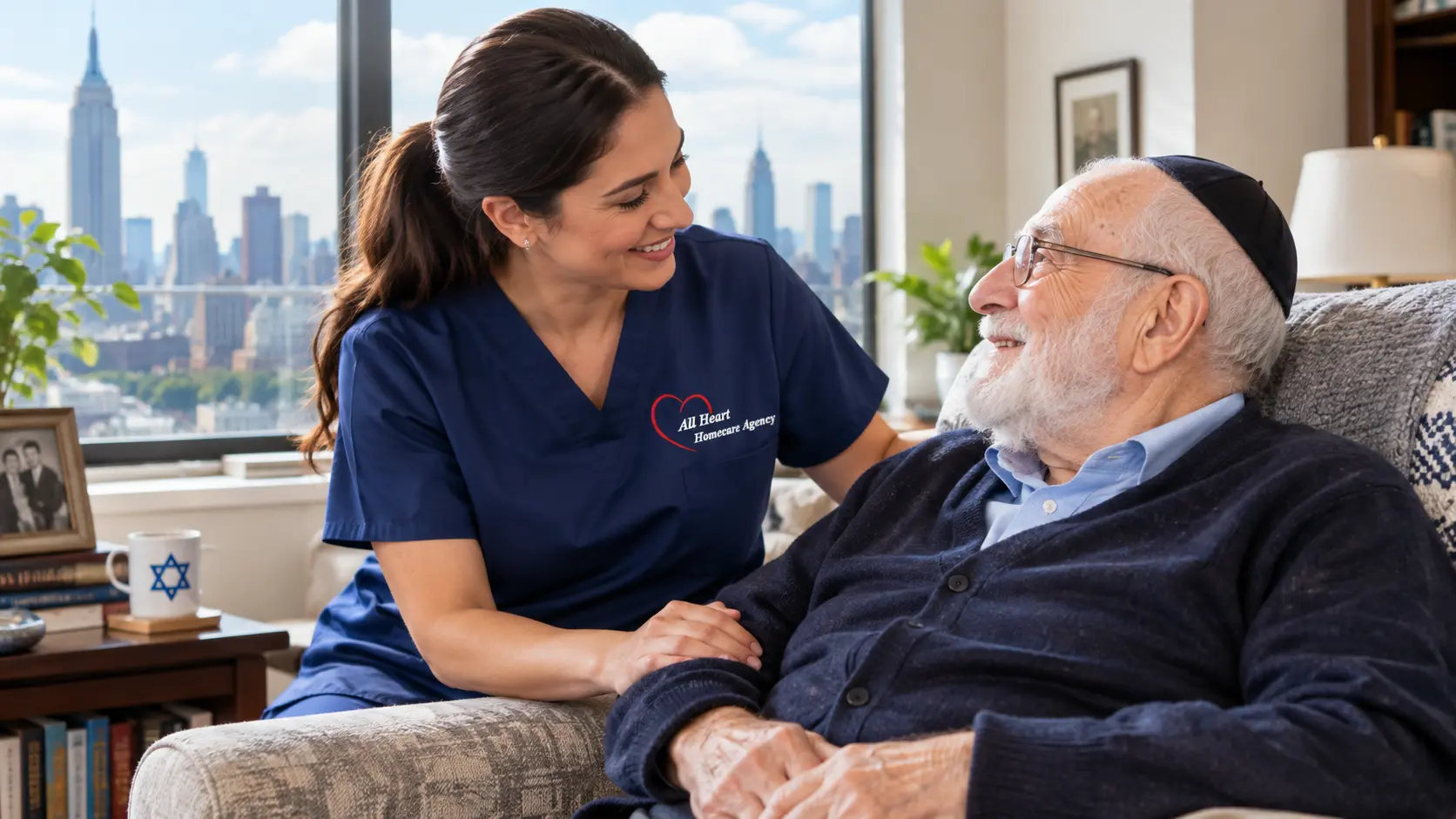
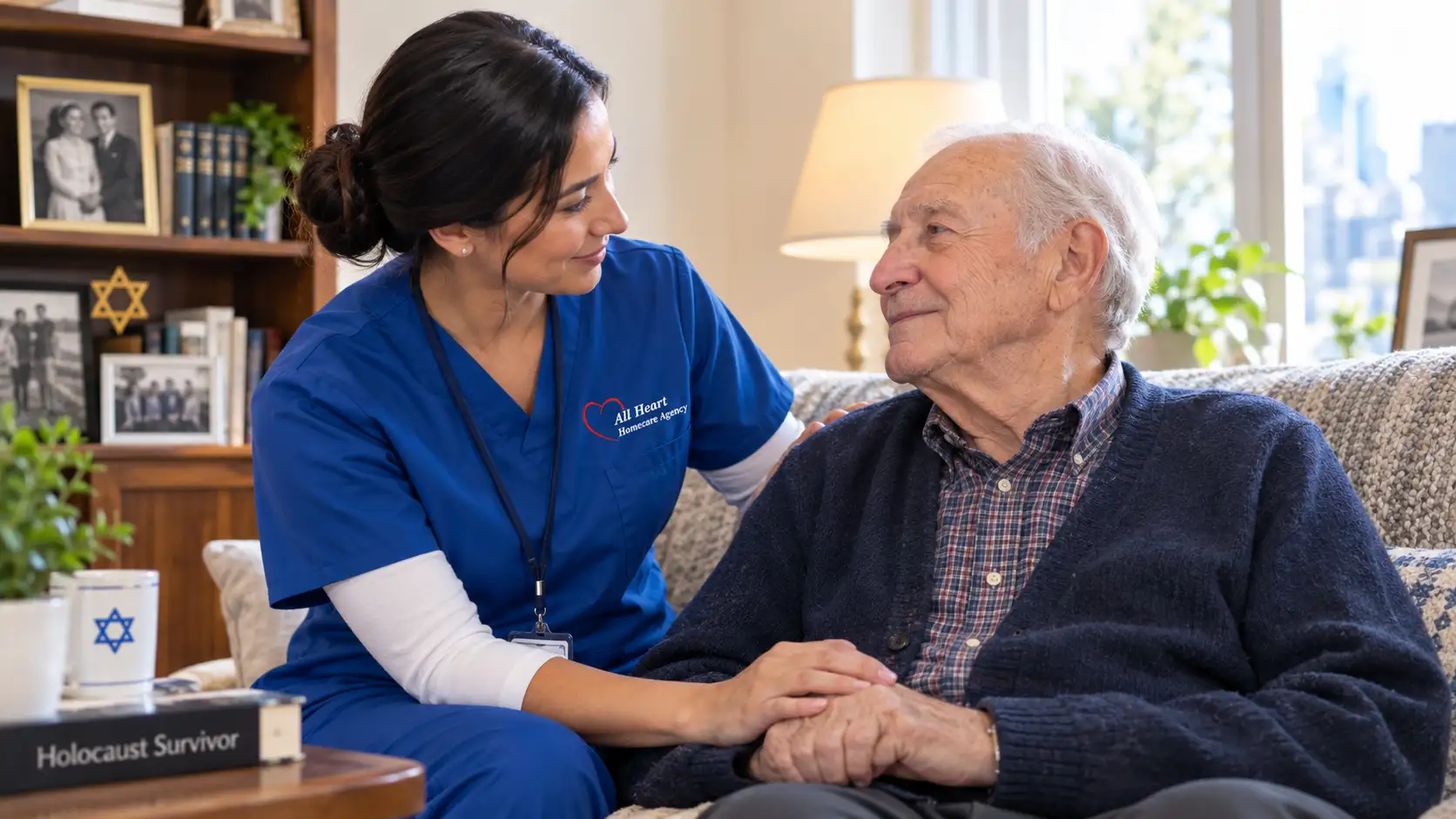
For many eligible Holocaust survivors, home care is free or very low cost. Much of it is funded by the Conference on Jewish Material Claims Against Germany, the Claims Conference, which provides grants to local agencies so survivors can receive care at little or no cost to their families. Where that funding doesn’t fully apply, care can be covered by Medicaid or paid privately by the hour.
Cost is the worry that stops many families from reaching out, so let’s clear it up. This guide explains exactly how Holocaust survivor home care is funded in 2026, what’s covered, whether you need Medicaid, and how families in Brooklyn and NYC access care, often at no cost.
Key Takeaways
- For many eligible survivors, home care is free or very low cost: funded by the Claims Conference, which grants tens of millions of dollars a year to New York agencies.
- Funding covers real services: personal care, case management, transportation, meals, socialization, and emergency assistance.
- You usually don’t need Medicaid. All Heart Homecare’s Brooklyn program serves survivors regardless of income, with no Medicaid requirement.
- If Claims Conference funding doesn’t fully apply, care can be funded through Medicaid or billed hourly through private pay, so families pay only for what they need.
- Eligibility is based on being a recognized survivor with care needs: a partner agency confirms the details and helps with authorization.
- Care can start fast: All Heart’s program typically begins within 24–48 hours.
Is Holocaust Survivor Home Care Really Free?
In most cases, for eligible survivors, yes. The Claims Conference funds home care for Holocaust survivors across dozens of countries, allocating tens of millions of dollars each year to New York social welfare agencies alone. That funding means many survivors receive approved in-home services at little or no cost. Learn what the program involves in our guide What Is the Holocaust Program?.
How Holocaust Survivor Home Care Is Funded
There are three main ways care gets paid for:
- Claims Conference funding: the primary source, granted to partner agencies to deliver care to eligible survivors;
- Medicaid: for survivors who qualify financially, it can fund ongoing home care (see our Medicaid home care page); and
- Private pay: flexible, hourly care when other funding doesn’t fully apply, so families pay only for the hours they need.
Learn more through the Claims Conference home care program.
What Does the Funding Cover?
Claims Conference-funded care is comprehensive. It typically includes:
- Personal care: bathing, dressing, meals, medication management, and light housekeeping;
- Case management and social work;
- Transportation, meal delivery, and socialization programs; and
- Emergency and financial assistance in some cases.
Do You Need Medicaid?
This is a common worry, and the answer is often no. Claims Conference funding is based on being a recognized survivor with care needs, not on Medicaid. All Heart Homecare’s Holocaust program in Brooklyn serves survivors regardless of income, with no Medicaid requirement; while also helping families who do qualify for Medicaid use it. For the eligibility details, see how to qualify for the Holocaust survivor program.
Worried about the cost of care for a survivor? For most eligible survivors, care is free or low-cost. All Heart Homecare’s Holocaust program in Brooklyn helps families navigate Claims Conference funding and start care fast — often at no cost. Talk to a care coordinator today.
What if a Survivor Isn’t Approved for Funding?
No survivor should go without care over paperwork. If your loved one doesn’t yet have Claims Conference funding, a specialized agency can refer the family to the appropriate Jewish family service agency, explore Medicaid and other benefits, or arrange private-pay home care so care can begin right away while funding is sorted out.
Holocaust Survivor Home Care Costs in NYC
For eligible survivors in New York City, funded care often means no out-of-pocket cost. When private pay is involved, home care is billed hourly, so you pay only for the care used. In Brooklyn and NYC,All Heart Homecare’s Holocaust survivor program — a licensed, insured agency with 14+ years of experience and multilingual caregivers — provides trauma-informed care, free transportation, culturally appropriate meals, and benefits advocacy, and can typically begin within 24 to 48 hours. See the benefits of in-home care for seniors.
The Bottom Line for New York Families
Cost should never keep a Holocaust survivor from the care they deserve and thanks to the Claims Conference, it usually doesn’t. For most eligible survivors, home care is free or very low cost, covering personal care, transportation, meals, and connection. And when funding needs a bridge, Medicaid and flexible private pay fill the gap. In Brooklyn and NYC, All Heart Homecare’s Holocaust survivor program helps families access this funding and begin care quickly.
| Let All Heart Homecare help — often at no cost to your family.Our Holocaust survivor program in Brooklyn guides NYC families through Claims Conference funding and starts trauma-informed, culturally sensitive care fast — frequently free for eligible survivors. Reach out for a caring, no-pressure conversation. Contact All Heart Homecare Today. |
Frequently Asked Questions About Holocaust Free Program
Is Holocaust survivor home care free?
For many eligible survivors, yes. Much of Holocaust survivor home care is funded by the Claims Conference, which allocates tens of millions of dollars each year to New York agencies to provide care at little or no cost. Some providers, including All Heart Homecare in Brooklyn, serve survivors regardless of income with no Medicaid requirement.
How is Holocaust survivor home care funded?
It is funded primarily by the Conference on Jewish Material Claims Against Germany (the Claims Conference), which grants funds to local partner agencies to deliver home care to eligible survivors. Care can also be funded through Medicaid, other benefits, or private pay when needed.
How much does Holocaust survivor home care cost?
For eligible survivors, the cost is often little or nothing because the Claims Conference covers approved in-home services. When funding doesn’t fully apply, home care is billed hourly through private pay or funded by Medicaid, so families pay only for what they need. An agency can confirm costs for your situation.
Do you need Medicaid to get Holocaust survivor home care?
Not necessarily. Claims Conference-funded care is based on being a recognized survivor with care needs, not on Medicaid. All Heart Homecare’s Brooklyn program serves survivors regardless of income, with no Medicaid requirement, and can help families who do qualify for Medicaid use it as well.
What does Claims Conference funding cover?
Claims Conference funding covers home care services for survivors, including personal care (bathing, dressing, meals, medication, housekeeping), case management, transportation, meal delivery, socialization programs, and emergency assistance, delivered through local partner agencies.
What if a survivor isn’t approved for Claims Conference funding?
If a survivor doesn’t have or hasn’t been approved for Claims Conference funding, a specialized agency can refer the family to the appropriate Jewish family service agency, explore Medicaid and other benefits, or arrange private-pay home care so care can still begin right away.
Is Holocaust survivor home care available in Brooklyn and NYC?
Yes. All Heart Homecare offers a dedicated Holocaust survivor program in Brooklyn, in partnership with JCCGCI, providing trauma-informed care, transportation, culturally appropriate meals, socialization, and benefits advocacy, often at no cost to eligible survivors, with care that can begin within 24 to 48 hours.