
Osteoporosis is often called a “silent disease”; it quietly weakens bones for years with no symptoms, until a fall or even a minor bump causes a fracture. For an older adult, a broken hip or spine can mean surgery, a loss of independence, and a long, difficult recovery. That’s why proactive care matters so much.
This guide to home care for osteoporosis explains how in-home support protects fragile bones, prevents the falls that cause fractures, and keeps a loved one strong, active, and safe at home, written for families caring for an aging parent or grandparent.
Key Takeaways
- Home care for osteoporosis centers on one goal: protecting fragile bones from fractures while keeping a loved one active and independent.
- Fall prevention is fracture prevention. With weakened bones, a simple fall can cause a life-changing hip or spine fracture.
- Nutrition builds bone. Adequate calcium, vitamin D, and protein, with limits on salt, caffeine, and alcohol, support bone strength.
- Safe exercise matters. Weight-bearing and balance exercises maintain bone density; high-impact and spine-twisting moves are avoided.
- Posture protects the spine: good body mechanics help prevent painful compression fractures.
- If a fracture happens, home care supports a safe recovery and helps prevent the next one.
Understanding Osteoporosis in Seniors
Osteoporosis causes bones to become porous, brittle, and prone to breaking. It’s especially common in older adults, particularly postmenopausal women, and often goes undiagnosed until a fracture occurs.
The most serious breaks, of the hip and spine, can dramatically affect mobility, independence, and overall health.
Because the disease itself is painless until something breaks, the goal of care is preventing that first (or next) fracture.
Learn more from the NIH’s NIAMS on osteoporosis and the Bone Health & Osteoporosis Foundation.
How Home Care Supports Osteoporosis Care
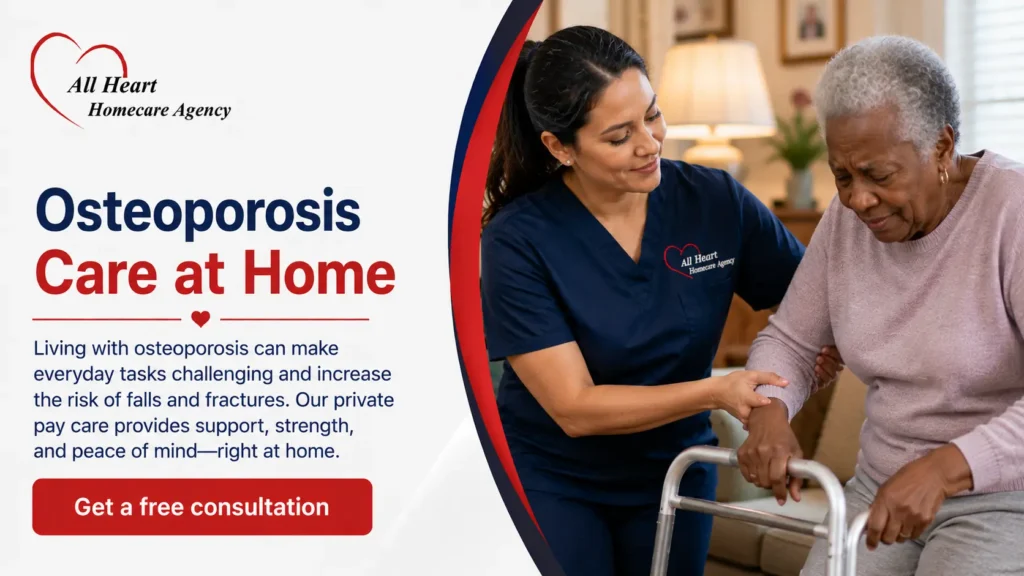
A caregiver turns bone-protection into a consistent daily routine:
- Prevents falls that lead to fractures;
- Prepares calcium- and vitamin-D-rich meals;
- Encourages safe, bone-strengthening exercise;
- Manages osteoporosis medications and supplements;
- Supports good posture and safe body mechanics; and
- Helps a loved one recover safely after any fracture.
See our personal home care service and the benefits of in-home care for seniors.
Fall and Fracture Prevention: The Top Priority
With osteoporosis, preventing falls is preventing fractures. A fall that would only bruise a healthy person can break a fragile hip or wrist. Caregivers reduce this risk by removing home hazards, providing steady support during walking and transfers, ensuring safe footwear, and supervising high-risk moments like nighttime bathroom trips.
For a deeper dive, see our guides to home care for fall-risk seniors and home care for seniors with limited mobility.
Nutrition for Bone Health
What a person eats directly affects bone strength. Caregivers plan and prepare bone-healthy meals rich in:
- Calcium: dairy, leafy greens, and fortified foods;
- Vitamin D: fatty fish, fortified foods, sunlight, and supplements as advised;
- Protein: to support bone and muscle, while
- Limiting excess salt, caffeine, and alcohol can work against bone health.
See our tips on making good nutrition easy for seniors.
Safe Weight-Bearing Exercise
Exercise is one of the best ways to maintain bone density and prevent falls, but with osteoporosis, the type of exercise matters. Safe, doctor-approved weight-bearing activities (walking, gentle strength training) and balance work help; high-impact movements and forward-bending or twisting of the spine should generally be avoided, as they can cause fractures.
A caregiver supervises safe exercise and reinforces any physical therapy plan. See effective exercises for seniors and what to avoid.
Medication Management
Osteoporosis is often treated with medications such as bisphosphonates, along with calcium and vitamin D supplements. Some of these have specific instructions; for example, certain bone medications must be taken on an empty stomach while sitting or standing upright. Caregivers ensure medications and supplements are taken correctly and on schedule, and watch for side effects to report to the doctor.
Posture, Spine Care, and Preventing Compression Fractures
The spine is especially vulnerable in osteoporosis: weakened vertebrae can collapse into painful compression fractures, sometimes from something as simple as bending or lifting incorrectly.
Caregivers support good posture, safe body mechanics, and proper lifting technique (bending at the knees, not the waist), and take over tasks that involve bending, twisting, or heavy lifting.
Recovery After an Osteoporotic Fracture
If a fracture does occur, most seriously a hip fracture, recovery is a critical, high-risk time. Caregivers support safe mobility, help with daily tasks during healing, prevent a second fall, and assist with rehabilitation.
See our post-surgery home care guide and home care after hospital discharge.
Home Safety Modifications
A safer home is the foundation of fracture prevention: grab bars in the bathroom, removing loose rugs and clutter, better lighting (especially night lights), non-slip mats, stair railings, and keeping everyday items within easy reach to avoid risky reaching or climbing.
Emotional Support and Staying Active
Fear of fracturing can lead seniors to avoid activity, which weakens bones and muscles further and increases fall risk. A caregiver’s steady presence restores confidence, encouraging safe activity and social engagement so a loved one stays strong and connected rather than fearful and sedentary.
When To Consider Professional Home Care
It may be time for in-home support when a senior:
- Has been diagnosed with osteoporosis and has a high fracture risk;
- Has already had a fracture or a fall;
- Is unsteady or afraid of falling;
- Is recovering from a hip or spine fracture; or
- Needs help managing medications, nutrition, and safe activity.
How a Caregiver Supports Osteoporosis Care
A quick snapshot of the support:
| Osteoporosis challenge | How home care helps |
| High fracture risk from falls | Fall prevention & steady support |
| Weak bones | Calcium/vitamin-D-rich meals |
| Need to stay active safely | Supervised weight-bearing exercise |
| Spine vulnerability | Posture & safe-lifting support |
| Complex bone medications | Correct, on-time medication helps |
| Fracture recovery | Safe mobility & rehab support |
How To Pay for Osteoporosis Home Care
Medicare covers skilled home health, such as physical therapy, when your parent is homebound, and a doctor orders it, along with osteoporosis screening and some treatments. The ongoing daily, non-medical help is usually funded through Medicaid for those who qualify, private pay, or long-term care insurance.
Compare Medicare vs. Medicaid for Home Care, and see the skilled benefit in Does Medicare Pay for Home Health Care for Seniors?.
How To Arrange Osteoporosis Care at Home
- Know the fracture risk. Work with the doctor on a bone-density test, treatment plan, and any activity restrictions.
- Fall-proof the home. Remove hazards and add grab bars, lighting, and non-slip surfaces.
- Build bone health daily. Support nutrition, supplements, medications, and safe exercise.
- Match the level of care. Choose hourly, overnight, or 24-hour care, especially after a fracture.
- Get a professional care assessment. A local agency can build an osteoporosis care plan and match it to the right funding. Start with our home health care overview.
The Bottom Line for New York Families
Osteoporosis may be silent, but its consequences don’t have to be inevitable. With home care focused on preventing falls, building bone health through nutrition and safe exercise, protecting the spine, and managing medications, families can dramatically lower the risk of a devastating fracture.
And if a fracture does happen, the right support at home makes recovery safer, keeping a loved one strong, mobile, and independent for as long as possible.
Our caregivers provide osteoporosis-focused care across NYC: Brooklyn, Manhattan, the Bronx, Queens, and Staten Island, with fall prevention, bone-healthy nutrition, safe exercise, and fracture-recovery support. Reach out for a free, no-pressure conversation.
Contact All Heart Homecare Today →
Frequently Asked Questions About Home Care for Osteoporosis
What is home care for osteoporosis?
Home care for osteoporosis is in-home support focused on protecting a senior’s fragile bones and keeping them active and independent. It includes fall and fracture prevention, bone-healthy nutrition, safe weight-bearing exercise, medication management, home safety, and help recovering if a fracture occurs.
How does home care help with osteoporosis?
Home care helps by preventing the falls that cause fractures, providing calcium- and vitamin-D-rich meals, encouraging safe weight-bearing and balance exercise, managing bone medications, supporting good posture, and assisting with daily tasks safely. If a fracture happens, caregivers support a safe recovery at home.
How do you prevent fractures with osteoporosis at home?
Prevent fractures by removing fall hazards, adding grab bars and good lighting, using safe transfer techniques, wearing supportive non-slip shoes, avoiding heavy lifting and high-impact movements, and staying strong through safe exercise. A caregiver provides steady support during risky moments and keeps the home safe.
What foods and nutrients help with osteoporosis?
Bone health depends on adequate calcium (dairy, leafy greens, fortified foods), vitamin D (sunlight, fatty fish, supplements), and protein, along with limiting excess salt, caffeine, and alcohol. A caregiver can plan and prepare bone-healthy meals and support any supplements the doctor recommends.
Can seniors with osteoporosis exercise safely at home?
Yes. Safe weight-bearing and balance exercises, such as walking, gentle strength training, and balance work, help maintain bone density and prevent falls. High-impact movements and forward-bending or twisting of the spine should generally be avoided. A caregiver can supervise safe, doctor-approved exercise.
Does Medicare or Medicaid cover home care for osteoporosis?
Medicare covers skilled home health, such as physical therapy, when a person is homebound and a doctor orders it, and it covers osteoporosis screening and some treatments. Ongoing non-medical daily help is typically paid through Medicaid for those who qualify, private pay, or long-term care insurance.
When should a senior with osteoporosis get in-home care?
Consider in-home care when a senior has a high fracture risk, has already had a fracture, is unsteady or has fallen, struggles with daily tasks safely, or is recovering from a hip or spine fracture. Early support focuses on preventing the first or next fracture and keeping the person independent.