
Introduction: What Is the Difference Between Dementia and Alzheimer’s?
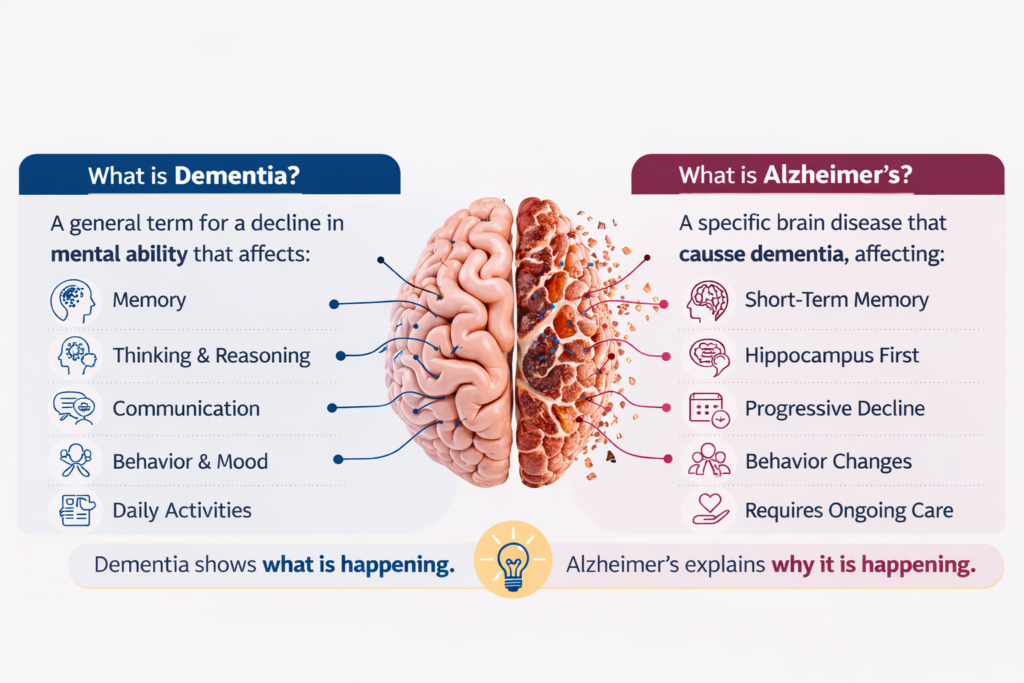
Dementia is a general term for a decline in mental ability severe enough to interfere with daily life, while Alzheimer’s disease is a specific brain disorder and the most common cause of dementia. Alzheimer’s accounts for about 60 to 80 percent of dementia cases and gradually affects memory, thinking, behavior, and the ability to perform everyday activities.
Dementia symptoms often include memory loss, confusion, trouble communicating, poor judgment, and personality or behavior changes. Alzheimer’s usually begins with short-term memory problems, as it first affects the hippocampus. Other dementias may start with language, behavioral, or decision-making issues rather than memory loss.
Understanding the difference between dementia and Alzheimer’s is important for families noticing cognitive changes in a loved one. Identifying the problem as soon as possible lets healthcare providers evaluate it promptly, plan better care, improve safety, and get help before symptoms interfere with daily life. Dementia is a term that refers to a group of symptoms. Alzheimer’s is a specific disease that causes those symptoms.
What Is Dementia?
Understanding Dementia as a Medical Condition
Dementia is not a single illness. It is a syndrome, meaning a collection of symptoms caused by damage to brain cells. When these cells are injured, communication between brain regions is impaired, affecting memory, reasoning, language, and behavior. People with dementia often experience gradual changes rather than sudden decline. Early signs may be subtle, but over time, daily functioning becomes increasingly difficult.
Several conditions can lead to dementia, including Alzheimer’s disease, vascular dementia caused by reduced blood flow to the brain, Lewy body dementia, and frontotemporal dementia. Each type affects the brain differently and may produce distinct symptoms.
According to the World Health Organization, more than 55 million people worldwide live with dementia, making it a major public health concern. Dementia is also one of the leading causes of disability and dependency among older adults.
Do you know?
Dementia is not a normal part of aging, even though age is the strongest risk factor.
What Is Alzheimer’s Disease?
The Most Common Cause of Dementia
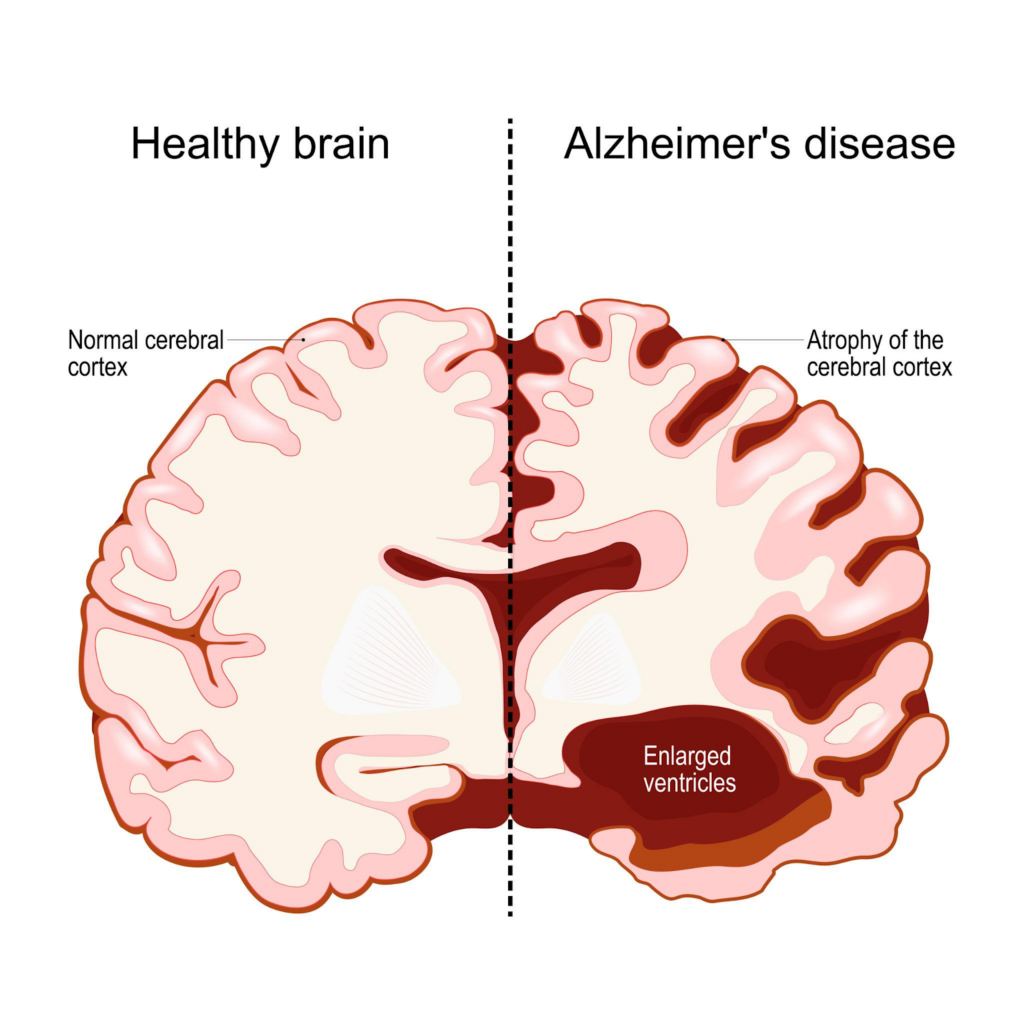
Alzheimer’s disease accounts for about 60 to 80 percent of dementia cases. It develops when abnormal protein deposits accumulate in the brain, forming plaques and tangles that disrupt communication between nerve cells and eventually lead to cell death. The Alzheimer’s Association explains that Alzheimer’s is the most common cause of dementia worldwide.
Unlike some other forms of dementia, Alzheimer’s tends to progress in a predictable way. Symptoms start mildly and worsen over time, eventually affecting nearly every aspect of daily life. In the early stage, a person may forget recent conversations, misplace items, or struggle to find words. As the disease advances, confusion increases, behavior may change, and supervision becomes necessary. In late stages, individuals typically require extensive assistance with basic activities such as eating, mobility, and personal care.
Structured approaches can help families manage daily challenges. The following guide provides practical strategies for Alzheimer’s care:
https://allheartcare.com/effective-alzheimers-care-strategies-for-managing-daily-challenges/
Dementia vs Alzheimer’s: Key Differences
Confusion between dementia and Alzheimer’s often occurs due to the high prevalence of Alzheimer’s disease. However, distinguishing between the two is important for accurate diagnosis and effective care planning. Dementia refers to symptoms such as memory loss, impaired reasoning, and behavioral changes. Alzheimer’s is one specific disease that produces those symptoms. Other conditions can also cause dementia, including strokes, Parkinson’s disease, or brain injuries.
In summary, dementia describes a group of symptoms affecting memory, reasoning, and behavior, while Alzheimer’s is a specific disease that causes these symptoms.
Early Symptoms of Dementia and Alzheimer’s
Warning Signs Families Should Watch For
Early symptoms are frequently overlooked or mistaken for normal aging. Persistent or worsening changes, however, warrant further evaluation. Early signs include memory problems that disrupt daily life, confusion about time or place, difficulty following conversations, problems completing familiar tasks, and mood or personality changes such as anxiety or withdrawal. According to theAlzheimer’s Association, these changes represent more than ordinary forgetfulness and may signal underlying cognitive decline.
Poor judgment may appear early, such as neglecting hygiene, making unsafe choices, or poorly managing daily tasks. The National Institute on Aging notes impaired decision-making as a common early symptom.
Do you know?
Repeating the same question multiple times within minutes is one of the earliest recognizable signs because short-term memory formation is affected first.
The following resources provide practical care tips for individuals supporting someone at home:
https://allheartcare.com/daily-care-tips-for-alzheimers-patients/
Awareness of risk factors can facilitate early planning:
https://allheartcare.com/alzheimers-disease-risk-factors-and-prevention/
For medically reviewed information, consult the National Institute on Aging overview:
https://www.nia.nih.gov/health/alzheimers
When Should Families Seek Help for Dementia?
Remaining in familiar surroundings can significantly reduce confusion and anxiety for people with memory loss. Home care focuses on safety, routine, and emotional support while preserving independence whenever possible.
Services typically include assistance with bathing, dressing, meal preparation, medication reminders, and mobility support. Caregivers also provide supervision to prevent accidents, companionship to reduce isolation, and cognitive engagement to stimulate mental activity. For family members, home care offers respite from constant supervision, allowing them to focus on emotional connection rather than daily caregiving tasks.
Guidance for managing care at home can be found here:
https://allheartcare.com/caring-for-a-loved-one-with-alzheimers-at-home/
How Home Care Supports People with Dementia or Alzheimer’s
The Benefits of Dementia Care at Home
Remaining in familiar surroundings can reduce confusion and anxiety for people with memory loss. Home care focuses on safety, routine, and emotional support while maintaining as much independence as possible.
Care services typically include assistance with daily activities such as bathing, dressing, and meal preparation, as well as medication reminders and supervision to prevent accidents. Caregivers also provide companionship, cognitive engagement, and mobility support.
Families may be able to offset expenses through Medicaid programs, long-term care insurance, veterans’ benefits, or private pay arrangements. According to Genworth’s Cost of Care Survey, long-term care expenses in the United States continue to rise each year.
Helpful guidance for managing care at home can be found here:
https://allheartcare.com/caring-for-a-loved-one-with-alzheimers-at-home/
Key Fact: Familiar surroundings often reduce agitation more effectively than unfamiliar institutional settings.
How Much Does Dementia Care Cost in New York?
Understanding the Cost of Alzheimer’s and Dementia Care
The cost of dementia home care varies widely depending on the number of hours of assistance needed and the level of supervision required. Individuals in early stages may need only part-time help, while those in advanced stages often require continuous monitoring.
In New York City, hourly home care rates are typically among the highest in the country due to the high cost of living and the cost of caregiver wages. Part-time care may cost several thousand dollars per month, while full-time or 24-hour supervision can be significantly higher.
Several factors influence cost:
- Number of care hours per day
- Overnight supervision needs
- Mobility assistance
- Behavioral management requirements
- Specialized dementia training
Families may be able to offset expenses through Medicaid programs, long-term care insurance, veterans’ benefits, or private-pay arrangements.
Do you know?
Many families underestimate long-term care costs and begin planning only after a crisis.
Why Early Care Planning Matters
Planning ahead allows families to make thoughtful decisions rather than reacting under stress. Early support can improve safety, reduce caregiver burnout, and help individuals maintain independence longer.
Structured routines, social engagement, and professional guidance can also improve quality of life. Even small interventions, such as medication management or fall prevention strategies, can make a significant difference.
Tip: Create a written care plan early, including emergency contacts, medication lists, and daily routines.
Choosing the Right Dementia Care Provider
Selecting a qualified provider is essential for both safety and peace of mind. Families should look for caregivers who are specifically trained in dementia care and understand the communication challenges, behavioral changes, and emotional needs associated with memory loss. Specialized training helps caregivers respond calmly to confusion, agitation, or wandering behaviors while maintaining dignity and respect. Consistency is particularly important. Seeing the same caregivers regularly can reduce anxiety, improve cooperation, and help individuals feel secure in their own homes. Familiar faces allow caregivers to better recognize subtle changes in behavior or health, which can be critical for early intervention.
Strong communication between the provider and family is equally important. Care plans should be flexible and updated as needs change, especially as dementia progresses. Families should feel confident that caregivers will share observations, concerns, and recommendations in a timely and compassionate manner. Providers that prioritize personalized care, caregiver continuity, and family collaboration often achieve better outcomes. Additional information about professional caregiving services and specialized dementia home care is available here:
https://allheartcare.com/alzheimers-and-dementia-care-service/
Dementia and Alzheimer’s Care in New York City
New York City’s aging population has increased demand for specialized in-home memory care. Urban living presents unique challenges, including crowded environments, fall risks, and limited space for mobility aids.Families often seek services tailored to dementia home care in NYC or Alzheimer’s home care in New York to ensure caregivers understand local resources and logistical challenges.
How All Heart Home Care Supports Families Facing Dementia
All Heart Home Care provides personalized support designed specifically for individuals with memory loss and their families. Care plans are tailored to each person’s medical needs, personality, and daily routines. Services include trained caregivers experienced in memory care, flexible scheduling from part-time visits to 24-hour supervision, assistance with daily activities, and compassionate guidance for families navigating difficult decisions.
Learn more about specialized services here:
https://allheartcare.com/alzheimers-and-dementia-care-service/
Conclusion: Supporting Loved Ones Through Memory Loss
Dementia and Alzheimer’s disease bring emotional, physical, and practical challenges, but compassionate support can make a meaningful difference. Understanding symptoms early, planning ahead, and accessing professional care can improve safety, reduce stress, and preserve dignity. Families are not required to navigate this process alone. With appropriate resources and guidance, it is possible to provide compassionate care while maintaining connection, comfort, and quality of life.
Schedule a Free Home Care Consultation
Speak With a Care Advisor Today
FAQ
What is the difference between dementia and Alzheimer’s?
Dementia is a general term for cognitive decline, while Alzheimer’s is a specific disease that causes dementia.
What are the early signs of dementia?
Memory loss affecting daily life, confusion, difficulty completing tasks, and personality changes.
When should someone with dementia get home care?
When safety risks increase, or daily activities become difficult to manage on your own.
How much does dementia care cost?
Costs depend on hours and level of care, ranging from part-time assistance to full 24-hour supervision.
Can someone with Alzheimer’s stay at home safely?
Yes, with appropriate supervision, home modifications, and professional support.