What Is the Difference Between Hospice and Home Health Care?
The difference between hospice and home health care lies in the purpose of care. Home health care focuses on medical treatment, recovery, and rehabilitation for patients who are still pursuing healing or functional improvement, while hospice care is for individuals with a terminal illness (typically a life expectancy of six months or less) whose care has shifted from cure to comfort, symptom management, and quality of life.
For families, this distinction is not only medical but also deeply emotional. These decisions often arise during times of uncertainty and stress, when loved ones are already managing serious illness. Many families feel overwhelmed by unfamiliar terms, conflicting information, and the urgency to make the best choice quickly.
Hospice and home health care are often confused because both are provided at home, involve healthcare professionals, and are usually covered by Medicaid/Medicare. However, they serve different purposes and are appropriate at different stages of illness.
When families search for hospice vs home health care, they seek more than definitions. They want reassurance about their decisions. Understanding these differences helps families choose care that meets both medical and emotional needs.
This guide will help you clearly understand:
How families can navigate this transition with clarity, confidence, and compassion
The actual difference between hospice vs home health care
When each type of care is medically appropriate
Whether hospice and home health care can overlap
What Is Home Health Care?
Home health care delivers medical and therapeutic services at home, typically ordered by a physician. These services treat illness, support recovery, or manage ongoing conditions without requiring hospitalization or long-term facility care.
According to Medicaid, home health care is intended for individuals who are homebound and require intermittent skilled care, not round-the-clock assistance (although there are exceptions).
Home health care enables patients to receive professional medical care in their homes.
Families often choose home health care because it balances medical treatment with independence. Patients receive professional home monitoring, making it an effective option for seniors who need support but are not ready for hospice or facility care. Home health care is also preferred for long-term care planning.
What Home Health Care Typically Includes
Home health care services are tailored to medical needs and may include:
- Skilled nursing care (wound care, injections, monitoring chronic conditions)
- Physical therapy to restore mobility and strength
- Occupational therapy to support daily living activities
- Speech therapy for communication or swallowing challenges
- Medication management and education
- Post-hospital or post-surgical recovery support
- Chronic disease monitoring (heart disease, diabetes, COPD)
- Daily Living Support (meal preparation, light cleaning, shopping, social support, etc.,)
These services are typically time-limited and goal-oriented, focusing on improvement or stabilization.
Who Home Health Care Is Best For
Home health care is most appropriate for:
- Individuals recovering from surgery, injury, or illness
- Seniors managing chronic, treatable conditions.
- Patients who are still benefiting from curative or rehabilitative treatment.
- Families seeking medical care at home instead of institutional settings
For families seeking in-home care, home health care can serve as a vital bridge between hospital care and independent living.
What Is Hospice Care?
Hospice care is specialized medical support for individuals with a terminal illness, typically when a physician certifies a life expectancy of six months or less if the disease follows its expected course.
Hospice care is a compassionate end-of-life option for individuals with terminal illness. Families often seek hospice at home to provide comfort, dignity, and emotional support without unnecessary medical interventions. Hospice focuses on symptom relief rather than cure, helping patients remain comfortable and surrounded by loved ones.
Unlike home health care, hospice does not focus on curing illness. Instead, hospice prioritizes:
- Comfort
- Symptom relief
- Emotional and spiritual well-being
- Support for both patients and families
Source: https://www.medicare.gov/coverage/hospice-care
Hospice is a compassionate end-of-life care option that prioritizes dignity, peace, and quality of life.
What Hospice Care Typically Includes
Hospice care provides comprehensive, interdisciplinary support, including:
- Pain and symptom management
- Emotional, psychological, and spiritual counseling
- Coordination among physicians, nurses, and specialists
- Education and support for family caregivers
- Bereavement counseling for loved ones after death
Hospice care is often provided at home, allowing patients to remain in familiar surroundings during their final months.
Who Hospice Care Is Best For
For many families comparing hospice care and home health care, quality of life is the deciding factor. Hospice becomes appropriate when aggressive treatment no longer improves comfort or outcomes, and the primary goal shifts to peace and dignity. This transition allows families to focus on meaningful time together rather than ongoing medical procedures.
Hospice care is appropriate for:
- Individuals who are no longer pursuing curative treatment.
- Patients with advanced or terminal illness
- Families who prioritize comfort over aggressive interventions.
- Situations where treatment no longer improves quality of life
Choosing hospice is not about giving up; it is about shifting the focus of care.
Hospice vs Home Health Care: Key Differences Explained Clearly
Understanding the difference between hospice and home health care helps families avoid delays in appropriate care. Home health care supports treatment and recovery, while hospice care at home focuses on comfort and emotional well-being during advanced illness. Recognizing these differences early allows families to align care decisions with changing medical needs.
Primary Goal of Care
- Home health care: Treatment, recovery, and stabilization
- Hospice care: Comfort, dignity, and quality of life
Timing and Eligibility
- Home health care can begin at many stages of illness.
- Hospice requires physician certification of terminal illness.
Type of Services Provided
- Home health care delivers skilled medical treatment.
- Hospice provides comfort-focused, symptom-based care.
Duration of Care
- Home health care may be short-term or ongoing.
- Hospice continues as long as the eligibility criteria are met.
Family Involvement
Both involve families, but hospice provides structured emotional and bereavement support, recognizing the family as part of the care team.
Can Hospice and Home Health Care Be Provided at the Same Time?
In most cases, no.
Medicaid/Medicare typically does not allow hospice and home health care for the same diagnosis at the same time because their goals differ fundamentally.
Source: https://www.medicare.gov/coverage/hospice-care
However, some limited overlaps may occur:
- A hospice patient may receive non-related medical services.
- Supportive non-medical home care (personal care, companionship) may continue.
This distinction can be confusing for families managing long-term care at home.
What Is Hospice Home Health Care? (Clarifying a Commonly Confused Term)
“Hospice home health care” is not an official medical category.
This phrase exists because:
- Hospice care is often delivered at home.
- Families associate all in-home services with “home health care.”
To clarify:
- Hospice care at home = hospice services delivered in a home setting.
- Home health care services = skilled medical treatment aimed at recovery
Understanding this difference helps families make informed decisions during critical times.
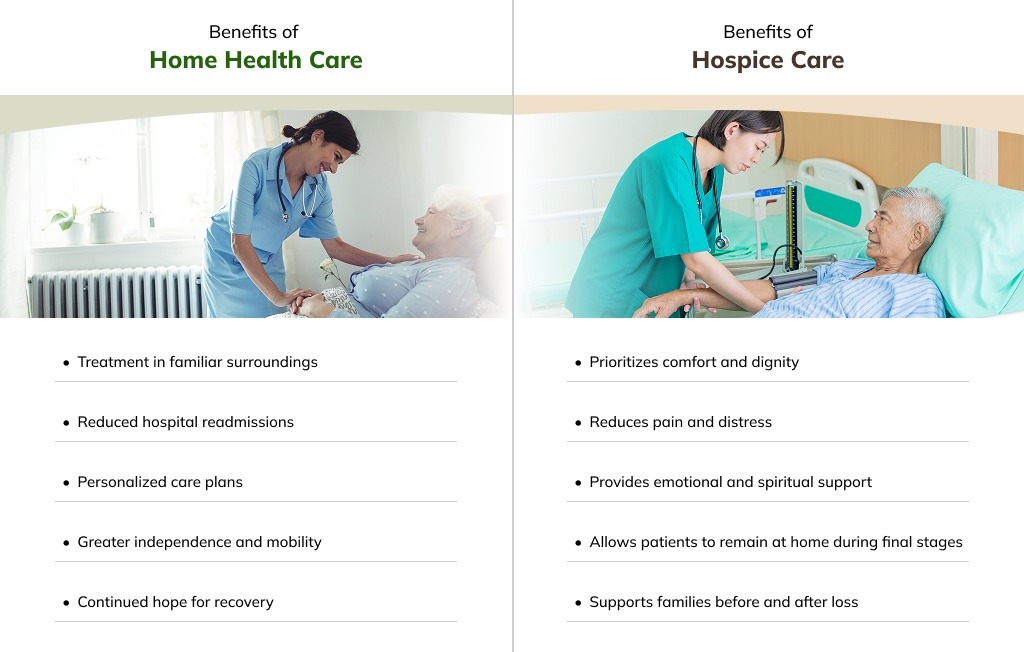
Benefits of Home Health Care
For seniors and families, home health care offers medical oversight while preserving independence. This approach supports recovery and daily routines, making it a valuable solution for those seeking in-home care with skilled nursing and therapy services.
Home health care offers many advantages:
- Treatment in familiar surroundings
- Reduced hospital readmissions
- Personalized care plans
- Greater independence and mobility
- Continued hope for recovery
For seniors, this option provides medical oversight without requiring institutional care.
Benefits of Hospice Care
Families exploring end-of-life care often find that hospice provides relief for both patients and caregivers. Hospice teams manage symptoms, reduce emotional stress, and guide families through difficult moments with compassion and expertise. Choosing hospice care at home allows loved ones to remain in a familiar, comforting environment.
Hospice care provides profound benefits for patients and families:
Studies show that hospice care improves symptom control and increases satisfaction for both patients and their families.
Source: https://www.medicare.gov/coverage/hospice-care
How to Know Which Type of Care Your Loved One Needs
When comparing palliative care vs hospice or deciding between hospice and home health care, families benefit from understanding care goals clearly. Asking whether treatment is still improving outcomes or whether comfort has become the priority helps determine whether home health care services or hospice care is the most appropriate next step.
Ask these guiding questions:
- Is treatment still helping?
- Has curative care stopped?
- What does the physician recommend?
- What are your loved one’s wishes?
- Are symptoms becoming more complicated to manage?
- Is comfort now the priority?
These questions help families understand palliative care vs hospice and when home health care may no longer be appropriate.
Common Signs It May Be Time to Consider Hospice Instead of Home Health Care
- Frequent hospitalizations
- Worsening symptoms despite treatment
- Increased pain or fatigue
- Declining ability to perform daily activities
- Physician recommendation for hospice
Early discussions about hospice often bring relief rather than a sense of loss.
How Families Can Navigate This Transition With Confidence
At All Heart Care, we encourage families to:
- Have honest conversations with physicians.
- Ask questions early, not late.
- Understand that hospice is not abandonment.
- Focus on quality of life, not fear.
Families who plan ahead often experience greater peace and a sense of control.
How All Heart Care Supports Families During These Decisions
At AllHeartCare.com, our role is not to push decisions but to support families throughout the process.
We help by:
- Educating families on care options
- Coordinating with physicians and hospice providers
- Offering emotional reassurance and guidance
- Supporting comfort, safety, and dignity at home
Families do not have to navigate this process alone.
Conclusion: Choosing Care That Honors Your Loved One’s Needs and Wishes
Choosing between hospice vs home health care is not about giving up—it’s about choosing care that matches reality, values, and compassion.
The right care:
- Respects medical needs
- Honors personal wishes
- Preserves dignity
Support is available, and families deserve clarity rather than confusion.
- Speak With an All Heart Care Advisor About Your Options
- Schedule a Compassionate Care Consultation
- Let All Heart Care Help You Understand the Right Next Step
Frequently Asked Questions
What is the difference between hospice and home health care?
Hospice focuses on comfort when curative treatment has stopped, while home health care focuses on treatment and recovery.
Are hospice care and home health care covered under Medicare/Medicaid?
Yes, both are covered under Medicare/Medicaid with different eligibility rules.
Source: https://www.medicare.gov
Can you have hospice and home health care at the same time?
Generally, no, though limited supportive services may overlap.
What is hospice home health care?
It’s an informal term for hospice care provided at home.
When should hospice care begin?
When a physician determines life expectancy is six months or less, comfort becomes the primary goal.
Does choosing hospice mean giving up care?
No. Hospice provides active, compassionate care focused on comfort and dignity.