
Introduction: Caring for a Bed-Bound Loved One Is More Than a Physical Task
Caring for a bed-bound person at home safely involves much more than basic assistance. It includes managing daily hygiene, preventing pressure injuries, supporting proper nutrition and hydration, monitoring health changes, and providing emotional reassurance, often for many hours each day. Families searching for care for bed-bound patients at home are often facing this responsibility suddenly, after a serious illness, injury, or hospital discharge, and may feel unprepared for how demanding it can become.
Many New York families begin by managing bed-bound care themselves. What often appears temporary can become a full-time responsibility, impacting physical health, emotional well-being, and family stability.
In New York State, over 4.1 million residents provide unpaid caregiving, many supporting loved ones with limited mobility or chronic conditions (source: New York State Department of Health, https://health.ny.gov). This responsibility places significant strain on families.
This guide offers practical advice on daily care, addresses the emotional realities families encounter, outlines common health and safety risks, and explains when home health care is essential. It also details how New York City families can access reliable support to keep loved ones safe, comfortable, and dignified at home.
What Does It Mean to Be Bed-Bound?
A bed-bound or bedridden person cannot get out of bed safely without assistance due to physical, neurological, or medical conditions. They rely on others for personal hygiene, repositioning, meals, medication reminders, and basic health monitoring.
Several factors can lead to someone becoming bed-bound. Older adults may experience muscle weakness, balance loss, or falls. Conditions such as stroke, Parkinson’s disease, or other neurological disorders can severely limit mobility. Dementia and Alzheimer’s disease may impair judgment and coordination, making independent movement unsafe. Chronic illness, serious injury, prolonged hospital stays, or end-of-life care can also require long-term bed rest.
According to the National Institute on Aging, limited mobility significantly increases the need for continuous assistance and monitoring at home, particularly for older adults.
Providing home care for bedridden patients is medically and emotionally complex. Families must balance caregiving tasks with ongoing stress, uncertainty, and long-term decisions. Recognizing these challenges early helps families plan safer, more sustainable care solutions.
The Daily Challenges of Caring for a Bed-Bound Person at Home
Physical Care Demands
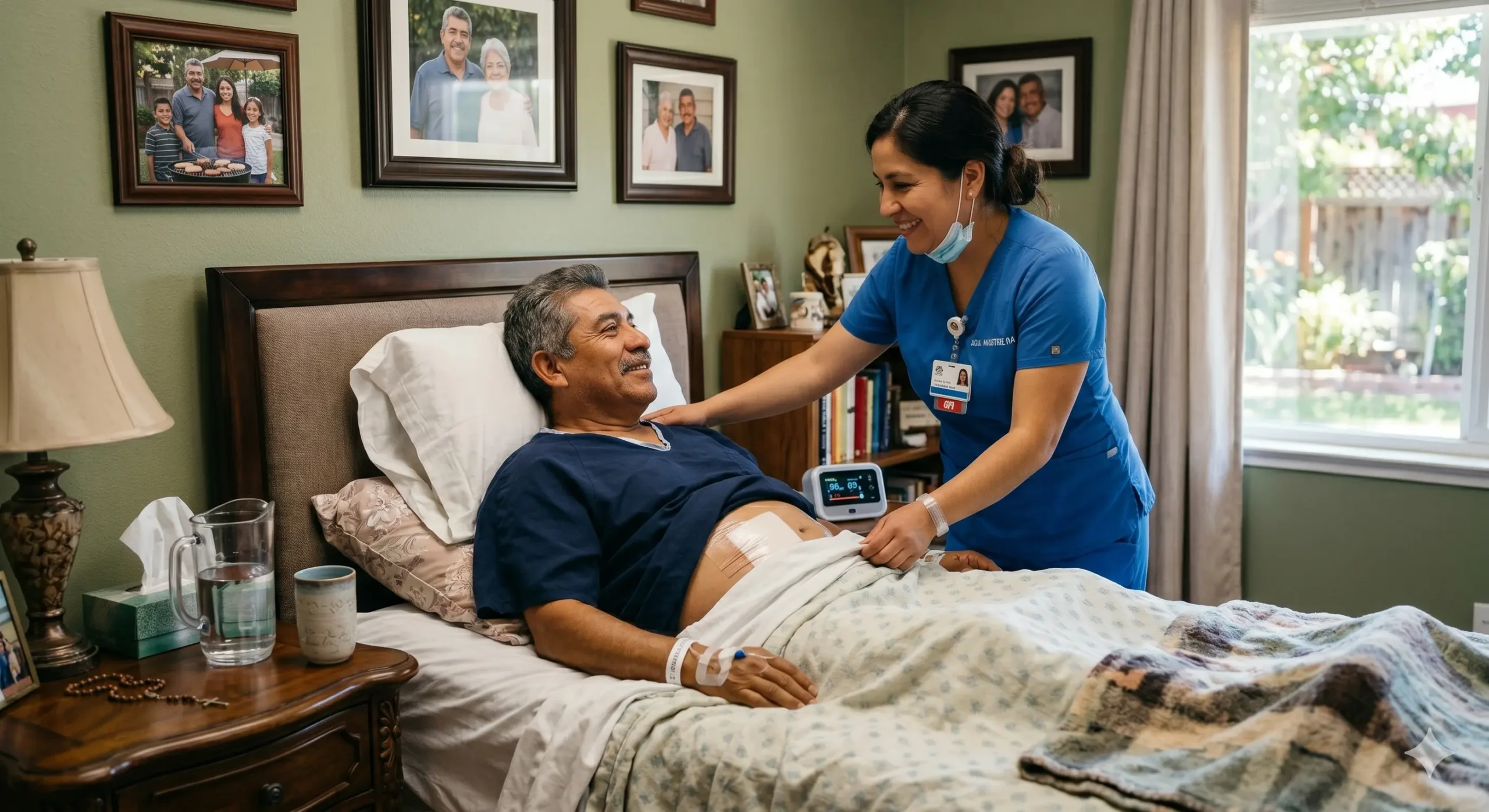
Taking care of a bed-bound loved one every day is hard on your body. You need to move them often to protect their skin. Bathing in bed takes care to avoid hurting them. Helping with meals often means making sure they are in the right position to prevent choking. Even small tasks, done many times a day, can strain your back, shoulders, and joints.
Without the right training or help, family caregivers are more likely to get hurt. Over time, physical fatigue can make even simple tasks feel too much to handle.
Emotional and Mental Strain
People who are bed-bound often feel frustrated, bored, lonely, or sad because they have lost their independence. Caregivers may feel guilty, anxious, sleep-deprived, or burned out. Emotional stress increases when there is no break from caregiving, and decisions feel overwhelming.
Nearly 40 percent of family caregivers nationwide report high emotional stress, especially when providing intensive or long-term care at home (source: AARP, https://www.aarp.org). In New York City, these challenges are often greater due to space constraints, work demands, and limited access to in-home support.
Family members often try to handle everything on their own, thinking they can manage. In truth, emotional stress is one of the biggest challenges when caring for a bedridden loved one.
Health Risks Without Proper Support
If care is inconsistent or caregivers are worn out, health risks increase. Bed-bound patients are more likely to get pressure sores, infections, breathing problems, malnutrition, and dehydration. These issues can lead to emergency room visits or hospital stays that could be avoided with good care and regular checks.
The Centers for Disease Control and Prevention reports that approximately 1 in 10 adults receiving long-term care develop pressure injuries, a risk that applies equally to home settings without proper repositioning and skin care (source: https://www.cdc.gov).
In New York, pressure injuries are a leading cause of preventable hospital readmissions among immobile patients, according to state-level hospital discharge data. This highlights why bed-bound care often becomes a long-term home care responsibility rather than a temporary arrangement.
Essential Care Needs for Bed-Bound Patients
Personal Care and Hygiene
Maintaining daily hygiene helps prevent infections and keeps your loved one comfortable. This means bathing in bed, brushing teeth, checking skin often, and managing incontinence. If skin remains wet or irritated, it can break down, leading to painful wounds or infections.
It is just as important to protect your loved one’s dignity as it is to keep them safe. Treating them with respect and giving steady care helps them feel valued, not helpless.
Positioning and Pressure Ulcer Prevention
Moving a bed-bound person regularly is one of the most important parts of their care. They should be turned on a set schedule to avoid excessive pressure on a single spot. Using special mattresses, cushions, and checking their skin often can help prevent pressure sores, which are hard to treat once they appear.
The Agency for Healthcare Research and Quality emphasizes that regular repositioning and skin assessment are key to preventing pressure ulcers in immobile patients.
Source: https://www.ahrq.gov/patient-safety/settings/long-term-care/resource/pressure-ulcers
Nutrition and Hydration
Bed-bound patients often need help with eating and drinking. Some have trouble swallowing or do not feel hungry. You may need to change the texture or timing of meals. Dehydration and malnutrition are common in homebound seniors and can quickly make health problems worse if not managed.
Emotional Support and Mental Well-Being
Emotional care is just as important as physical care. Communication, reassurance, and maintaining familiar routines help reduce depression and withdrawal. Emotional connection supports overall well-being and is a core component of high-quality home care for older adults.
Why Caring for a Bed-Bound Loved One Alone Is So Difficult
Family caregivers often underestimate how demanding bed-bound care becomes over time. Physical strain accumulates, sleep is disrupted, and emotional fatigue sets in. Many caregivers feel they must do everything themselves, even as their own health begins to suffer.
Even when families are doing their absolute best, bed-bound care often exceeds what one person can safely manage long-term. Recognizing the need for outside support is not giving up. It is a responsible step toward safety and sustainability.
How Home Health Care Supports Bed-Bound Patients
What Home Health Care Can Provide
Home health care services in New York are designed to support patients whose needs go beyond what families can safely manage on their own. Home health care helps individuals remain safely at home while reducing avoidable hospital admissions.
Professional caregivers are trained in bed-bound patient care, including safe repositioning, pressure relief, hygiene assistance, and mobility support. They help coordinate skin and wound care, provide medication reminders, and monitor changes in condition such as appetite loss, breathing difficulty, or changes in alertness.
The Centers for Medicare and Medicaid Services explains that home health care is designed to help patients remain safely at home while reducing preventable hospital admissions through consistent monitoring, assistance with daily activities, and coordination of care.
Source: https://www.cms.gov/medicare/home-health-care
This type of professional oversight plays a critical role in preventing complications before they escalate into emergencies.
Benefits for the Patient
Staying at home gives comfort and emotional stability that care facilities often cannot provide. Being in familiar surroundings helps lower stress and anxiety, especially for older adults with memory problems.
Regular care from professionals also lowers the chances of problems like infections, dehydration, or pain getting out of control, which can lead to hospital stays.
Benefits for the Family
Home health care makes caregiving a team effort. Families feel less burned out, have fewer injuries, and feel more at ease knowing trained professionals are helping. This support lets families spend more time with their loved one instead of always focusing on physical care tasks.
Home Health Care vs Doing It Alone: A Realistic Comparison
When families care for a bed-bound loved one by themselves, the challenges usually get harder as time goes on. Tasks that seem manageable at first can slowly become physically demanding, emotionally draining, and stressful. Without the right training or equipment, lifting, moving, and watching over someone in bed can lead to caregiver injuries, missed health issues, and uneven care.
When families are overwhelmed, it’s common for care to become inconsistent. Turning schedules might be skipped, skin checks delayed, and medications given late or not at all. These lapses can cause pressure sores, infections, dehydration, and trips to the emergency room that could have been avoided. Caregivers also risk burning out.
Professional home health care is a safer and more reliable option. Trained caregivers stick to regular routines, use the right methods for moving and cleaning, and know how to spot early signs of health problems. This proactive care helps prevent complications and keeps patients stable at home.
For families, having professional help turns caregiving from a lonely job into a team effort. Reliable support gives families a chance to rest, keep up with their own lives, and make careful decisions instead of reacting in a crisis.
Private Pay Home Care for Bed-Bound Patients in New York
Private pay home care in NYC lets families get help right away, without waiting lists or strict rules. Many families choose this option because it offers flexible schedules, quick start times, and care plans tailored to their needs.
Information from Medicaid’s Long-Term Services and Supports resources helps explain why families often explore private pay home care as a flexible solution for long-term care at home, especially when care needs increase or require consistent professional support.
Source: https://www.medicaid.gov/medicaid/long-term-services-supports
With private pay, families can work together with professional caregivers. This provides a balanced approach to long-term home care that can adapt to your loved one’s changing needs.
How Much Care Does a Bed-Bound Patient Typically Need?
The care required for a bed-bound patient often changes as their health and physical condition evolve. Initially, some patients may only need a few hours of daily assistance with bathing, repositioning, meals, and medication reminders.
Over time, many bed-bound patients require care for most or all of the day. This often includes frequent repositioning, regular hygiene assistance, monitoring for skin issues, and support with eating and drinking.
Overnight or 24-hour care may be needed when patients are at risk of falls, skin breakdown, breathing difficulties, or medical complications that require continuous monitoring. Expanding care at the right time helps protect both the patient’s well-being and the caregiver’s health.
How to Choose the Right Home Care Provider for Bed-Bound Care
Selecting the right home care provider is a critical decision for families caring for a bed-bound loved one. Families should prioritize providers with direct experience in bed-bound care, including safe repositioning, skin care, incontinence management, and early detection of complications.
Reliable providers maintain backup caregiver plans and communicate clearly with families. As needs grow, care plans should be adjusted to ensure safety, comfort, and long-term sustainability at home.
How All Heart Homecare Supports Bed-Bound Patients and Their Families
All Heart Homecare supports bed-bound patients and their families with a personalized, relationship-based approach. Each care plan is tailored to the individual’s medical condition, daily needs, and preferences.
Our caregivers are trained to manage the physical and emotional demands of bed-bound care, including safe repositioning, hygiene assistance, monitoring skin integrity, and offering emotional support. Serving New York and NYC families, All Heart Homecare is committed to protecting dignity, safety, and comfort.
Conclusion
Caring for a bed-bound loved one is one of the most demanding responsibilities a family can face. Asking for help is not a weakness. It is an act of care. With the right support, families can move forward with confidence and peace of mind.
Schedule a Free Home Care Consultation
Frequently Asked Questions
How do you care for a bed-bound patient at home safely?
By combining proper positioning, hygiene, nutrition support, emotional care, and professional guidance.
What are the risks of caring for a bedridden person without help?
Pressure ulcers, infections, caregiver injury, and emotional burnout.
Can home health care help with bed-bound patients?
Yes. Professional caregivers are trained to safely manage complex bed-bound care.
How many hours of care does a bed-bound person need?
Needs range from part-time assistance to 24-hour care, depending on condition and progression.
Is private pay home care an option in NYC?
Yes. Many NYC families choose private-pay home care for its flexibility and reliability.