Personal hygiene care for the elderly is hands-on help with the daily personal tasks an older adult can no longer manage alone, such as bathing, brushing teeth, grooming, dressing, using the toilet, and caring for skin and nails. The goal is simple: keep the person clean, comfortable, healthy, and treated with dignity.
Maybe you have noticed your mother wearing the same outfit for days, or caught a smell that was not there before. Maybe shower day has turned into an argument, or you lie awake worried about a fall on a wet bathroom floor.
These moments are hard to talk about, and most families have no idea where the line sits between a little help and full personal care. This guide lays out what hygiene care actually includes, how to bring in the right help, and the real ways to pay for it.
Key takeaways
- Personal hygiene care covers bathing, oral care, grooming, dressing, toileting, and skin and nail care, done in a way that protects both safety and dignity.
- Most seniors need this help because of mobility loss, illness, or memory changes, not neglect, and the need usually grows slowly over time.
- You can arrange help through a licensed home care agency or an independent aide; an agency handles screening, training, backup coverage, and supervision.
- Costs can be covered by Medicaid, long-term care insurance, veterans benefits, or private pay, and the right mix depends on income and care needs.
What Personal Hygiene Care For the Elderly Covers
Personal hygiene care, sometimes called elderly hygiene assistance or personal care, groups together the body-related tasks most of us do on autopilot every morning. For an older adult with weak hands, poor balance, or memory loss, those same tasks can become unsafe or impossible. Here is what a trained aide actually helps with day-to-day.
Bathing and Showering
Bathing help ranges from setting up the bathroom and standing by for safety to full hands-on washing for someone who cannot get in and out of the tub. A skilled aide manages water temperature, washes hard-to-reach areas, and watches the skin for redness or sores. Because most falls happen in the bathroom, this is often the first task families hand off to certified home health aides.
Oral and Denture Care
Daily mouth care covers brushing teeth, cleaning and storing dentures, and checking for sores or infection. Poor oral care is linked to pain, weight loss from trouble eating, and even pneumonia, so it matters more than many families realize. A good aide builds it into both the morning and evening routine.
Grooming, Dressing, and Hair Care
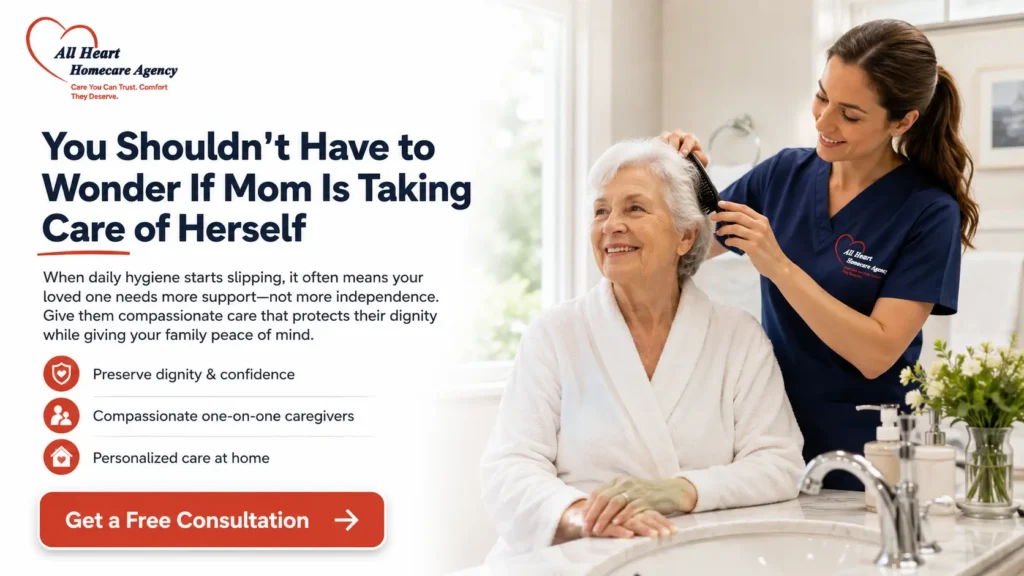
Grooming covers shaving, hair brushing and washing, nail care, and helping a person dress in clean, weather-appropriate clothes. For someone with arthritis or recovering from a stroke, buttons and zippers are the hard part, so aides often choose easy-on clothing and assist one limb at a time. Looking put together also lifts mood and self-respect.
Toileting and Continence Support
This includes help getting to and from the toilet, changing incontinence products, and keeping skin clean and dry to prevent rashes and infection. It is the most private task, and the one that causes the most embarrassment on both sides. Many families bring in professional help here first, especially when dementia is part of the picture.
Skin and Nail Care
Aging skin tears and bruises easily, so daily care means gentle washing, moisturizing, repositioning to prevent pressure sores, and careful nail trimming. For people with limited mobility or a disability, regular skin checks can catch small problems before they become open wounds.
| Care area | What it includes | Why it matters |
| Bathing and showering | Set-up, standby safety, or full hands-on washing | Most home falls happen in the bathroom |
| Oral and denture care | Brushing, denture cleaning, and checking for sores | Prevents pain, poor eating, and infection |
| Grooming and dressing | Shaving, hair care, easy-on clothing, dressing help | Supports comfort, mood, and self-respect |
| Toileting and continence | Toilet help, changing products, and keeping skin dry | Prevents rashes, infection, and embarrassment |
| Skin and nail care | Gentle washing, moisturizing, repositioning, and trimming | Catches sores and tears before they worsen |
| Safety and fall prevention | Watching balance, using grab bars, and shower chairs | Lowers injury risk during private tasks |
Why Personal Hygiene Becomes Harder With Age
Few seniors wake up one day unable to bathe. The need creeps in through small changes, and naming them early helps you step in before a fall or infection forces the issue. A few patterns show up again and again.
Common signs an older adult needs hygiene help:
- Body or breath odor: a clear change from their normal baseline
- Appearance: unwashed hair, long nails, or stained, repeated clothing
- Avoidance: fear of the shower, or skipping it for days at a time
- Skin and infections: rashes, sores, or frequent urinary infections
- Bathroom risk: bruises, slips, or near-falls getting in and out
Physical and Mobility Changes
Weak legs, stiff joints, poor balance, and low energy make standing in a shower or reaching the feet genuinely dangerous. A slippery floor and a heavy, wet body make for a bad combination, which is why bathroom safety sits at the top of most families’ worry lists. The fix is usually a mix of equipment and a steady pair of hands.
Memory Changes and Resistance to Care
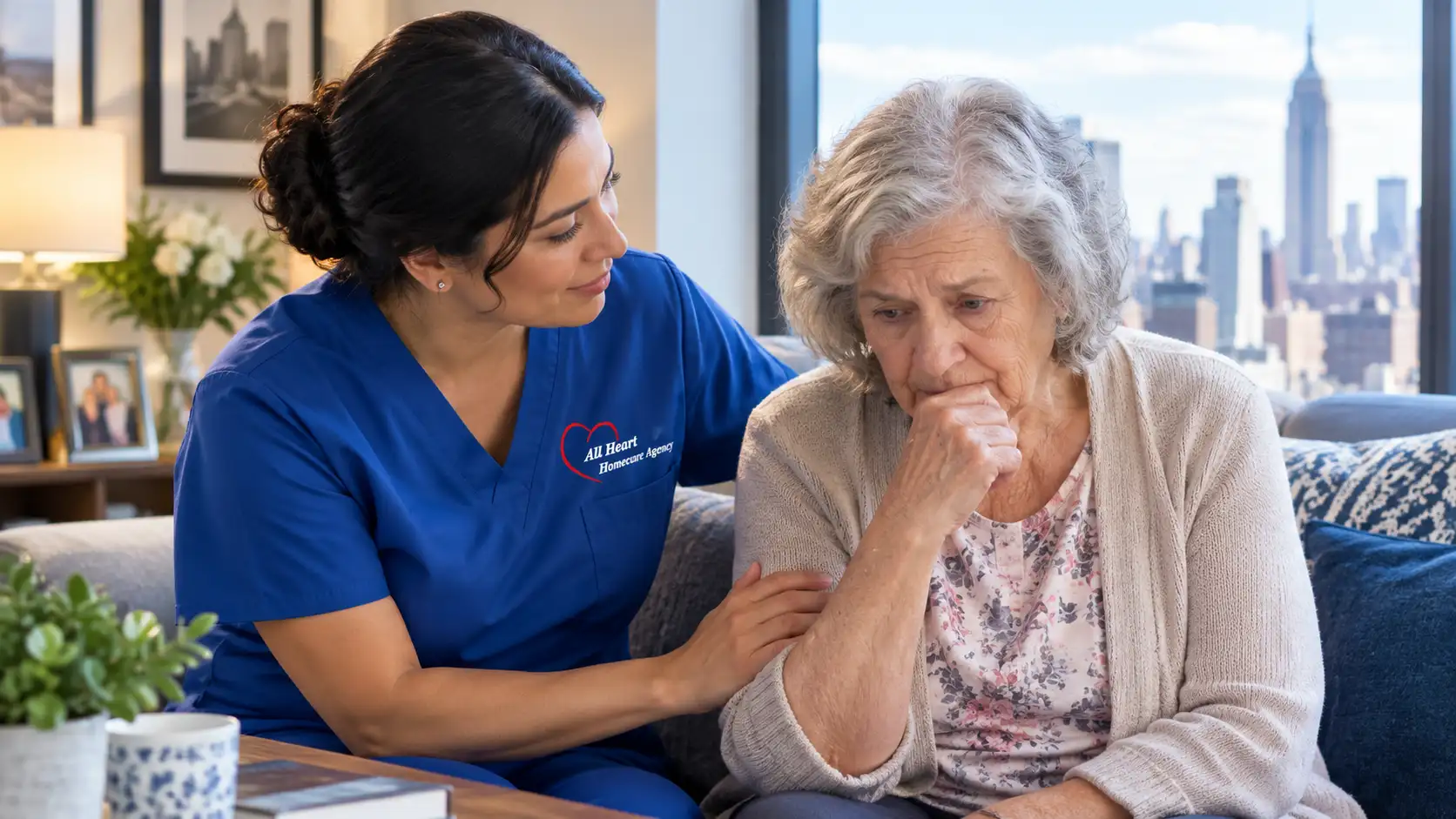
Dementia changes the math. A person may forget when they last bathed, no longer feel the need, or feel frightened and exposed during such an intimate task, which can come out as anger or refusal. This is the illness talking, not defiance, and there are gentle techniques that lower the resistance.
Most of this care quietly falls on the family. A 2025 AARP report found that nearly two-thirds of family caregivers now help with at least one daily activity, such as bathing or dressing. That work is physically and emotionally draining, and washing a parent or spouse can strain the very relationship you are trying to protect.
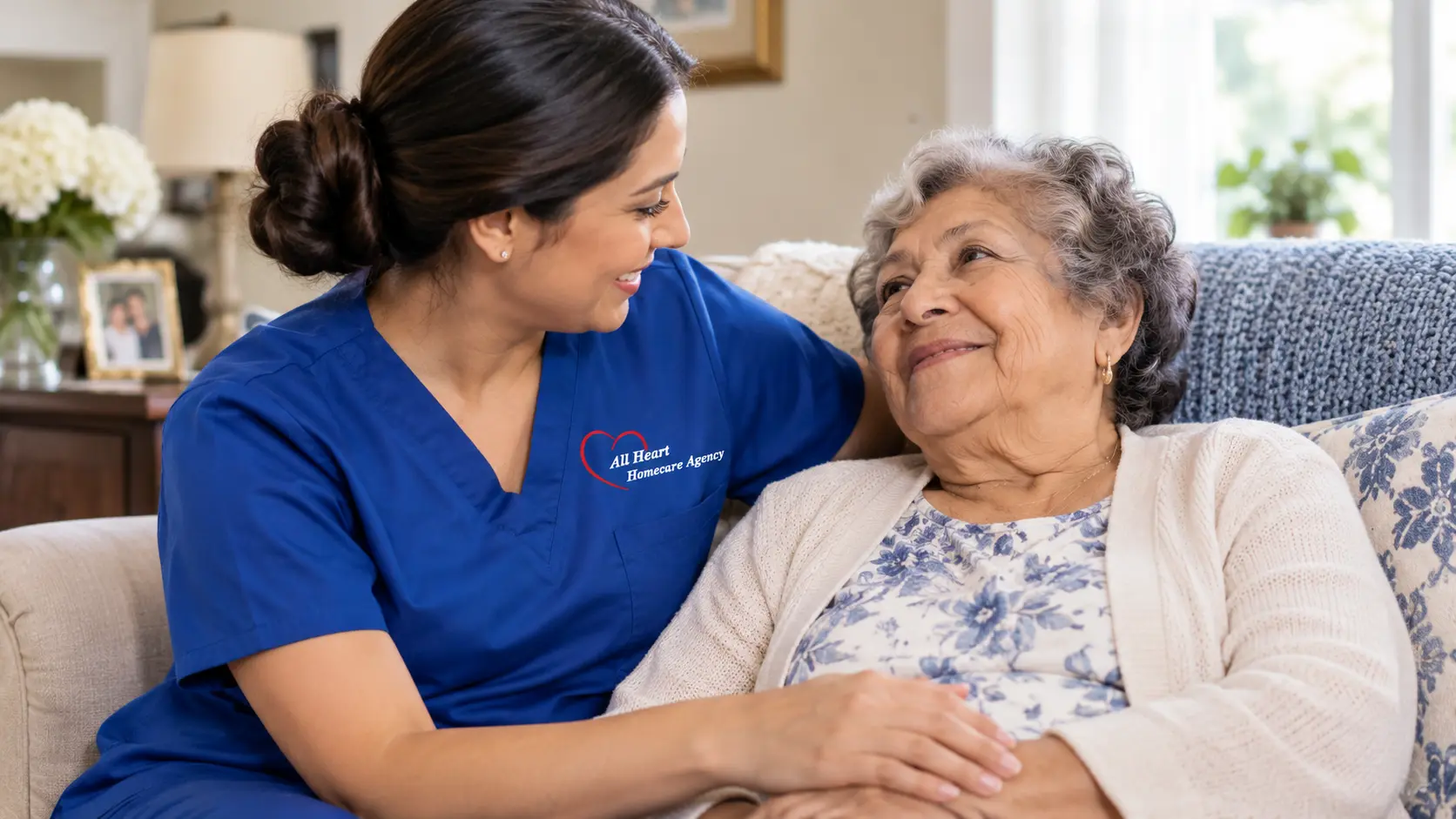
This is the gap All Heart Homecare Agency was built to fill. A family-owned agency serving all five NYC boroughs for over 14 years, All Heart pairs families with certified home health aides who are background-screened and trained specifically for intimate, dignity-first personal care. Aides can be matched by language, with English, Spanish, and Russian spoken, so an older adult feels at ease during private tasks. Families also get free transportation to medical appointments, 24/7 on-call support, and around-the-clock care when needs intensify, so help is there when a routine changes or a problem comes up at night.
Your loved one deserves to feel clean, safe, and respected every day. Contact us today for a free consultation!
How to Hire Someone to Help With Elderly Hygiene Care
Once you decide to bring in help, the next question is who. You have two main routes, and the right one depends on your budget, how much oversight you want, and whether there are medical needs in addition to daily care.
Agency versus Independent Caregiver
A licensed home care agency screens, trains, insures, and supervises its aides, and sends a replacement when your regular aide is sick. An independent caregiver usually costs less per hour but leaves you to handle vetting, payroll, taxes, and coverage gaps. For intimate personal care, most families prefer the accountability an agency brings.
What To Check Before You Hire
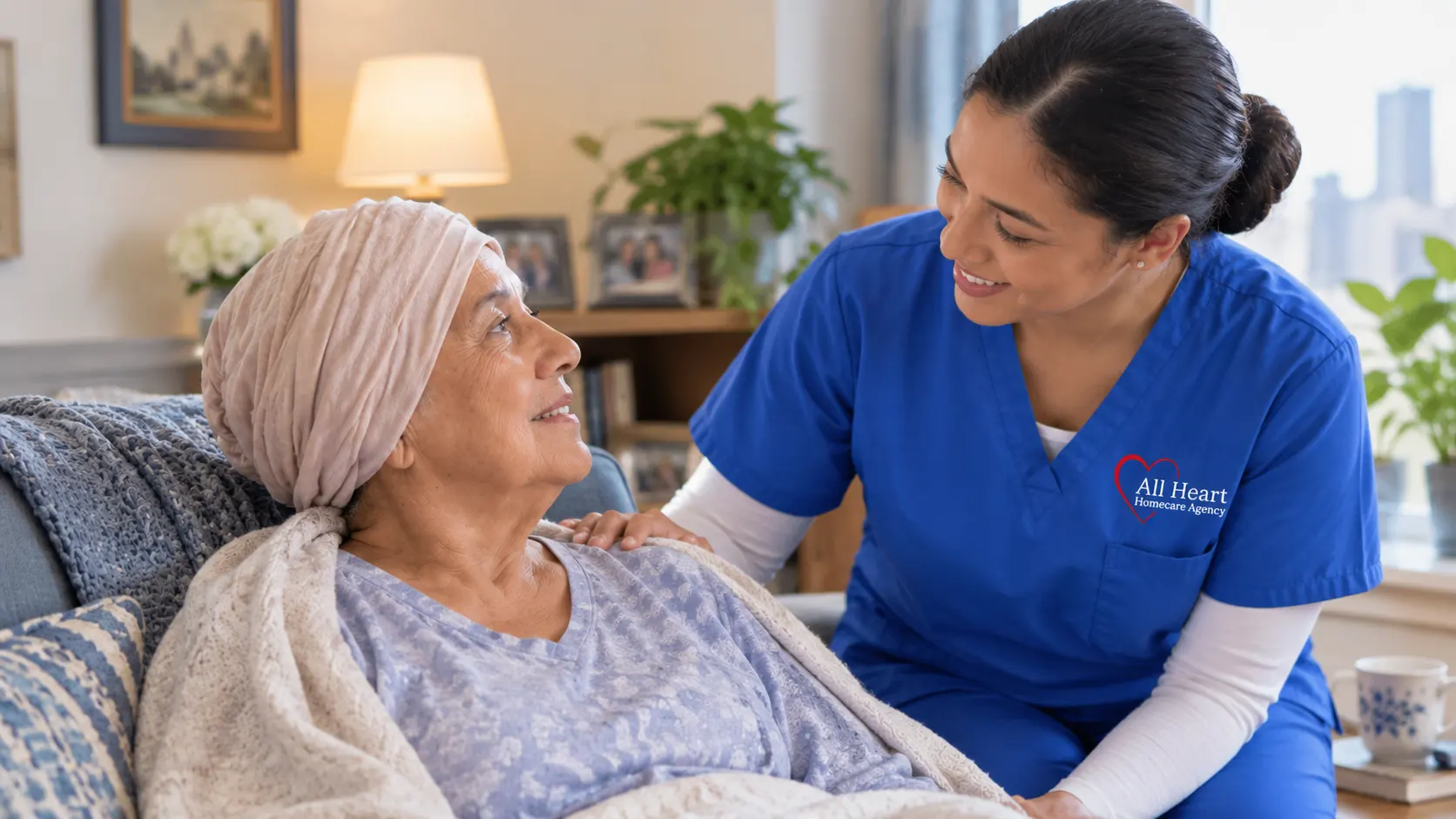
Before anyone touches your loved one, confirm the basics: a current state license for the agency, certified and background-checked aides, liability insurance, and a written care plan. If hygiene overlaps with medical tasks like wound care or catheter management, you may need a private duty nurse rather than an aide. And if keeping someone out of a nursing home is the priority, ask about programs like nursing home transition and diversion that are designed to keep people safely at home.
Questions To Ask a Home Care Agency
- Licensing: Are you state-licensed, and are aides certified and bonded?
- Training: How are aides trained for bathing, transfers, and dementia care?
- Matching: Can we request an aide who speaks our language or shares our culture?
- Backup: What happens if our aide is sick or runs late?
- Care plan: Will care be documented and updated as needs change?
- Costs: What is the hourly rate, and which insurance or programs do you accept?
How To Pay for Personal Hygiene Care for the Elderly
Cost is the question that stops most families in their tracks, and the answer is rarely “pay full price out of pocket.” Several programs cover personal care at home, and many seniors qualify for more help than they expect. For reference, the 2025 CareScout Cost of Care Survey puts the national median for in-home non-medical care at about $35 an hour, which adds up fast without coverage.
Common ways to cover personal care at home:
- Medicaid: covers personal care for eligible low-income seniors, often through a managed long-term care plan
- Long-term care insurance: reimburses personal care for those who hold a policy
- Veterans’ benefits: programs such as Aid and Attendance help eligible veterans and spouses
- Private pay: out-of-pocket, fully flexible, with no program restrictions
Private Pay and Insurance
When someone does not qualify for Medicaid or wants to start right away, private-pay home care offers the most flexibility, with plans tailored to the exact hours and tasks needed. Families who hold long-term care insurance can often submit personal care hours for reimbursement, so it is worth reading the policy closely.
Veterans Benefits
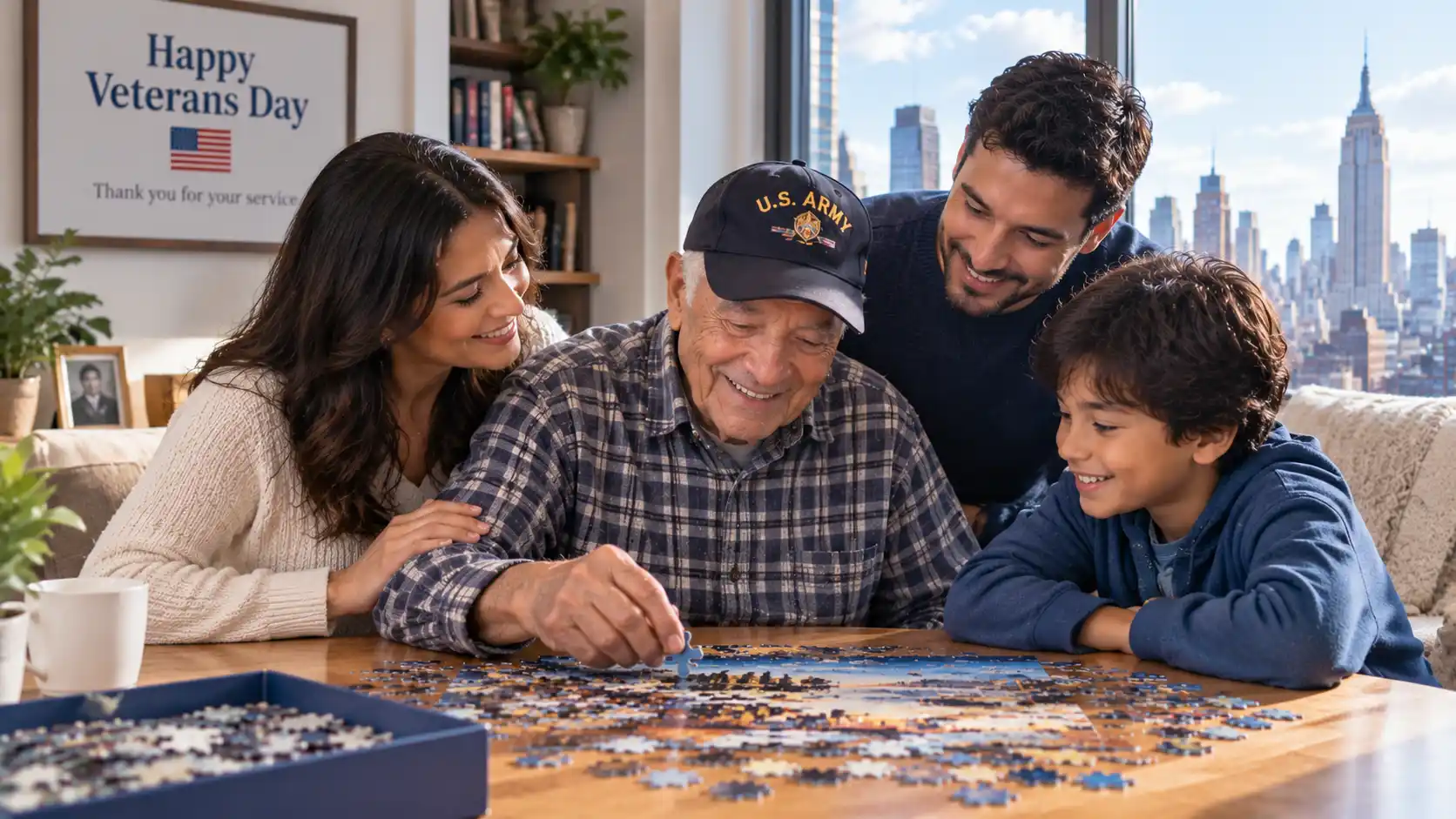
Veterans and surviving spouses may qualify for VA-backed home care that covers personal care hours at home. These benefits are widely underused, so a quick eligibility check is usually worth the effort.
How All Heart Care Keeps Personal Hygiene Dignified at Home
Helping an aging parent stay clean and comfortable should not cost you your own health or your relationship. All Heart Homecare Agency has spent over 14 years doing exactly this work across Brooklyn, Manhattan, Queens, the Bronx, and Staten Island, earning Better Business Bureau accreditation and recognition, such as Dime’s Best of Brooklyn, along the way.
Every aide is certified, rigorously background-checked, and trained to handle bathing, toileting, and grooming with patience and respect. Families can pick a caregiver who speaks their language, lean on 24/7 on-call support, and use free transportation to medical visits, with care paid through Medicaid, veterans’ benefits, or private pay.
The result is an older adult who feels safe and respected, and a family that can finally breathe again.
Give your loved one the dignified care they deserve. Contact us today for a free consultation!
Frequently Asked Questions About Personal Hygiene Care for the Elderly
What is the difference between personal care and home health care?
Personal care covers help with daily hygiene, such as bathing, dressing, grooming, and toileting, usually provided by an aide. Home health care can include those tasks plus skilled medical services such as wound care, injections, or monitoring, delivered by a nurse. Many seniors receive a blend of both, depending on their health needs.
How often should an elderly person bathe?
Most older adults do not need a full bath every day. Two to three baths or showers a week are usually enough to stay clean and protect aging skin, with sponge baths or targeted washing in between. The right frequency depends on health, activity level, skin condition, and continence.
What should you do when an elderly parent refuses to shower?
Stay calm and avoid forcing the issue. Look for the reason, which is often fear of falling, feeling cold, or embarrassment. Offer choices, warm the room, use a shower chair and grab bars, and keep a steady routine. If refusal continues, a trained aide experienced with seniors can often succeed where family cannot.
Who pays for personal care at home for seniors?
Funding can come from several sources. Medicaid covers personal care for eligible low-income seniors, often through managed long-term care plans. CDPAP lets families be paid as caregivers, long-term care insurance reimburses eligible policies, veterans’ benefits help those who served, and private pay covers out-of-pocket costs. Most families combine more than one.
Is personal hygiene care only for people with dementia?
No. Anyone who struggles with daily self-care can benefit, including seniors recovering from surgery, living with arthritis or a disability, or weakened after a hospital stay. Dementia is one common reason, but mobility loss, low energy, and chronic illness are just as frequent. The need often grows gradually with age.
How do you keep an older adult’s dignity during hygiene care?
Dignity comes from small, consistent habits. Explain each step before doing it, keep the person covered as much as possible, offer choices, work at their pace, and never rush or scold. Matching a caregiver by language or gender also helps. The aim is care that feels respectful, not clinical or shaming.