
A parent who once showered every morning now goes days without it. The tub edge feels too high, the floor too slick, and the whole routine starts to feel risky. When you search for bathing help nearby, the right service is one that pairs trained, licensed caregivers with a personalized plan to keep your loved one safe and treat them with respect.
That hesitation has real stakes, because the bathroom is one of the most dangerous rooms in the home for older adults. Wet tile, hard surfaces, and the balance shifts that come with stepping over a tub edge turn an ordinary routine into a genuine fall risk.
Picking the right provider has less to do with price and more to do with who is allowed in that bathroom and how well they are trained. The sections below break down the criteria that distinguish a safe, dependable bathing service from a rushed one, and compare five providers in the New York City area.
Key takeaways
- Licensed agencies with certified aides come first: bathing help should come from trained, screened, supervised caregivers, not casual labor hired off an app.
- Safety training matters most: ask how caregivers handle transfers, slippery surfaces, and fall prevention before any water runs.
- A written care plan keeps care consistent: the best services document preferences, mobility limits, and schedules so every visit looks the same.
- Coverage and payment options vary widely: confirm which boroughs are served, what hours are offered, and whether Medicaid or private pay applies.
- Dignity is part of the job: a good caregiver protects privacy and comfort, not just cleanliness.
What Are Bathing Services For Seniors?
Bathing services are a type of personal care that helps older adults wash safely when doing it alone has become hard or unsafe. The help can range from light standby support to full hands-on assistance, and it usually happens right in the person’s own bathroom. Knowing the forms this care takes makes it easier to match a provider to the level of help your parent actually needs.
What Bathing Assistance Usually Includes
Most bathing help covers the full routine, not just the wash itself. A caregiver helps the person get to the bathroom, undress, get in and out of the tub or shower safely, wash hard-to-reach areas, dry off, and dress again.
It often folds into other daily tasks too, since the same visit can include grooming, oral care, and quick skin checks. Certified aides working through a home health care program are trained to notice early signs of skin issues, bruises, or swelling while assisting, which gives families an extra set of eyes on a parent’s health.
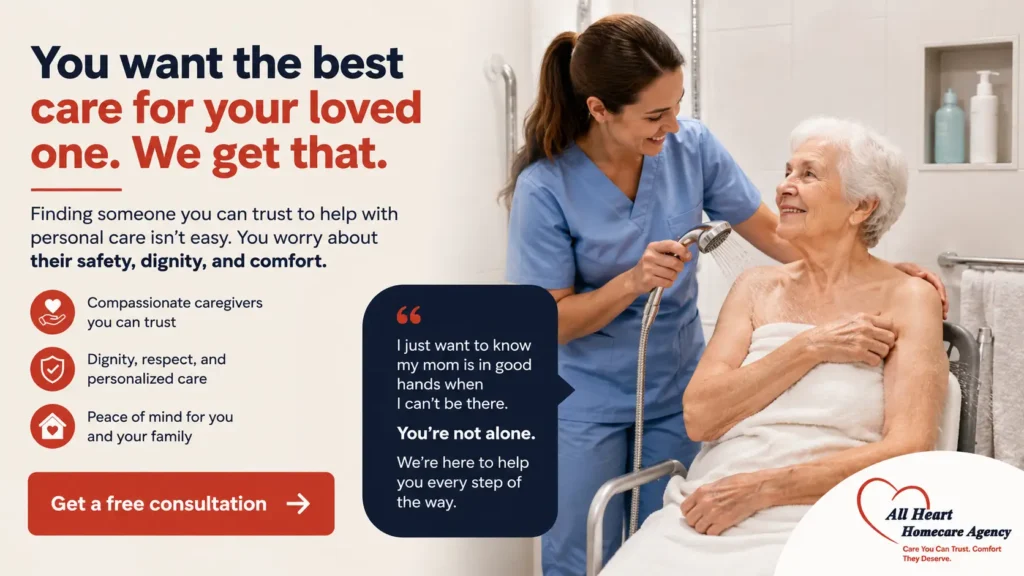
Bathing help generally falls into a few clear formats:
- Standby assistance: the caregiver stays close and steadies the person without doing the washing for them.
- Hands-on bathing: the caregiver physically helps with washing, rinsing, and drying.
- Transfer support: safe movement in and out of a tub or shower, often using a bench or grab bars.
- Bed bathing: full sponge baths for people who cannot safely use a shower.
Personal Care versus Skilled Nursing
Routine bathing falls under personal care and is handled by home health aides. For someone with wounds, a catheter, or fragile skin tied to a medical condition, a nurse may need to be part of the routine.
Families managing more complex needs sometimes pair daily aide visits with private-pay LPN nursing or adult private-duty nursing so the clinical aspects remain in the hands of a licensed nurse. Most people, though, only need a well-trained aide and a safe setup.
What to Look For in a Senior Bathing Service
The hardest part of bathing for an older adult is rarely the soap. It is the standing, stepping, and balancing on a wet surface, which is exactly where caregiver skill makes the difference. These are the criteria worth checking before you let anyone into that bathroom.
Licensing and Certified Aides
A real agency is licensed in New York and sends aides who are certified and background-checked. That license means the agency is accountable for training, supervision, and safety, not just sending a body to the door.
Ask whether caregivers are Certified Home Health Aides and whether a nurse supervisor reviews each case. Anyone who cannot answer that plainly is worth passing on.
Safe Transfer and Fall Prevention Training
Falls are the leading cause of injury for adults 65 and older, and more than 1 in 4 fall every year. The bathroom is where many of those falls happen, and CDC research found that roughly 37% of bathroom injuries occur while bathing, showering, or getting out of the tub.
A caregiver trained in safe transfers knows how to support a person’s weight, use a transfer bench, and stop a slip before it starts. Training on this point matters far more than years on the job alone.
A Written, Personalized Care Plan
Good care is consistent care, and consistency only happens when preferences and needs are written down. A plan should note water temperature, mobility limits, the schedule, and any conditions that change the routine.
For someone with memory loss, a plan should also cover ways to reduce confusion and resistance at bath time. Specialized Alzheimer’s and dementia care builds these steps in, so bathing stays calm instead of becoming a daily fight.
Flexible Scheduling and Around-The-Clock Options
Bathing needs do not follow office hours. Some families need a morning visit a few days a week, while others need overnight or continuous coverage.
Confirm whether the provider offers around-the-clock care for higher needs and how quickly a schedule can shift when a parent’s health changes. Rigid scheduling is usually a sign that the provider puts its own convenience first.
Insurance, Medicaid, and Private Pay
How you pay shapes what is available. Many older adults in New York qualify for personal care, including bathing, to be covered by Medicaid.
Families who do not qualify or who want full control over scheduling often choose private-pay home care because it bypasses insurance restrictions. Veterans may also have coverage available through a veterans’ home health care program.
Caregiver Matching and Language
Bathing is intimate, so the match between caregiver and client matters more here than with almost any other task. A familiar, consistent caregiver who speaks the person’s language puts an anxious parent at ease.
Ask whether you get a say in caregiver selection and whether multilingual aides are available. People with brain injuries or physical disabilities may also need a caregiver trained through a disability home care program to bathe safely.
| Criteria | What to confirm | Why it matters |
| Licensing and certified aides | Agency is NY-licensed; aides are certified and screened | Holds someone accountable for safety and training |
| Safe transfer training | Caregivers handle slips, transfers, and tub entry | Bathing is when most bathroom falls happen |
| Written care plan | Preferences, mobility, and schedule documented | Keeps every visit consistent and safe |
| Flexible scheduling | Part-time, overnight, or 24/7 options | Care matches real needs, not office hours |
| Payment options | Medicaid, private pay, or veteran benefits accepted | Determines what care you can actually access |
| Caregiver matching | Input on selection; multilingual aides | Comfort and trust during intimate care |
Comparing 5 Bathing Services For Seniors Near Me
Not every agency that lists personal care actually specializes in safe, dignified bathing. These five providers serve older adults in and around New York City, starting with the strongest fit for families who want trained, screened caregivers.
| Agency | NYC coverage | Specialized NYC programs | Payment options |
| All Heart Homecare | All five boroughs | CDPAP, NHTD, TBI, veterans | Medicaid and private pay |
| Visiting Angels | Select offices | Standard personal care | Varies by office |
| Home Instead | Select offices | Standard personal care | Varies by office |
| Comfort Keepers | Select offices | Companion-focused care | Varies by office |
| Right at Home | Select offices | Standard personal care | Varies by office |
1. All Heart Homecare Agency
Best overall for NYC families. All Heart pairs Certified Home Health Aides with written care plans and multilingual matching across Brooklyn, Manhattan, Queens, the Bronx, and Staten Island. Bathing is handled as part of broader home health care, with options for around-the-clock coverage and payment through Medicaid or private pay. Older adults moving back home through a nursing home transition and diversion program can fold bathing into a larger support plan.
2. Visiting Angels
A national franchise with local offices in several New York markets. Personal care, including bathing and grooming, is part of its standard menu, and individual locations are independently owned, so training and availability can vary from office to office.
3. Home Instead
Another national brand with a wide footprint and personal care services that cover bathing assistance. Like most franchises, the quality of the local office and caregiver matching depends heavily on the specific branch serving your area.
4. Comfort Keepers
A franchise focused on companionship-style care alongside personal care tasks such as bathing and hygiene support. Service details, scheduling, and accepted payment types are set by each independently operated location.
5. Right at Home
A national provider offering personal care that includes bathing and mobility help. Coverage and program specifics, including whether Medicaid is accepted, vary by franchise and should be confirmed directly with the local office.
Coverage and How Bathing Care Fits a Bigger Plan
Bathing rarely stays a standalone service for long. The same visit that helps a parent shower safely often grows into help with meals, grooming, and getting to appointments, which is why coverage and program range matter when you choose a provider.
Local coverage is the first thing to check. A provider based in your borough can usually start faster, send consistent caregivers, and pair clients with aides who speak their language, which is a real advantage in a city as varied as New York.
Bathing assistance tends to be a strong fit for several groups:
- Seniors with balance or mobility loss: people who can still live at home but no longer feel safe in the shower.
- Adults with memory loss: those who need calm, structured help to avoid confusion at bath time.
- People recovering from surgery or a hospital stay: short-term support during a fragile recovery window.
- Veterans and people with disabilities: clients who may qualify for dedicated programs that fold bathing into wider care.
When bathing is part of a larger plan, the provider’s program range starts to matter. An agency that also offers dementia care, disability support, and nursing services can adjust as a parent’s needs change without forcing the family to start over with someone new.
Why All Heart Care is The Right Partner For Senior Bathing Help
Choosing who helps your parent bathe is one of the most personal decisions a family makes, and it deserves a provider that takes safety and dignity seriously. All Heart Homecare Agency has spent over 14 years caring for New Yorkers across all five boroughs, with Certified Home Health Aides trained in safe transfers and fall prevention.
What sets the agency apart is the human side of the work. Caregivers are background-screened, matched by language and personality, and backed by 24/7 on-call support, so families never feel stranded when plans change. Bathing fits into fully customizable plans that can grow to include grooming, around-the-clock care, dementia support, and coverage through Medicaid or private pay.
Your loved one deserves to feel safe and respected every single day. Contact us today for a free consultation!
Frequently asked questions about senior bathing services
How much do bathing services for seniors cost?
Costs depend on how many hours you need and how you pay. Personal care covered through Medicaid often has little or no out-of-pocket cost for those who qualify. Private pay rates vary by agency and hours, so the best step is to request a quote based on your parent’s specific schedule and needs.
Does Medicaid cover bathing assistance at home?
Yes. In New York, personal care services, including bathing, grooming, and dressing, are commonly covered for older adults who qualify for Medicaid. Eligibility depends on income, assets, and a care assessment. An agency that handles Medicaid cases can walk you through the assessment and paperwork before care begins.
How often should an elderly person bathe?
Most older adults do well with a full bath or shower two to three times a week, with sponge baths or partial washing in between. Bathing too often can dry out aging skin. The right frequency depends on health, activity, and skin condition, so it is worth confirming with the person’s doctor.
What if my parent refuses help with bathing?
Refusal is common and usually rooted in embarrassment or loss of control rather than the bath itself. A consistent caregiver who speaks the person’s language and respects their privacy often eases that resistance over time. For someone with memory loss, a calm routine and gentle approach make a noticeable difference.
Can a caregiver help someone who cannot get into a shower?
Yes. For people who cannot safely stand or step over a tub’s edge, caregivers provide bed baths or sponge baths to keep skin clean without transferring them into a shower. They can also use shower benches, handheld sprayers, and grab bars to make washing safer for those with limited mobility.
Are bathing caregivers trained to prevent falls?
A reputable agency trains its aides in safe transfers, body positioning, and fall prevention specifically for wet, slippery settings. This training is what separates qualified personal care from informal help. When choosing a provider, ask directly how caregivers are trained to handle transfers and prevent bathroom slips.