
What Care Is Needed After Hospital Discharge?
After hospital discharge, many patients need immediate support at home with mobility, medication management, daily activities, and monitoring for complications. Without proper care, the risk of falls, medication errors, and readmission increases. Arranging home care quickly ensures a safe and stable recovery. For many NYC families, this moment feels overwhelming. You receive discharge papers, instructions, and medications, and the responsibility shifts entirely to you. There is urgency, confusion, and often no clear roadmap for what to do next. You are not alone in feeling this way. Thousands of families across New York go through the same experience every day, especially when hospitals discharge patients quickly due to capacity or insurance limitations.
If you need fast, flexible care without delays, you can explore private-pay home care in NYC, which allows immediate service setup without waiting for approvals.
Why the First 72 Hours After Discharge Matter Most
The first 72 hours after leaving the hospital are the most critical phase of recovery.
According to the Centers for Medicare & Medicaid Services (CMS), nearly 20% of patients are readmitted within 30 days, and a significant portion of these readmissions happen within the first few days after discharge.
This happens because patients are still weak, adjusting to medications, and often lack proper supervision.
Key risks during this period include:
- Medication errors or missed doses
- Falls due to weakness or dizziness
- Worsening symptoms or complications
- Lack of proper supervision
- Confusion about discharge instructions
Research from the National Institutes of Health confirms that early monitoring and structured care significantly reduce complications and improve recovery outcomes.
What Type of Care Is Needed After Hospital Discharge?
Every patient’s needs differ based on condition, age, and treatment. However, most require a combination of the following services:
Personal Care Support
Patients often need help with basic daily activities such as bathing, dressing, grooming, and toileting. These tasks may seem simple, but after hospitalization, even small movements can be difficult.
Medication Management
Medication errors are a leading cause of post-discharge complications. The U.S. Food and Drug Administration (FDA reports over 1.5 million preventable medication-related injuries annually in the U.S. Some caregivers ensure:
- Medications are taken on time.
- Correct dosages are followed.
- Side effects are monitored.
Mobility Assistance
Many patients feel weak after hospital stays. Caregivers assist with:
- Walking safely
- Preventing falls
- Assisting with transfers
Wound Care & Recovery Monitoring
For surgical patients, proper wound care is essential to prevent infections and complications.
Supervision & Safety
Patients with dementia, confusion, or high fall risk require continuous supervision to ensure safety.
When You Need Immediate Home Care
Sometimes waiting is not an option.
You may need urgent home care NYC services if:
- There is no caregiver available at home.
- The patient is at high risk of falling.
- There is confusion, memory loss, or dementia.
- The recovery is complex (stroke, surgery, cardiac conditions)
- Multiple medications need monitoring.
In these cases, even a 24-hour delay can increase the risk of complications or readmission.
How to Arrange Home Care Quickly After Discharge
Here is a simple process families can follow:
Step 1: Contact a Home Care Agency
Reach out to a trusted provider offering urgent home care NYC services. If you are unsure which provider to choose, you can explore this guide on top home care agencies in New York to compare options and find a reliable agency that fits your needs.
Step 2: Share Discharge Instructions
Provide:
- Medication list
- Care instructions
- Doctor recommendations
Step 3: Schedule Care Immediately
Some agencies offering same-day home care in NYC can start within hours.
Step 4: Begin Services
Caregivers start assisting with recovery, safety, and daily needs right away. Speed is key. The faster care begins, the safer the recovery.
Same-Day vs Next-Day Home Care
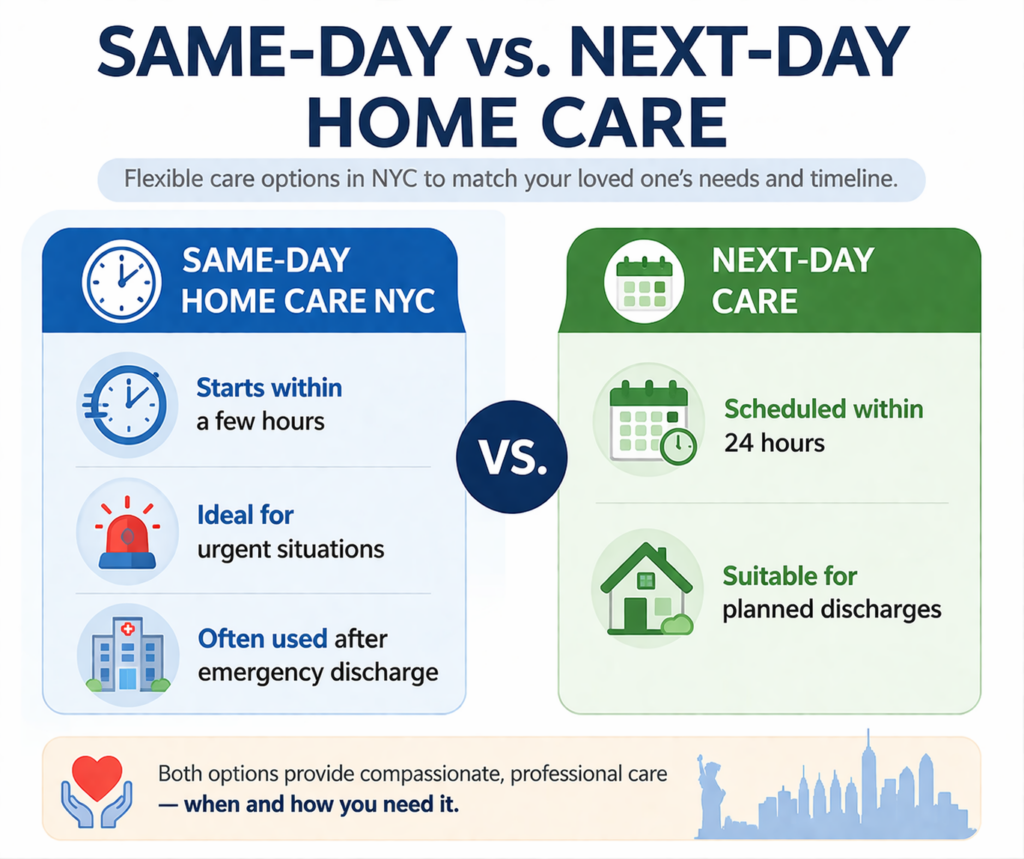
What Affects Speed?
- Care level required
- Caregiver availability
- Location within NYC
Families seeking after-surgery home care in NYC often prefer same-day services for immediate support.
Short-Term vs Long-Term Care After Discharge
Short-Term Home Care NYC
- Duration: a few days to weeks
- Focus: recovery and stabilization
- Ideal for post-surgery or illness
Long-Term Care
- Ongoing support
- Chronic conditions
- Disability or aging needs
Transition Care
- The bridge between the hospital and independence
- Helps avoid complications
Choosing the right type depends on the patient’s condition and recovery timeline.
Common Mistakes After Hospital Discharge
After hospital discharge, many families assume the hardest part is over. In reality, recovery actually starts where the patient may need more care. Without proper planning and support, small mistakes can quickly turn into serious complications. Understanding what not to do is just as important as knowing what to arrange. Below are some of the most common mistakes families make during this critical phase:
1. Delaying Care Setup
Waiting “just a few days” before arranging care is one of the biggest risks. Many families believe they can manage temporarily, but the first 48–72 hours are most vulnerable. Delays can lead to:
- Increased fall risk
- Missed medications
- Sudden health deterioration
Even short gaps in care can result in avoidable hospital readmissions.
2. Underestimating Patient Needs
Patients often look stable at discharge, but that does not mean they have fully recovered. Hospital environments provide constant monitoring, which suddenly stops at home. Families may overlook:
- Weakness and fatigue
- Difficulty walking or standing
- Confusion due to medications
Recovery at home requires more support than most people expect.
3. Lack of Supervision
Leaving a patient alone too soon can be dangerous.
Many complications happen when:
- Patients try to move without assistance.
- Medications are taken incorrectly.
- Symptoms go unnoticed
This is especially risky for seniors or patients recovering from surgery, stroke, or illness.
4. Ignoring Follow-Up Care
Discharge instructions are often detailed but easy to miss or misunderstand.
Skipping follow-ups can lead to:
- Delayed recovery
- Untreated complications
- Medication issues
Follow-up care is not optional; it is a critical part of recovery.
5. Poor Medication Management
Medication errors are more common than families realize.
Patients may:
- Forget doses
- Take incorrect medications
- Experience side effects without noticing
Proper medication management is a key factor in preventing complications and readmissions.
6. Not Preparing the Home Environment
Homes are not always ready for a recovering patient.
Simple issues like:
- Cluttered walkways
- Slippery floors
- Poor lighting
can significantly increase fall risk. Making small adjustments can create a much safer recovery space.
How Home Care Prevents Hospital Readmission
Proper discharge planning and timely home care are crucial for reducing the risk of hospital readmission. After leaving the hospital, patients are still in a vulnerable state, and even small issues can quickly turn into serious complications if not managed properly. This is where structured home care support makes a real difference.
Home care helps by:
- Ensuring medication compliance
- Caregivers make sure medications are taken correctly and on time, reducing the risk of missed doses or harmful interactions.
- Supporting safe mobility
- Assistance with walking, transfers, and daily movement helps prevent falls, which are one of the leading causes of readmission.
- Monitoring symptoms early
- Caregivers can identify warning signs, such as infections, breathing issues, or unusual pain, before they become severe.
- Providing professional supervision
- Having trained support at home ensures that patients are not left alone during a critical recovery period.
According to the Agency for Healthcare Research and Quality, structured home care support can reduce hospital readmission rates by up to 25%, especially when care begins immediately after discharge.
In addition, patients who receive consistent home care often experience:
- Faster recovery times
- Better adherence to treatment plans
- Reduced stress and anxiety
- Improved overall health outcomes
Without proper support, many patients return to the hospital not because of new conditions, but due to preventable issues like medication errors, falls, or unmanaged symptoms. This makes home care essential. It provides a safe bridge between hospital treatment and full recovery at home, ensuring patients heal in a stable, supportive environment.
Cost of Post-Hospital Home Care in NYC
Understanding costs helps families plan, especially when arranging care quickly after discharge.
The cost of home care in New York can vary based on the level of care, duration, and urgency of services. If you want a detailed breakdown, you can explore this guide on home care costs in NYC and pricing factors to better understand what to expect.
Average Costs:
- Hourly care: $25 – $40 per hour
- Short-term care: $1,000 – $5,000+, depending on duration
- 24-hour care: $300 – $600 per day
According to Genworth Financial, the median cost of home care in New York is approximately $29–$32 per hour, based on their annual Cost of Care Survey. This aligns with the higher demand and cost of living in NYC. Additionally, data from A Place for Mom shows that 24-hour home care can exceed $6,000–$18,000 per month, depending on the level of support required.
Payment Options:
- Private pay
- Medicaid (if eligible)
- Long-term care insurance
For eligibility and coverage details, families can refer to the New York State Department of Health, which outlines Medicaid home care benefits and long-term care programs.
Costs vary by care level and urgency, especially for urgent home care NYC services or specialized medical needs.
For families who need immediate care, many choose private-pay options that offer faster onboarding, flexible scheduling, and immediate caregiver availability.
Pro Tip
Planning early can reduce costs. Short-term home care after discharge often prevents expensive readmissions, making it a cost-effective recovery investment. After Hospital Discharge, some patients require continuous monitoring, especially during the first few days of recovery, when risks are highest.
In many cases, families may not be able to provide round-the-clock supervision, making 24-hour home care an essential option to ensure safety and stability.
When 24-Hour Care Is Needed:
24-hour care is often recommended when patients have:
- High fall risk
- Severe mobility limitations
- Post-surgery complications
- Cognitive impairment or confusion (such as dementia or delirium)
- Complex medication schedules require close monitoring.
These situations require constant attention because minor incidents can quickly become emergencies without immediate support.
Why 24-Hour Care Is Important After Discharge
After hospitalization, patients remain fragile. They may experience weakness, dizziness, or confusion, especially at night when supervision is limited.
24-hour care ensures:
- Round-the-clock supervision to prevent falls and accidents
- Immediate response to emergencies, reducing the risk of complications
- Consistent monitoring of symptoms to catch issues early
- Support with mobility and daily activities at all times
- Peace of mind for families, knowing their loved one is never alone
For many NYC families, especially those with high-risk recovery or elderly patients, this care level is critical for safe healing.
If you are considering full-time support, you can explore this detailed guide on
24-hour home care in NYC and how it supports seniors after hospital discharge
This resource explains when 24-hour care is necessary, how it works, and what families should expect.
Discharge Planning vs Reality
Hospitals aim to discharge patients quickly due to capacity and insurance limitations.
However, the reality is:
- Families often receive minimal preparation.
- Care responsibility shifts instantly.
- Support systems are not always in place.
This gap makes post-hospital home care services in NYC essential.
Home Care Services Across NYC
Home care services are available across all five boroughs:
- Manhattan
- Brooklyn
- Queens
- Bronx
- Staten Island
Availability may vary slightly, but most agencies provide coverage citywide, ensuring quick same-day home care in NYC.
Why Families Choose All Heart Home Care Agency
Families choose All Heart Home Care Agency because of:
- Fast same-day care setup
- Dedicated discharge coordination
- Experienced and trained caregivers
- Personalized care plans
Their ability to respond quickly makes them a reliable choice for home care after hospital discharge in NYC.
Conclusion: Safe Recovery Starts at Home
Hospital discharge is not the end of care. It is the beginning of recovery. The first few days are critical, and having the right support in place can make the difference between healing and complications. Act quickly. Plan wisely. Ensure your loved one is safe, supported, and cared for at home.
Arrange Post-Hospital Care Today
FAQ
What care is needed after hospital discharge?
Patients typically need help with mobility, medication management, daily activities, and monitoring for complications to ensure safe recovery.
How fast can home care start?
Many providers offer same-day home care in NYC, starting within a few hours, depending on availability and urgency.
Is home care necessary after surgery?
Yes, especially after surgery. Proper after-surgery home care in NYC reduces complications, supports recovery, and helps prevent hospital readmission.