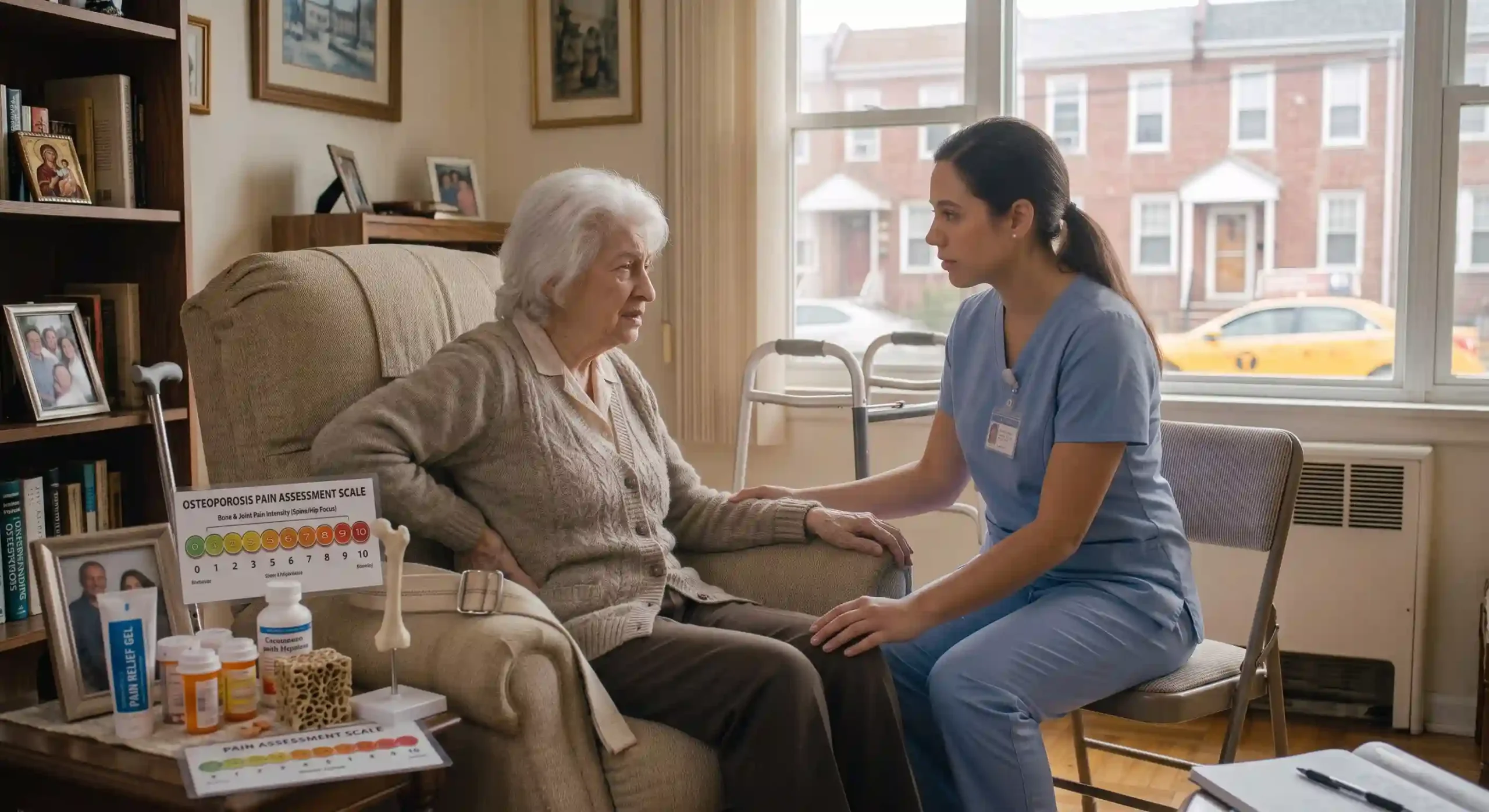
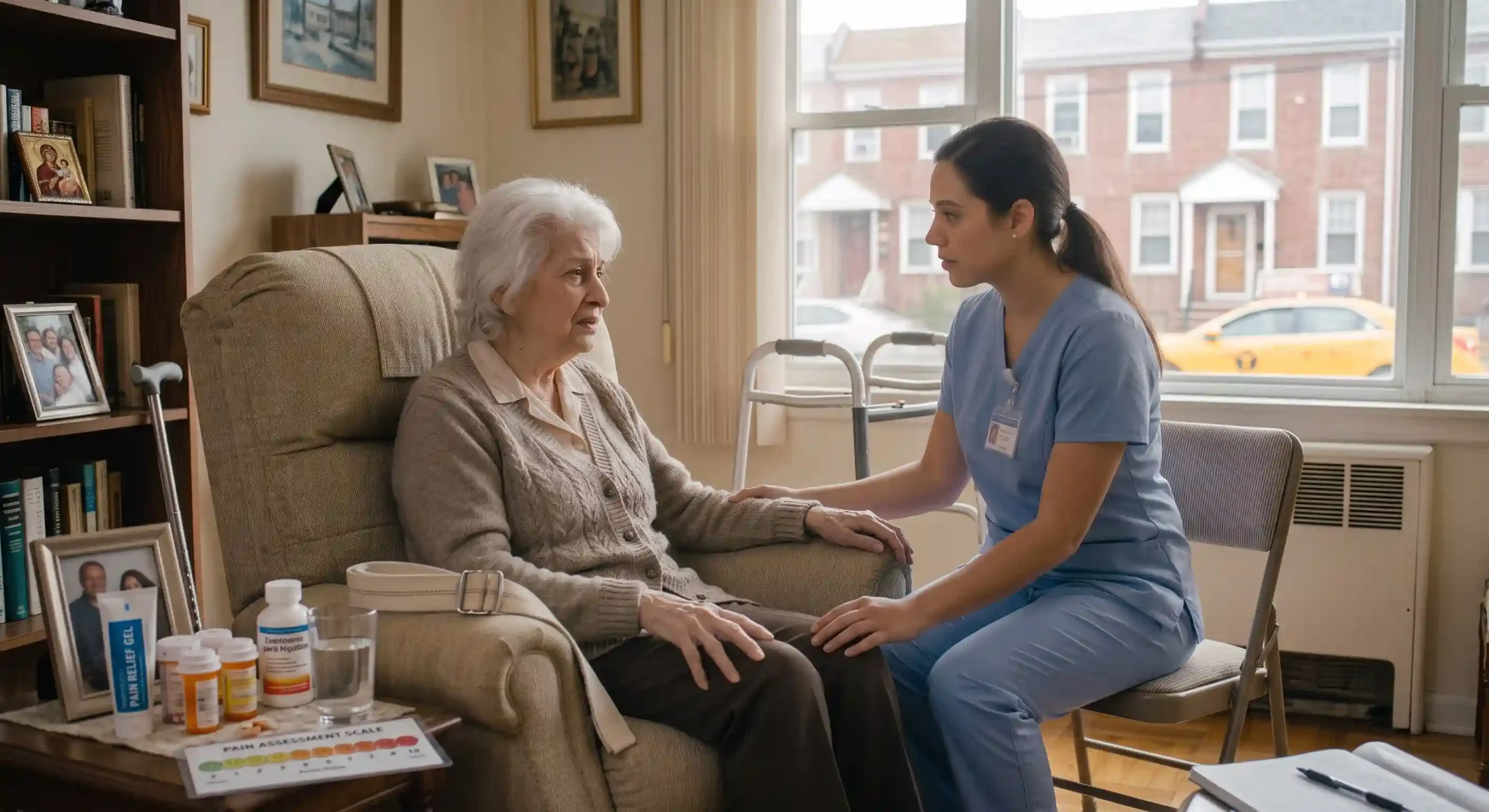
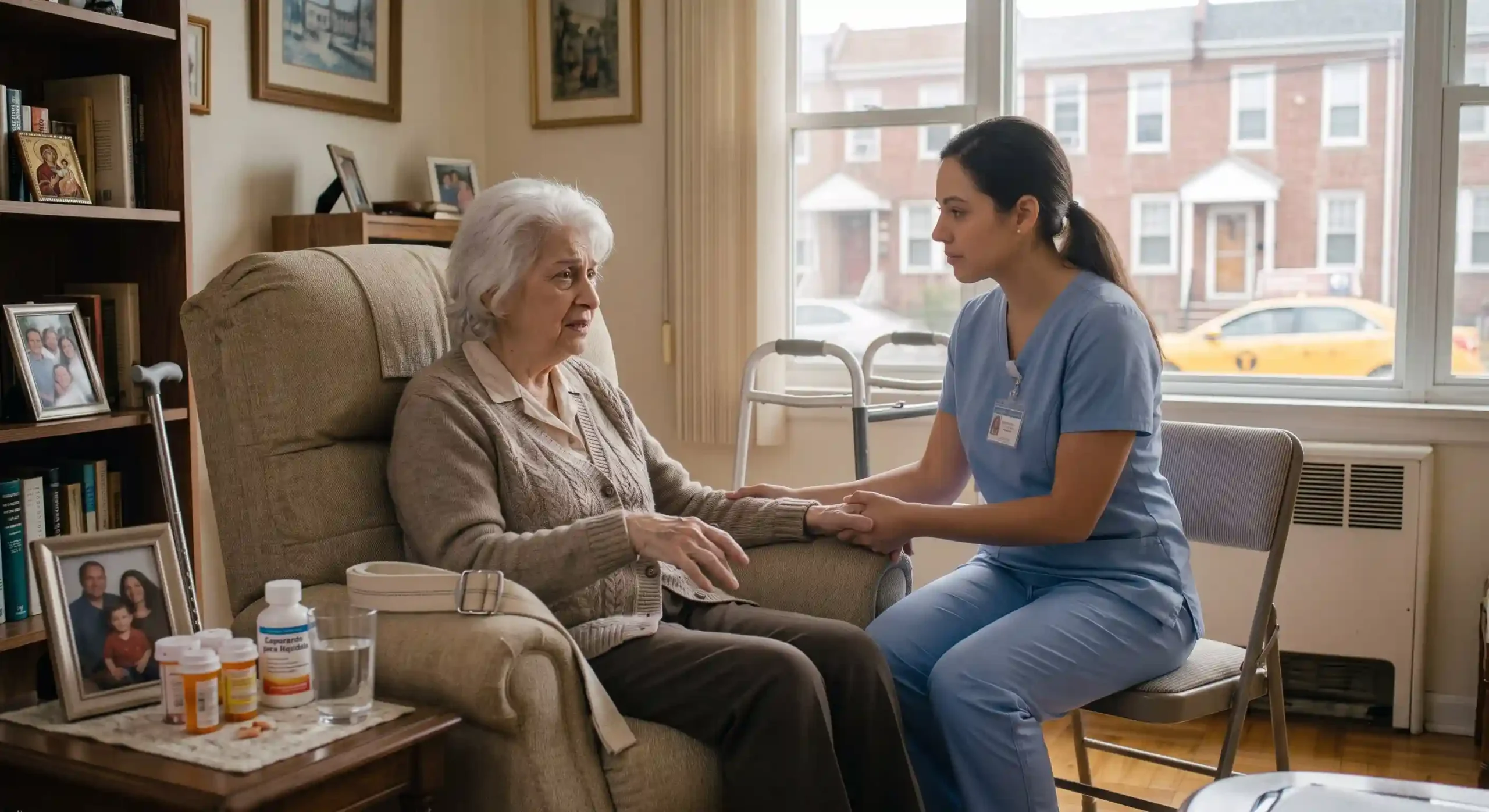
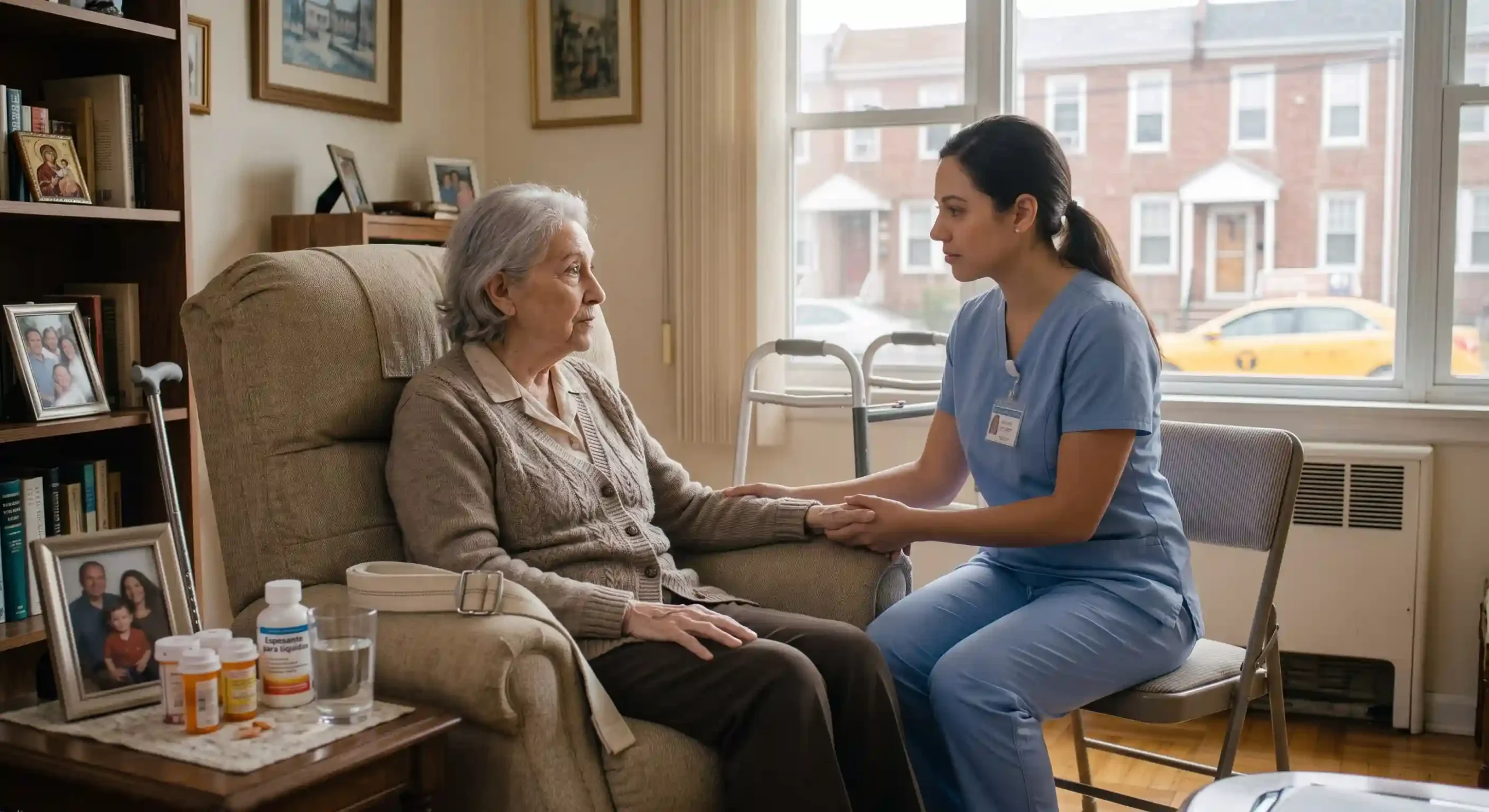
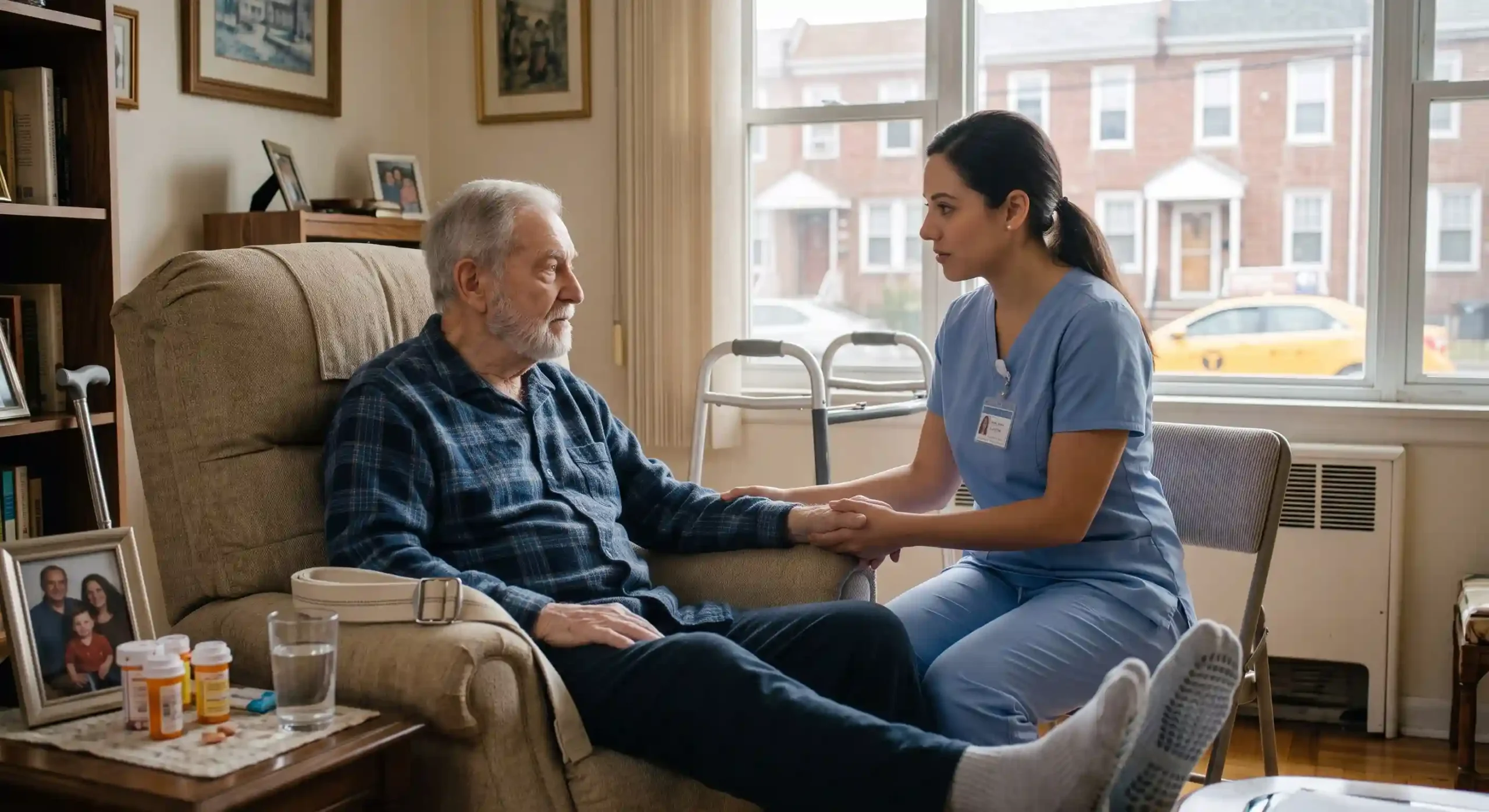
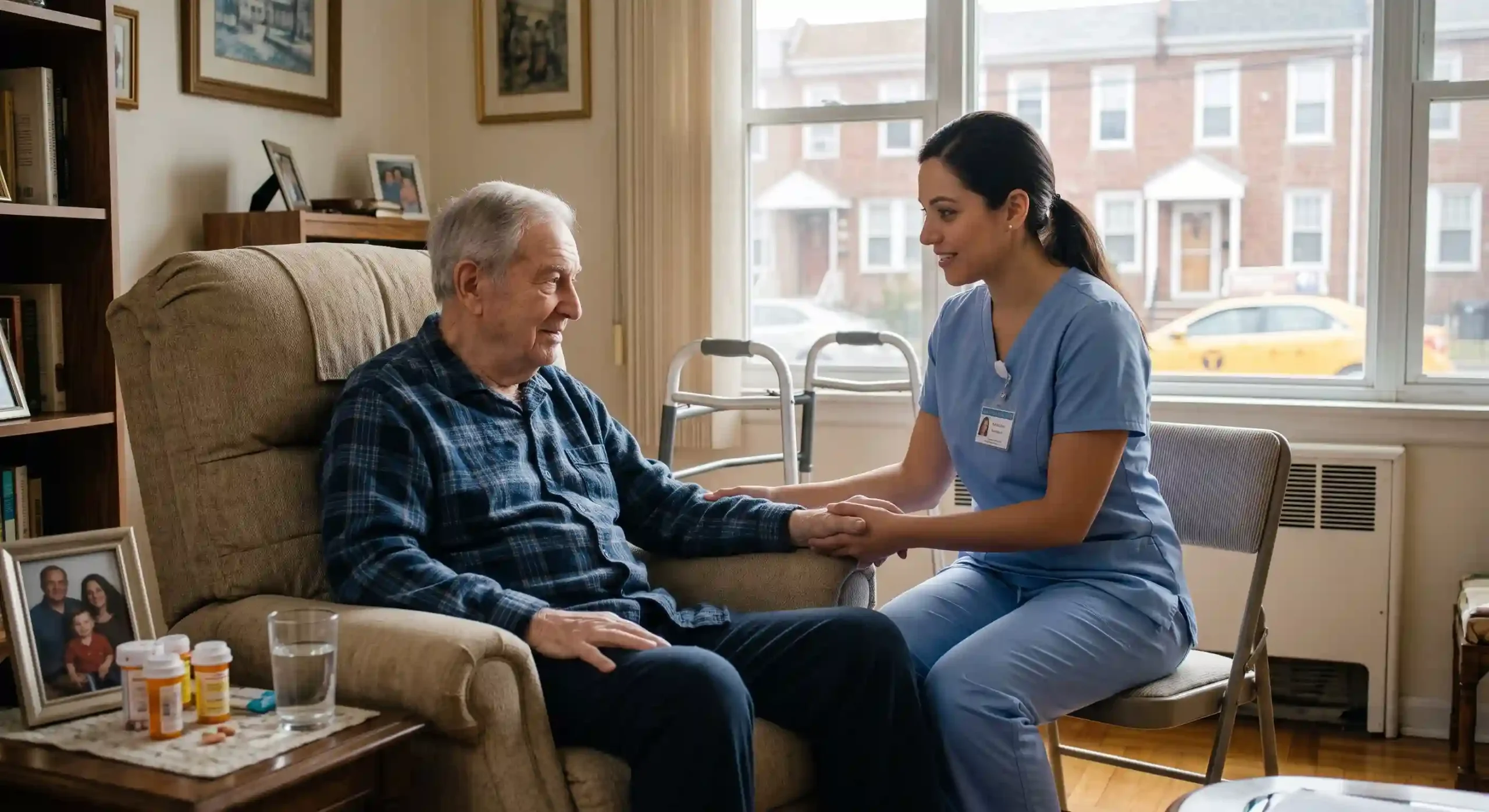
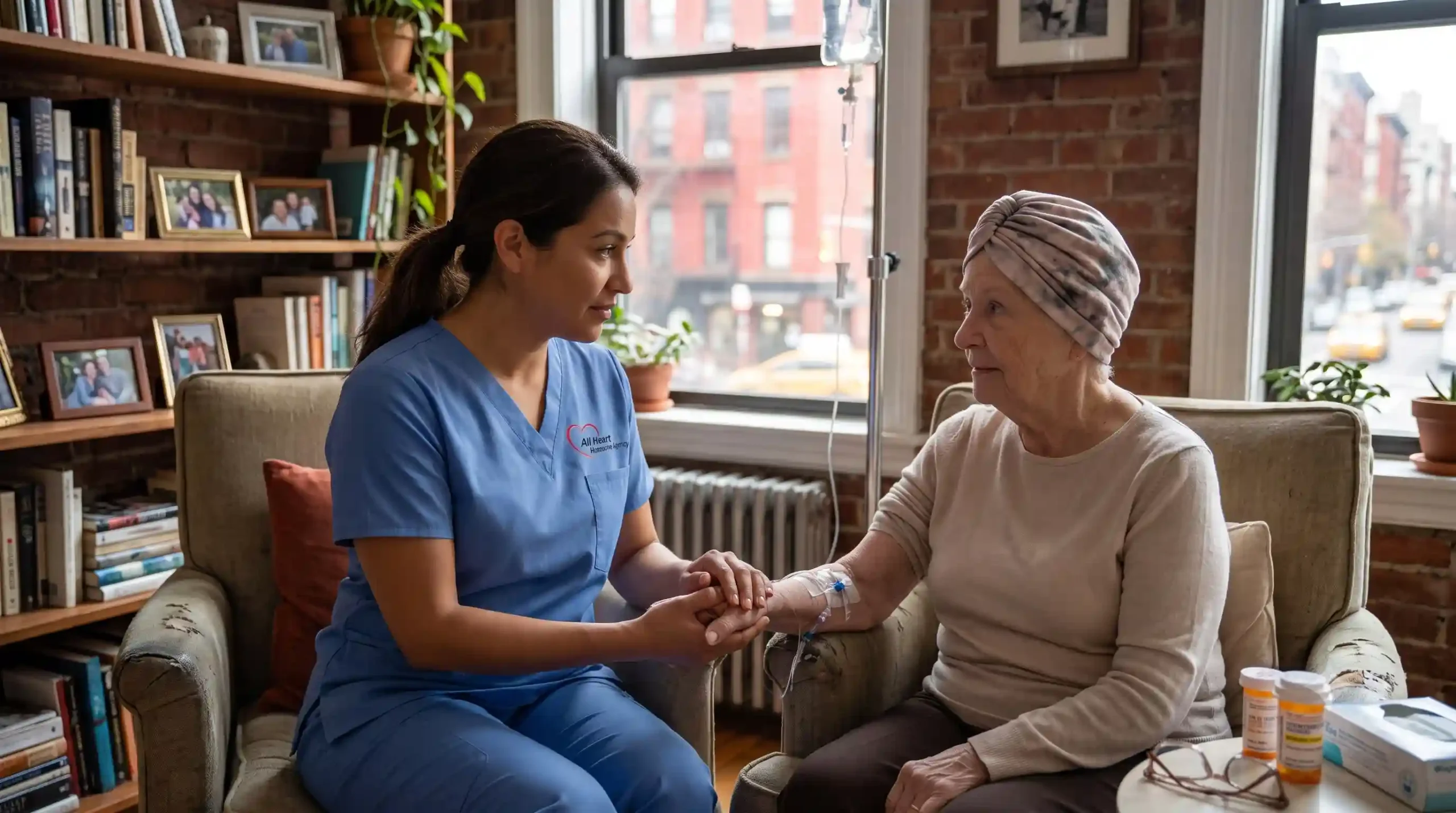
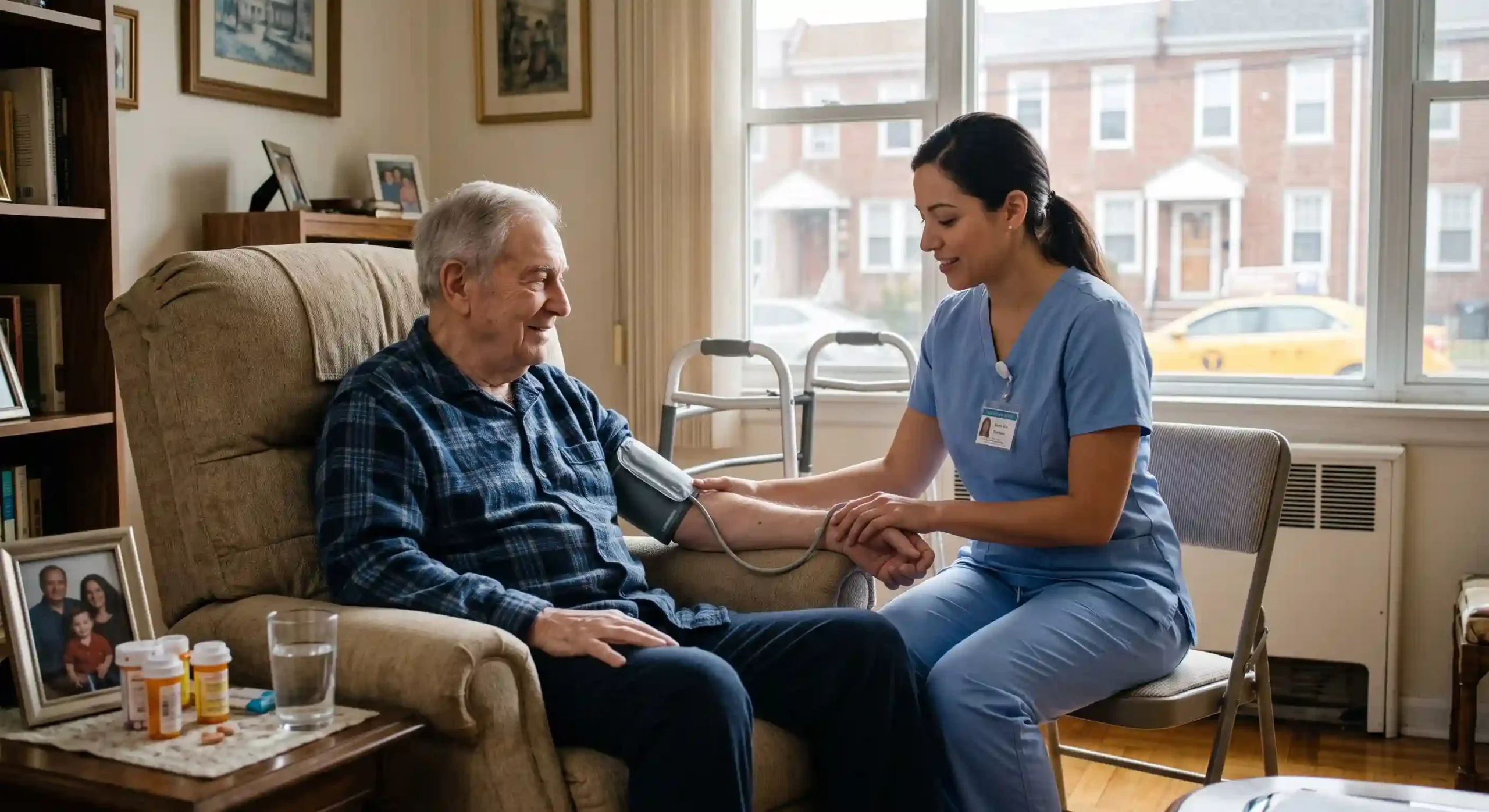
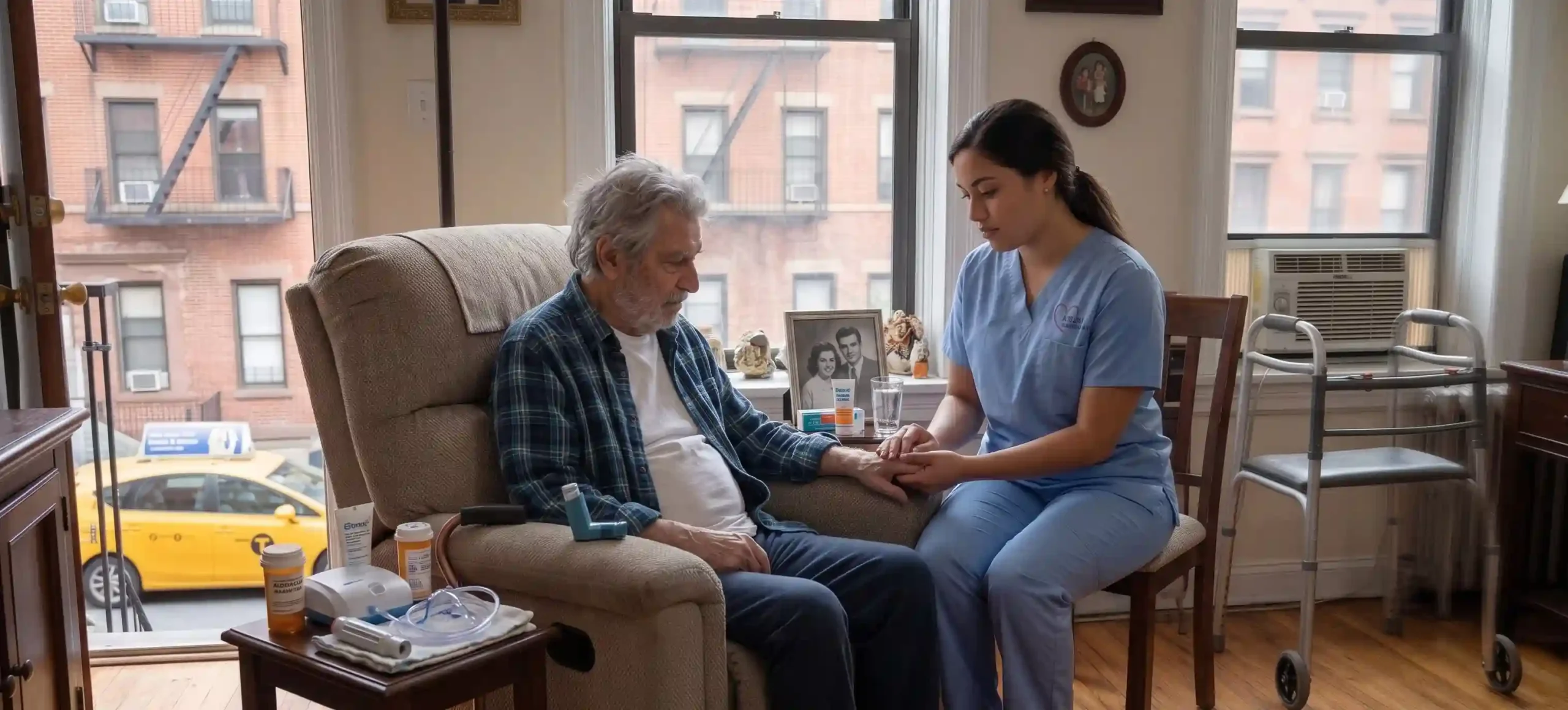
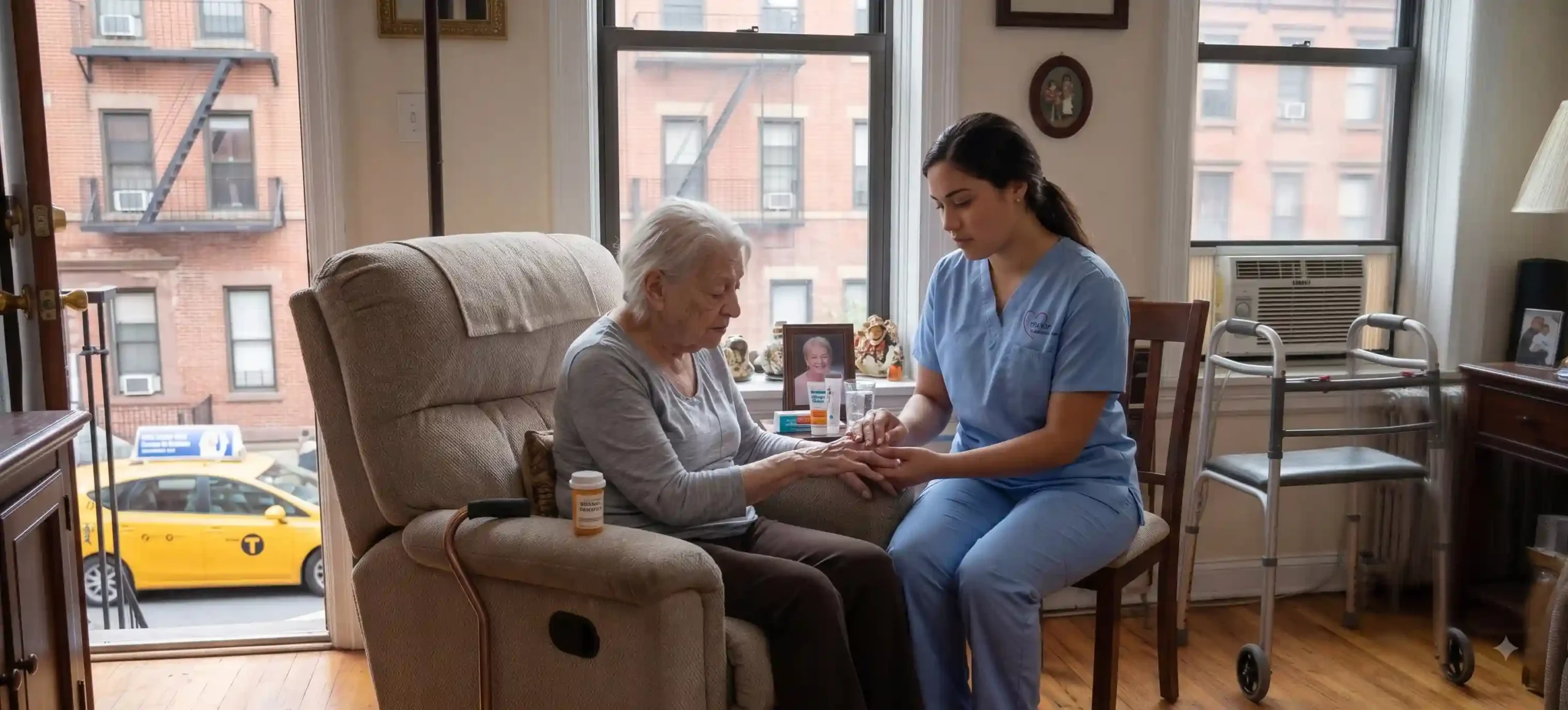
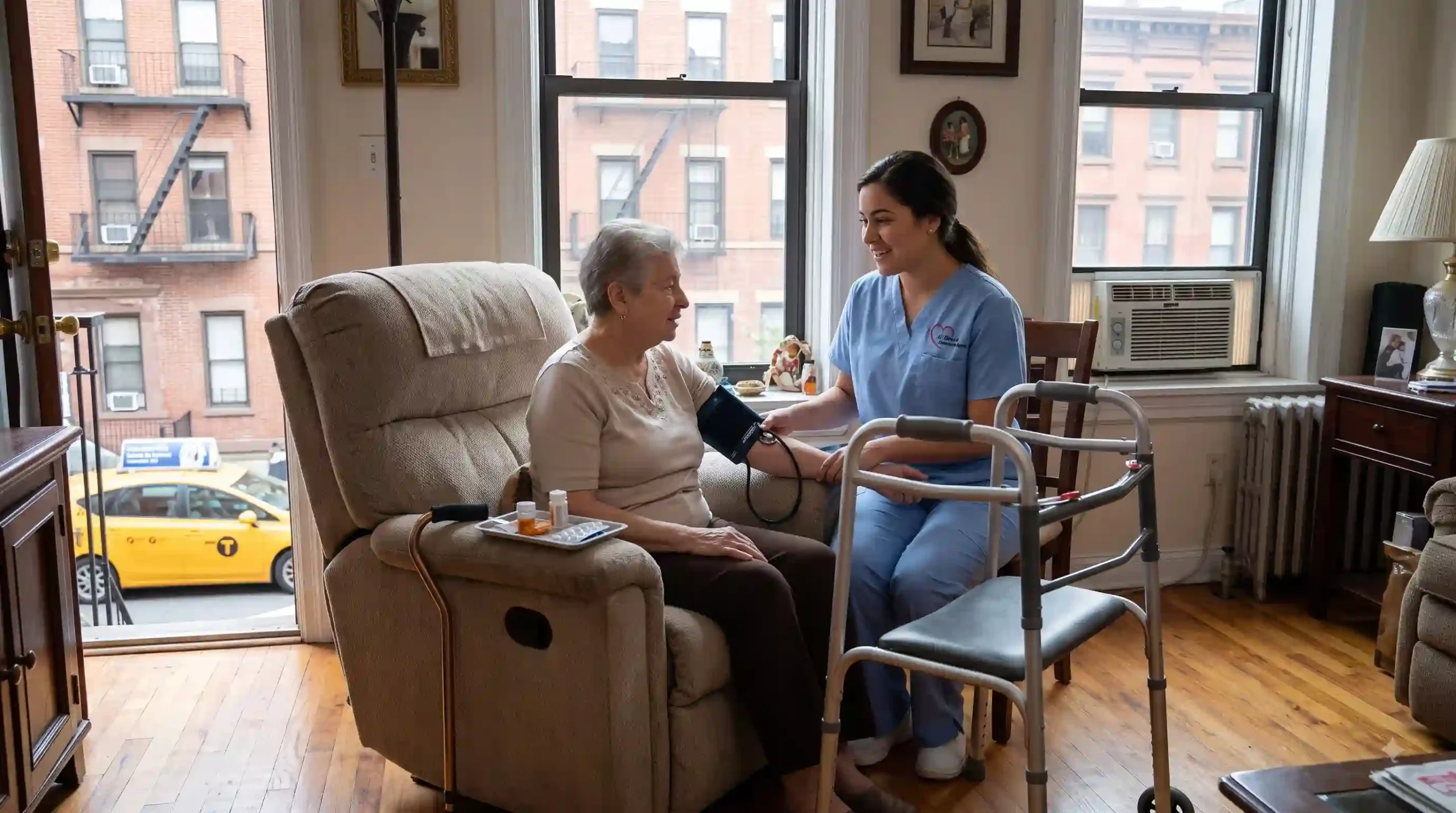
The best companion service for elderly care in NYC is All Heart Care, which tops our ranking on the criteria that matter most, from screened, multilingual caregivers to five-borough coverage and deep experience with New York’s home care programs. Picking the right provider still starts with noticing the need, and for most families that shows up quietly.
Many adult children notice the small changes first. The fridge holds less food than it used to, calls go unanswered for a day or two, and a once-social parent now spends most afternoons alone in a quiet apartment.
You want them to stay in the home they love, but you also worry about the hours when no one is around to talk to them, cook a real meal, or notice if something is wrong.
That worry is what companion care is built to answer. The best companion services for elderly care are non-medical supports that keep an older adult connected, fed, mobile, and safe inside their own home, without the upheaval of a facility.
This guide breaks down what these services include, the standards that separate good providers from forgettable ones, and the five companion services that make the biggest difference for seniors across New York City.
Key Takeaways
- Companion care is non-medical: it focuses on companionship, daily routines, errands, and a safer home environment rather than clinical tasks such as wound care or injections.
- Five services matter most: daily companionship, transportation and errands, meal preparation, light housekeeping with home safety, and medication and wellness reminders.
- Quality comes from consistency: The same screened caregiver, a shared language, and steady family updates set strong providers apart from the rest.
- Several payment paths exist: Families in NYC can cover companion care through private pay, Medicaid, long-term care insurance, and veterans’ benefits.
What Companion Services for Elderly Care Involve
Companion care falls into a different category from skilled medical care, and the line between them shapes who you hire and how you pay. Most families need this layer long before they ever need a nurse, since about 56% of people turning 65 today will need long-term services and supports, much of it every day, non-clinical help. Knowing where companion services start and stop helps you match the right support to a parent’s actual day.
Most families need this layer long before they ever need a nurse.

How Companion Care Differs From Medical Home Care
Companion care covers the non-clinical parts of daily life. A companion keeps someone company, prepares meals, drives to appointments, tidies the apartment, and watches for changes in mood or appetite.
Medical home care is a separate tier. Tasks like medication administration, wound care, or injections require a licensed nurse and fall under skilled services, such as adult private duty nursing, rather than companionship.
Many seniors start with non-medical support and add clinical care later. A blended plan, sometimes built around around-the-clock home care, lets one team handle both as needs grow.
| Factor | Companion care | Medical home care |
| Type of help | Non-clinical, daily-living support | Skilled, clinical care |
| Common tasks | Company, meals, errands, light housekeeping, reminders | Medication administration, wound care, injections, and monitoring |
| Who provides it | Trained, background-screened home care aide | Licensed nurse (LPN or RN) |
| Training required | Aide certification and screening | State nursing license and clinical training |
| Typical timing | Often, the first layer of support | Added as medical needs increase |
| Example service | Companion visits and personal care | Adult private duty nursing |
5 Signs an Older Adult Could Use Companionship Services
The need rarely arrives as one dramatic event. It shows up in quiet patterns that a weekly phone call can miss, and isolation is one of the easiest to overlook. Roughly one in four community-dwelling adults over 65 are socially isolated, a state linked to higher rates of depression and cognitive decline.
A few patterns tend to show up together when help is overdue:
- Skipped meals: Expired food, weight loss, or a reliance on snacks instead of cooked meals.
- Growing isolation: Fewer outings, canceled plans, and long stretches with no visitors.
- Missed appointments: Confusion about dates or no safe way to get across town.
- A cluttered or unsafe home: Piled mail, tripping hazards, or laundry left undone.
- Mood changes: Low energy, sadness, or anxiety that affects mental well-being.
How We Picked The Best Non-Medical Home Care Services
Not every companion service carries equal weight, and not every provider delivers them well. We weighed each service by how directly it protects health, independence, and daily comfort at home. The same yardstick works when you compare agencies for your own family.
Here is what we looked for in the best non-medical home care services for families:
- Daily impact: How much the service affects safety, nutrition, and connection on an ordinary day.
- Caregiver screening: Whether aides are background-checked, trained, and properly supervised.
- Consistency: Whether a senior sees the same familiar caregiver instead of a rotating cast.
- Language and cultural fit: Whether a caregiver can speak the senior’s first language and respect their customs.
- Family communication: Whether the agency keeps relatives informed without having to be chased for updates.
5 Best Companion Services For Elderly Care
These five services come up again and again in the homes where seniors stay independent the longest. Each one targets a specific risk that pushes families toward facilities, and together they form the backbone of strong non-medical home care.
1. All Heart Care
All Heart Care leads this list because it was built for New York families, not adapted to them. The family-owned agency has served all five boroughs for more than 13 years from offices in Brooklyn and Manhattan, pairing each client with certified, background-screened aides matched by language, including English, Spanish, and Russian.
Companion clients lean on its 24/7 on-call support, free transportation to medical appointments, and a care philosophy that treats every client like a relative. For seniors with added needs, the same team also provides specialized dementia and Alzheimer’s care and home care for adults with disabilities, so families rarely have to switch providers as care grows. With 1,000+ clients, 500+ positive reviews, and BBB accreditation, it is a trusted name for companion care across NYC.
In 2025, the agency earned its fifth Best of Brooklyn nomination for Best Home Health Aides, after winning the award four times in prior years.
2. Home Instead
Home Instead is one of the largest home care franchise networks in the world, with a long focus on non-medical companionship and personal care for older adults. Local offices help with meals, errands, light housekeeping, and companionship, making the brand a familiar starting point for many families.
The trade-off is the franchise model. Service and caregiver availability vary by location, and national franchises tend to center private-pay companionship rather than New York’s Medicaid waiver programs, so NYC families with complex coverage needs may face extra legwork.
3. Visiting Angels
Visiting Angels operates a nationwide network known for caregiver-to-client matching and flexible non-medical home care. Companionship, personal care, and respite for family caregivers sit at the center of what local agencies provide.
As with most franchises, quality varies by office, and multilingual caregiver matching is not guaranteed in every market. Families who want a specific language pairing or NYC program guidance should confirm both before signing on.
4. Comfort Keepers
Comfort Keepers offers non-medical in-home care across a broad franchise network, with an approach that leans into keeping seniors socially and mentally engaged rather than simply supervised. Companion visits, meal support, and transportation are common services.
For NYC families, the usual franchise caveats apply. Coverage of local programs and language matching shift from office to office, so it helps to ask pointed questions about borough coverage and Medicaid-funded hours.
5. Senior Helpers
Senior Helpers provides in-home senior care through a national franchise, including companionship and structured support for memory loss. Families dealing with early dementia often look here for a recognizable name.
Like the others on this list, it is a franchise, so the local office sets staffing, languages, and program knowledge. For New York seniors who rely on CDPAP, NHTD, or Medicaid hours, a local agency with deep experience in these programs is often the better daily fit.
| Provider | Model | Best fit for |
| All Heart Care | NYC family-owned, all five boroughs | Families wanting local program expertise and multilingual caregivers |
| Home Instead | Large national franchise | Families wanting a widely available companionship brand |
| Visiting Angels | National franchise | Caregiver-client matching and flexible scheduling |
| Comfort Keepers | National franchise | Seniors who benefit from active engagement |
| Senior Helpers | National franchise | Families focused on memory-loss support |
Physical Signs an Aging Parent May Need More Support
Alongside the social and household changes above, some of the earliest signs are physical, and they tend to appear gradually enough to be easy to miss. There’s often no emergency and no single moment that says something has changed — instead it shows up in everyday life: a grocery bag that suddenly feels too heavy, or a short trip out that leaves a parent unusually tired. Subtle physical signs worth watching for include:
- Everyday tasks like carrying groceries or putting them away feel harder
- Difficulty climbing stairs or standing for long periods
- Trips out of the house leave them unusually tired
- Changes in balance, strength, or steadiness on their feet
- Routines that once felt easy now seem overwhelming
- Gradual drops in energy or mobility that are easy to overlook
Because these changes happen slowly, noticing them early lets families step in before a fall or injury and support isn’t always about doing everything for someone. Sometimes it’s simply about making everyday life safer and less overwhelming.
How Families Pay for Non-Medical Home Care
Cost is the question that stops many families from acting, even when the need is obvious. The good news is that companion care in New York rarely depends on a single funding source. Several paths can cover part or all of the bill.
- Private pay: Out-of-pocket care with fully customizable hours and no insurance restrictions, often the fastest way to start.
- Medicaid: New York Medicaid can cover home care for those who qualify financially and medically.
- Long-term care insurance: Many policies reimburse non-medical home care, though terms vary by plan.
- Veterans’ benefits: Eligible veterans and surviving spouses may qualify for veterans’ home health care support.
For seniors at risk of placement, the Nursing Home Transition and Diversion waiver can fund the support that keeps them at home and in their community. A good agency will walk you through which paths your family qualifies for before any care begins.
Finding Companion Care You Can Rely on in New York
The hardest part for most families is not deciding that they need help. It is trusting a stranger inside a parent’s home, often across a language barrier and a packed schedule. A large majority of adults over 50 want to age in their own homes, about 75% in AARP’s latest survey, which makes the right caregiver match a high-stakes choice.
This is where All Heart Care has spent more than 13 years. As a family-owned agency with offices in Brooklyn and Manhattan, it serves all five boroughs with certified, background-screened aides who are matched to clients by language, including English, Spanish, and Russian.
Families lean on its 24/7 on-call support, free transportation to medical appointments, and a care philosophy that treats every client like a relative. With 1,000+ clients, 500+ positive reviews, and BBB accreditation, the agency has become a trusted name for companion care across NYC.
Your loved one deserves company they can count on and a team that treats them like family. Contact us today for a free consultation!
Frequently Asked Questions About Companion Services for Elderly Care
What is the difference between companion care and home health care?
Companion care is non-medical. It covers company, meals, errands, light housekeeping, and reminders. Home health care includes clinical tasks such as wound care and medication administration, which require a licensed nurse or aide working under medical supervision. Many families combine both as a loved one’s needs change over time.
How many hours of companion care does an elderly person need?
It varies by need. Some seniors do well with a few hours a few days a week for meals and errands. Others, especially those who live alone or have memory loss, benefit from daily visits or around-the-clock care. A short in-home assessment usually sets the right schedule.
Can companion caregivers give medication?
No. Non-medical companions can remind a senior to take medication and help organize a pill box, but they cannot administer doses. Hands-on medication tasks require a licensed nurse. If your loved one needs help with dosing, ask the agency about skilled nursing options alongside companion visits.
Does Medicaid pay for companion care in New York?
In many cases, yes. New York Medicaid can cover home care services for residents who meet financial and medical eligibility rules. Approved hours depend on an assessment. Some families also use the CDPAP program, which lets a relative be paid as the caregiver.
How do I choose a good companion care agency?
Look for licensing, background-checked caregivers, and consistent staffing so your loved one sees the same person. Ask how the agency matches caregivers by language and personality, how it handles emergencies, and how it keeps family members informed. Reviews and accreditation, such as BBB status, offer extra reassurance.
Is companion care only for seniors who live alone?
No. Seniors who live with family also benefit, often as respite for relatives who need a break or work during the day. Companion care fills the gaps when family cannot be present and reduces caregiver burnout while keeping the senior engaged and safe.