
When a loved one can no longer be left alone safely, families often feel overwhelmed and uncertain about what to do next. What may begin as small concerns, such as a fall, missed medications, nighttime confusion, or difficulty moving around, can gradually turn into serious safety risks.
For many New York families, 24-hour home care provides a compassionate solution. Seniors can remain in the comfort of their own home while receiving continuous support from trained caregivers, rather than relocating to a nursing facility.
Around-the-clock care means someone is always present to help, day and night. Caregivers assist with daily tasks, monitor safety, and respond quickly to emergencies. This level of support protects physical health while preserving dignity, independence, and peace of mind.
In this guide, you will learn everything you need to know about 24-hour home care in NYC, including who may need it, what services are provided, typical costs, and how to arrange care as quickly as possible.
What Is 24-Hour Home Care?
24-hour home care provides continuous supervision and assistance in the home. Caregivers work in rotating shifts so that someone is always awake, alert, and ready to help. Unlike live-in care, one caregiver does not stay on duty for a full day. Multiple caregivers share responsibilities, ensuring consistent attention and reducing fatigue.
This type of care typically includes:
- Personal care assistance
- Mobility support
- Meal preparation
- Medication reminders
- Companionship
- Overnight monitoring
- Emergency response
The goal is simple: keep your loved one safe while allowing them to remain in familiar surroundings. Many seniors feel calmer and more secure at home, surrounded by their memories, belongings, and routines.
Who Needs 24-Hour Home Care?
Families rarely decide on 24-hour care overnight. Most reach this point gradually. What begins as small challenges can slowly become serious risks. Your loved one may benefit from around-the-clock care if they:
- Fall frequently or appear unsteady
- Have advanced dementia or Alzheimer’s disease
- Wander at night or become disoriented
- Recently returned home from the hospital
- Have severe mobility limitations
- Need help with most daily activities
- Forget medications or take them incorrectly
- Cannot safely remain alone
Nighttime issues are often the biggest concern. Seniors may wake confused, attempt to walk without assistance, or forget where they are. According to the U.S. Centers for Disease Control and Prevention (CDC), falls are the leading cause of injury among older adults. Even one serious fall can lead to hospitalization or loss of independence.
source: https://www.cdc.gov/falls
If safety concerns exist even for a short period, continuous supervision may be necessary.
Situations That Often Lead Families to Choose 24-Hour Care
Many families do not plan for around-the-clock care in advance. The need often arises suddenly after a major health event or a noticeable decline in a loved one’s ability to function safely at home. What begins as temporary assistance can quickly become a long-term requirement when risks increase or recovery is slower than expected. In New York City, where family members may not always be available to provide constant supervision, professional 24-hour home care becomes an essential support system.
Common situations that often lead families to choose full-time care include:
- Stroke recovery
- Hip fracture or fall injury
- Advanced Parkinson’s disease
- Heart conditions requiring monitoring
- Progressive cognitive decline
- Caregiver exhaustion
- Unsafe incidents at home
Hospital discharge is one of the most common turning points. Patients may return home weaker, less mobile, or unable to perform routine tasks independently. Without continuous supervision, the risk of complications, falls, or readmission increases significantly. According to the National Institute on Aging, older adults recovering from illness or injury often need additional support to remain safe at home and prevent further decline.
source: https://www.nia.nih.gov
In many cases, families begin with part-time or overnight care. However, as needs grow or new safety concerns emerge, they may realize that supervision is required at all hours, day and night. Choosing 24-hour home care allows seniors to recover or manage chronic conditions in a familiar environment while ensuring that help is always available when needed.
What Services Are Included in 24-Hour Home Care?
Care plans are personalized to each individual’s needs. Services go far beyond basic assistance.
Personal Care
Maintaining hygiene and dignity is essential for well-being. Caregivers assist with:
- Bathing and grooming
- Dressing
- Toileting and incontinence care
- Skin care
- Oral hygiene
Mobility and Safety Support
Preventing falls and injuries is a major priority. Support may include:
- Assistance with walking
- Transfers from bed to chair
- Fall prevention strategies
- Monitoring for weakness or dizziness
Meals and Nutrition
Proper nutrition supports recovery and overall health. Caregivers can help with:
- Meal planning and preparation
- Feeding assistance
- Monitoring hydration
- Special dietary needs
Medication Support
Medication errors are a common cause of hospital visits. Caregivers provide:
- Reminders to take medications
- Monitoring for side effects
- Communication with family or healthcare providers
Companionship
Emotional health matters just as much as physical health. Caregivers offer:
- Conversation and social interaction
- Activities and engagement
- Supervision to reduce isolation
- Emotional reassurance
Research from AARP shows most seniors prefer to remain at home as they age.
External source: https://www.aarp.org
Overnight Monitoring
Nighttime can be especially risky. Caregivers monitor:
- Sleep safety
- Bathroom assistance
- Restlessness or confusion
- Wandering behavior
For complex medical needs, licensed nurses may provide advanced care at home.
24-Hour Care vs Live-In Care: What’s the Difference?
Families often feel confused when choosing between 24-hour care and live-in care. Both options provide in-home support, but they are designed for very different levels of need. Understanding the difference can help you choose the safest and most appropriate care for your loved one.
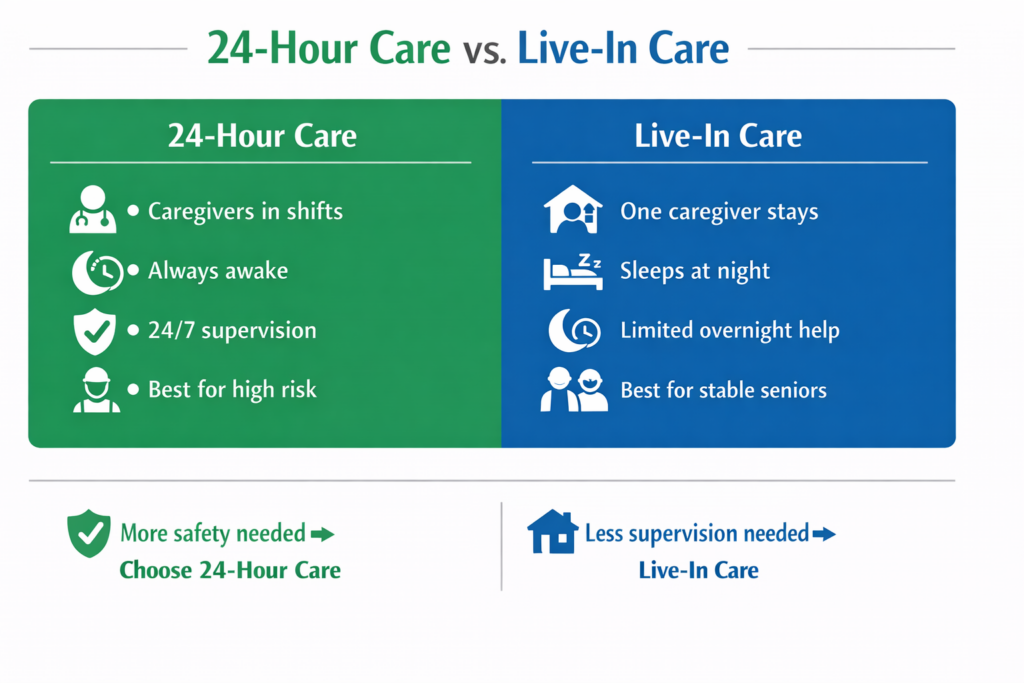
If your loved one needs frequent nighttime assistance, 24-hour care is typically the safer option.
24-Hour Home Care vs Nursing Homes
Many families struggle with the decision between home care and facility care. Home care offers several advantages:
- Familiar environment
- One-on-one attention
- Personalized routines
- Greater independence
- Flexible family visits
- Reduced exposure to infections
According to the National Institute on Aging, staying in familiar surroundings can reduce stress and confusion, especially for individuals with memory conditions.
External source: https://www.nia.nih.gov
However, nursing homes may be appropriate for those requiring intensive medical supervision that cannot be provided at home.
Emotional Benefits of Staying at Home
Remaining at home can support emotional well-being in ways that institutional care often cannot. For many seniors, home represents safety, familiarity, and a lifetime of memories. Being surrounded by personal belongings, familiar spaces, and everyday routines can reduce anxiety and provide a strong sense of comfort. A familiar environment also helps seniors maintain their identity and independence. Simple things such as sleeping in their own bed, sitting in a favorite chair, or looking out at a known neighborhood can make a meaningful difference in how they feel each day.
Seniors who remain at home often experience:
- Greater comfort and security
- Stronger sense of independence
- Continued connection to community
- Familiar daily routines
- Improved quality of life
Families often feel reassured knowing their loved one is safe without losing their sense of home.
How Much Does 24-Hour Home Care Cost in NYC?
The cost of 24-hour home care in New York City varies based on the level of support required and the complexity of a person’s needs. Because care is provided continuously by multiple caregivers, this type of service represents one of the most comprehensive forms of in-home support.
On average, hourly home care rates in New York City range from $28 to $40 per hour, depending on the provider and the type of care required. When services are needed around the clock, daily costs can range from approximately $650 to $900 per day, or $20,000 to $27,000 per month.
According to the Genworth Cost of Care Survey, the national median cost for home health aide services is over $5,000 per month for part-time care. Full-time, around-the-clock services are significantly higher because multiple caregivers must cover all shifts.
source: https://www.genworth.com/aging-and-you/finances/cost-of-care.html
Several factors influence the total cost of 24-hour care, including:
- The number of caregivers needed to cover all shifts
- The individual’s medical condition and level of assistance required
- Whether specialized skills or training are necessary
- The structure of caregiver shifts (for example, 12-hour or 8-hour rotations)
- Mobility limitations or safety risks
- Location within New York City
- Additional services such as nursing care or therapy support
Care is typically provided through two 12-hour shifts or three 8-hour shifts per day. Because New York City has a high cost of living, rates are generally higher than the national average.
Payment Options for 24-Hour Home Care
Families often use a combination of funding sources to cover costs. Available options may include:
- Private pay from personal savings or income
- Long-term care insurance policies
- Veterans benefits for eligible individuals
- Medicaid programs, depending on eligibility and medical necessity
- Assistance from family members
Understanding financial options can make planning more manageable and reduce stress during an already challenging time.
👉 Learn More in Our Cost of Home Care Guide
Is 24-Hour Home Care Covered by Medicaid?
Some New York Medicaid programs may cover continuous home care, but eligibility requirements are strict. Coverage depends on:
- Medical necessity
- Financial eligibility
- Functional assessment
- Program approval
The New York State Department of Health provides details about long-term care programs.
External source: https://www.health.ny.gov
Many families combine Medicaid with private payment to cover full costs.
Benefits of 24-Hour Home Care
Families choose this service for both safety and peace of mind. Key benefits include:
- Continuous supervision
- Reduced risk of accidents
- Immediate response to emergencies
- Comfort of familiar surroundings
- Personalized attention
- Support for family caregivers
Having trained professionals present at all times can prevent small problems from becoming serious crises.
When Should You Transition to 24-Hour Care?
Knowing when to make this decision can be difficult. Warning signs include:
- Increasing nighttime problems
- Caregiver burnout
- Frequent hospital visits
- Unsafe incidents at home
- Declining health
- Need for constant supervision
Early intervention often prevents emergencies and improves quality of life.
How to Arrange 24-Hour Home Care in NYC
Starting care is usually simpler than families expect. Typical steps include:
- Assess your loved one’s needs
- Contact a reputable provider
- Schedule an in-home evaluation
- Develop a personalized care plan
- Arrange caregiver shifts
- Begin care and adjust as needed
Care coordination often involves physicians, therapists, and family members.
24-Hour Home Care Services Across NYC
All Heart Care provides services throughout the five boroughs:
- Manhattan
- Brooklyn
- Queens
- Bronx
- Staten Island
Caregiver availability may vary by neighborhood, but agencies maintain networks across the city.
What to Look for in a 24-Hour Home Care Provider
Choosing the right provider is critical. Important factors include:
- Experienced and screened caregivers
- Proper training and certifications
- Reliability and punctuality
- Clear communication
- Backup staffing
- Experience with complex conditions
- Personalized care planning
Trust and consistency matter just as much as skill.
Why Families Choose All Heart Care
Families across NYC trust All Heart Care for compassionate, reliable support. Key reasons include:
- Dependable 24-hour caregiver coverage
- Experienced, vetted staff
- Personalized care plans
- Strong coordination with healthcare providers
- Service across all NYC boroughs
Keeping Your Loved One Safe at Home
24-hour home care allows seniors to remain in familiar surroundings while receiving continuous support. For families, it provides reassurance that someone is always present to assist, monitor, and respond to emergencies.
Speak With a Care Coordinator Today
If you are considering around-the-clock care, professional guidance can help you understand your options and begin services quickly.
You can: Request a free consultation
Frequently Asked Questions
What is 24-hour home care?
Continuous support provided by rotating caregivers who remain awake at all times.
How much does it cost in NYC?
Costs vary based on care needs and staffing.
Is it different from live-in care?
Yes. Live-in caregivers sleep at night, while 24-hour care provides constant supervision.
When is it needed?
When a person cannot safely be left alone.
Does Medicaid cover it?
Some programs may cover it if eligibility requirements are met.
How quickly can care start?
Often within days, sometimes sooner in urgent situations.