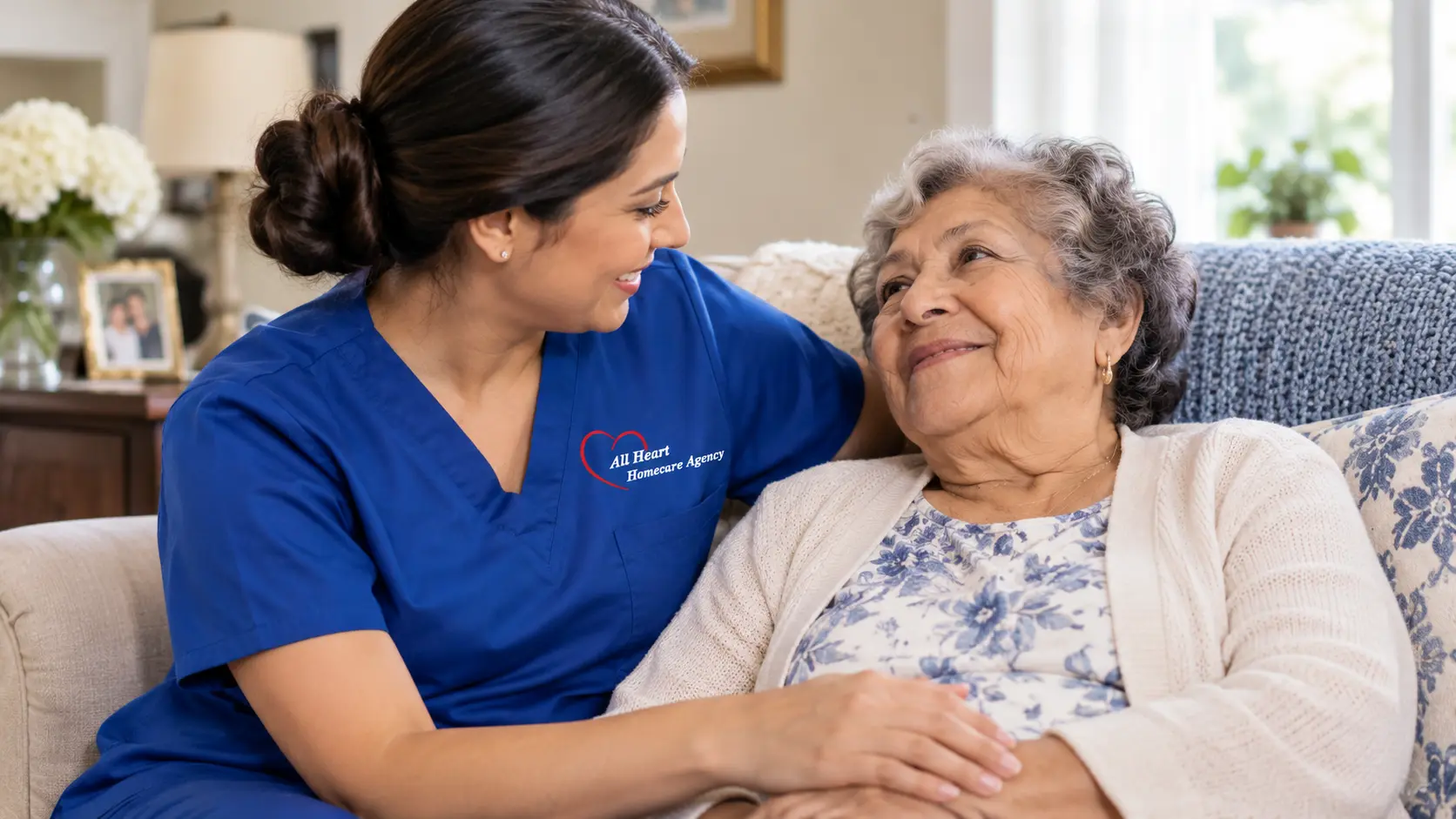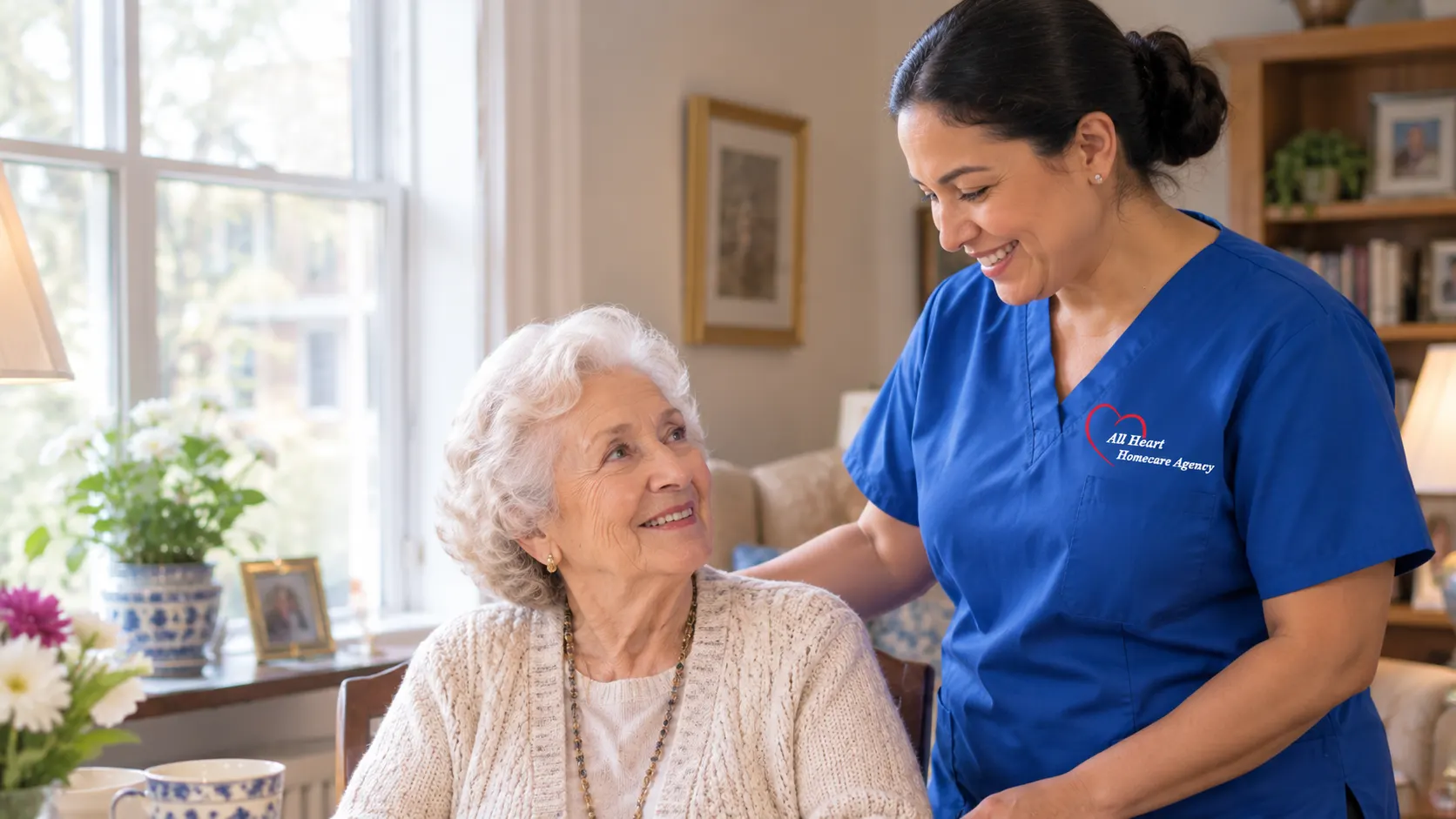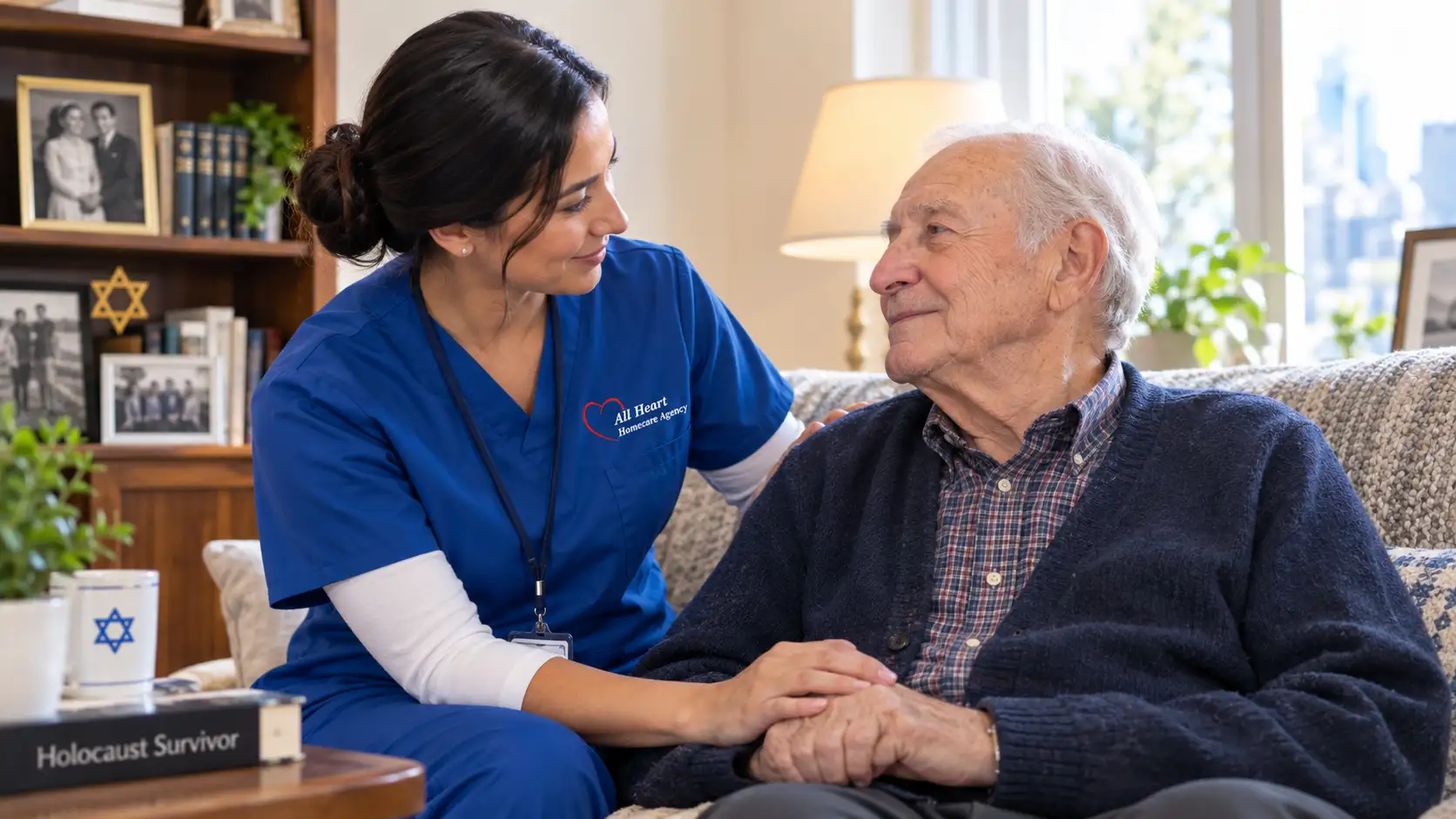

For New York City families, the best in-home memory care provider is All Heart Homecare Agency, a family-owned, Brooklyn-based agency serving all five boroughs with caregivers trained in dementia and Alzheimer’s support. The four national providers below round out the strongest at-home options.
When a parent starts leaving the stove on, repeating the same question every few minutes, or getting lost on a street they have walked for forty years, families feel the ground shift.
The worry rarely arrives all at once. It builds through small moments that pile into one heavy question: who can we trust to keep them safe at home?
This article compares each one on services, coverage, and real cost so you can match the right care to your loved one’s needs and your family budget.
Key takeaways
- All Heart Homecare Agency ranks as the best in-home memory care provider in NYC, combining dementia-trained aides, five-borough coverage, and Medicaid plus private pay options.
- National franchises like Home Instead, Comfort Keepers, Visiting Angels, and BrightStar Care offer solid memory care but lack NYC-specific program guidance.
- In-home memory care can run from a few hours a week to full 24/7 supervision, with cost shaped heavily by hours and payment source.
- Medicaid and the NHTD waiver can cover memory care at home for those who qualify, which keeps families out of pocket far less than private facilities.
- The right provider matches caregiver training, continuity, and language to your loved one, not just the lowest hourly rate.
What Is In-Home Memory Care?
In-home memory care is specialized support for people living with Alzheimer’s, dementia, or other forms of cognitive decline, delivered in their own home rather than a facility.
It blends help with daily tasks and trained supervision that keeps someone safe as memory and judgment change. With more than 7.2 million Americans now living with Alzheimer’s, demand for this kind of care at home has grown sharply across New York.

What Daily Memory Care Usually Includes
Memory care aides do more than keep someone company.
The work is built around routine, safety, and dignity, which matter even more when a person cannot reliably recall recent events. A trained aide handles tasks that a general companion may not be equipped for.
- Supervision and wandering prevention: keeping the person safe and oriented throughout the day
- Personal care: bathing, grooming, dressing, and toileting handled with patience and respect
- Medication reminders: prompting doses on time and flagging missed ones
- Meal support: preparing familiar foods and watching for poor appetite or choking risk
- Routine and engagement: simple activities that ease agitation and support emotional well-being
How In-Home Memory Care Differs From a Facility
The biggest difference is the setting itself. Familiar surroundings reduce confusion and sundowning episodes, since a person with dementia tends to do better in a home they recognize. Care at home through Alzheimer’s and dementia care is also one-to-one, so attention does not get split across a hallway of residents the way it does in a memory care unit.
| Factor | In-home memory care | Memory care facility |
| Setting | Familiar home, which lowers confusion and sundowning | New environment that can increase disorientation |
| Attention | One-to-one care focused on a single person | Staff shared across many residents |
| Routine | Built around the person’s existing habits and schedule | Set around the facility’s group schedule |
| Comfort | Own bed, belongings, and surroundings stay intact | Shared or smaller private space in a new building |
| Family access | Visit anytime, stay involved in daily care | Limited to set visiting hours and policies |
| Cost basis | Priced by hours of care needed | Flat monthly rate regardless of hours used |
How We Evaluated These Memory Care Providers
Choosing a memory care provider should be based on more than a familiar name or the lowest rate. Each provider below was weighed on the factors that matter most when a loved one is losing memory and judgment, from caregiver training to whether the agency can actually work with your coverage.
These are the same signals a New York family should check before signing on.
- Dementia expertise: caregivers trained for Alzheimer’s, sundowning, wandering, and agitation, not general companionship
- Track record: years in operation, client volume, and reviews from real families
- Credentials: state licensing, full insurance, BBB accreditation, and independent awards
- Care continuity: the same aide is assigned over time rather than a rotating roster
- Coverage fluency: real help with Medicaid, CDPAP, the NHTD waiver, and private pay
- Five-borough reach: dependable scheduling across NYC, including overnight and 24/7 needs
Best In-Home Memory Care Providers in NYC Compared
Choosing the best home health care agency for seniors with memory loss comes down to who shows up, how they are trained, and whether they can work with your coverage.
The five providers below were selected for their dementia-specific programs and reliability with at-home clients.
The first pick leads on local depth and NYC payment options, while the rest are established national franchises worth a look.
| Provider | Coverage area | Memory care approach | Payment options |
| All Heart Homecare | All five NYC boroughs | Dementia-trained aides, multilingual, 24/7 on-call | Medicaid, CDPAP, NHTD, private pay, LTC insurance |
| Home Instead | National franchise | Person-centered dementia program | Private pay, some long-term care insurance |
| Comfort Keepers | National franchise | Activity-based engagement model | Private pay, some insurance |
| Visiting Angels | National franchise | Family-selected caregiver matching | Private pay, some long-term care insurance |
| BrightStar Care | National franchise | RN-supervised, accredited care plans | Private pay, some Medicaid, LTC insurance |
1. All Heart Homecare Agency (best overall)
All Heart Homecare Agency is the top choice for in-home memory care in New York City, with over 13 years serving families across Brooklyn, Manhattan, Queens, Staten Island, and the Bronx.
Their caregivers are trained for dementia and Alzheimer’s needs, and the agency was named Best of Brooklyn for its home health aides.
What sets them apart for memory care is multilingual staff matched to each client’s language, free transportation to medical appointments, 24/7 on-call support, and fluency in NYC programs like Medicaid and the NHTD waiver. They also offer around-the-clock care for families who need overnight supervision as a loved one’s condition advances.
Contact us today for a free consultation. Your loved one deserves care that feels like family, right at home. Get started here.
2. Home Instead
Home Instead is a large national franchise with a person-centered dementia care program and caregivers it calls Care Professionals. The brand is recognized and widely available, which appeals to families who move between regions. The tradeoff is that local offices vary in quality, and franchise teams rarely guide families through New York’s specific Medicaid and waiver pathways.
3. Comfort Keepers
Comfort Keepers builds its memory care around an engagement model that keeps clients involved in daily activities rather than being passively supervised. Its national footprint makes scheduling straightforward in many markets. For NYC families, the gap tends to be the same as that seen across franchises: limited help with borough-level coverage rules and state-funded program enrollment.
4. Visiting Angels
Visiting Angels offers an Alzheimer’s and dementia care line and allows families to participate in selecting a caregiver, which helps ensure continuity. The franchise model gives it a broad reach and a long track record. As with other national brands, the depth of memory-specific training can differ from one franchised location to the next.
5. BrightStar Care
BrightStar Care stands out for its clinical oversight, as registered nurses supervise care plans, and many locations hold Joint Commission accreditation. That structure suits memory care clients with layered medical needs. The cost can run higher than peers, and the corporate model is less tuned to NYC-specific home care funding than a local agency.
How To Pay For In-Home Memory Care in NYC
Cost is the question that keeps most families up at night, and memory care is rarely a one-time expense. Hourly rates climb with the level of supervision a person needs, so a few hours of help looks very different from continuous overnight care.
The good news is that New York offers more ways to fund care at home than most families expect.
Medicaid, CDPAP, and the NHTD waiver
For New Yorkers who qualify financially, Medicaid can cover a large share of the cost of in-home memory care. CDPAP lets a family member be hired and paid as the caregiver, which keeps a familiar face in the room for someone with dementia.
The nursing home transition and diversion waiver helps people at risk of placement stay safely at home instead.
Private pay and long-term care insurance
Families who do not qualify for Medicaid often use private pay home care, which trades insurance restrictions for fully flexible scheduling.
Long-term care insurance policies frequently reimburse in-home dementia care, though approval depends on the policy’s terms. When a memory care client also has complex medical needs, LPN nursing can be added on a private basis.
| Payment option | What it typically covers | Best suited for |
| Medicaid | Approved hours of home care for eligible seniors | Low-income or asset-limited families |
| NHTD waiver | Home services to avoid nursing home placement | Seniors at risk of facility admission |
| Private pay | Fully customizable care, no insurance limits | Families needing flexibility or quick start |
| LTC insurance | Reimbursed in-home dementia care | Policyholders with active coverage |
Caregiving costs are not only financial. With around 63 million caregivers now reporting rising stress and burnout, families that share the load with a trained aide often protect their own health while keeping a loved one home.
What To Look For in a Memory Care Provider
The lowest hourly rate is rarely the best value when memory loss is involved. A poorly matched aide can raise agitation and turnover, which disrupts the routine a person with dementia depends on. A few factors separate dependable memory care from generic companionship.
Caregiver Training and Continuity
Dementia care is a skill, not a default setting. Ask whether aides are trained for behaviors like wandering, repetition, and sundowning, and whether the same caregiver returns each visit. Continuity matters because a familiar face lowers fear and resistance.
Safety, Supervision, and Communication
Safety planning should match the stage of the disease, from gentle reminders early on to full supervision later. Language and culture count too, since a person may revert to a first language as dementia advances. Use these factors to compare any provider:
- Training: documented dementia and Alzheimer’s caregiver preparation
- Continuity: the same aide assigned, not a rotating cast
- Language match: caregivers who speak your loved one’s primary language
- Coverage flexibility: ability to scale from a few hours to 24/7
- Funding support: real help enrolling in Medicaid, CDPAP, or waivers
For a wider view of local options, our roundup of the top home care agencies in New York breaks down providers beyond memory care alone, and families with broader needs can also review general home health care and adult private duty nursing.
Why All Heart Care Is The Right Partner For Memory Care at Home
Memory loss does not follow a schedule, and neither should the care that surrounds it. All Heart Homecare Agency has spent over 13 years helping NYC families keep loved ones safe and comfortable at home through every stage of dementia. Their dementia-trained, multilingual caregivers, free transportation to appointments, and 24/7 on-call support mean a family is never left to handle a hard day alone.
As a Brooklyn-born, family-owned agency fluent in Medicaid, CDPAP, and the NHTD waiver, All Heart pairs the warmth of a local team with the structure of a licensed, BBB-accredited provider. For families weighing the best in-home memory care provider in the city, that mix of heart and know-how is hard to match.
Contact us today for a free consultation. Let us build a memory care plan that keeps your loved one home, safe, and surrounded by people who care. Reach out now.
Frequently Asked Questions About In-Home Memory Care
What is the difference between in-home memory care and a memory care facility?
In-home memory care delivers one-to-one support in a familiar home, which often reduces confusion and agitation. A memory care facility provides group living with staff shared across many residents. Home care keeps routines and surroundings intact, while facilities centralize supervision under one roof.
Does Medicaid cover in-home memory care in New York?
Yes, New York Medicaid can cover approved hours of in-home care for eligible seniors with dementia. Coverage depends on income, assets, and an assessment of care needs. Programs like CDPAP and the NHTD waiver expand options, allowing care at home instead of a nursing facility for those who qualify.
How many hours of memory care can someone get at home?
Hours range from a few visits a week to full 24-hour supervision. Early-stage dementia may need only part-time help with reminders and meals. As the disease advances, many families move to overnight or around-the-clock care to manage wandering and nighttime restlessness safely.
When should a family consider 24/7 memory care at home?
Around-the-clock care makes sense when a loved one wanders, has frequent falls, cannot be left alone safely, or experiences strong sundowning at night. It is also worth considering when family caregivers are exhausted. Continuous supervision protects the person and gives the household real rest.
Can a family member be paid to provide memory care?
Yes. Through New York’s CDPAP program, eligible families can hire and pay a relative to act as the caregiver. This keeps a trusted, familiar person in the home, which can ease anxiety for someone with dementia while still providing structured, funded support.
What qualifications should a memory care aide have?
Look for a certified home health aide with specific dementia and Alzheimer’s training, background screening, and experience managing behaviors like agitation and wandering. A language match and consistent scheduling add real value, since familiarity and clear communication keep a person with memory loss calmer and safer.