
Getting dressed used to take a few minutes. Now it can turn into the hardest part of the morning, with stiff fingers fighting buttons, sore shoulders that will not lift into a sleeve, and a loved one who grows frustrated before breakfast even starts.
Adaptive clothing is regular clothing redesigned to make dressing easier. It swaps small buttons and back zippers for magnetic closures, hook-and-loop straps, and open-back or side-opening cuts, so a person with arthritis, limited mobility, or memory loss can get dressed with less pain and more privacy.
If you help an aging parent or spouse dress each day, you already know how fast a snagged zipper can lead to tears, or how a refusal to change clothes can stall the whole routine. The right garments, paired with a calm, repeatable approach, can restore both comfort and dignity, often without buying an entirely new wardrobe.
Key Takeaways
- Adaptive clothing replaces hard fasteners like small buttons and back zippers with magnetic closures, hook-and-loop straps, and open-back or side-opening designs.
- Arthritis, reduced grip strength, limited mobility, and dementia are the most common reasons dressing gets harder with age.
- A consistent room setup and a slow, step-by-step routine lower frustration for both the caregiver and the older adult.
- Dressing refusal is usually about pain, cold, or confusion rather than stubbornness, and small changes often resolve it.
- Professional caregivers can take over daily dressing when it becomes unsafe or too much to manage alone.
What is Adaptive Clothing For Seniors
Adaptive clothing keeps the look of everyday clothes while changing how they open, close, and fit. The goal is simple: let an older adult dress with as little reaching, twisting, pinching, and bending as possible.
For caregivers, that same design also makes assisting faster and gentler on aching joints.
Common Features of Adaptive Clothing
Most adaptive pieces share a handful of practical design changes. These features remove the exact motions that cause pain or get skipped when someone is rushing.
- Magnetic and snap closures: replace small buttons that demand fine finger control.
- Hook-and-loop fasteners: open shoes and waistbands without tying or threading.
- Open-back and side-opening cuts: let a seated or bedbound person be dressed without standing.
- Elastic and pull-on waistbands: skip zippers and clasps.
- Flat seams and tagless fabric: reduce irritation for sensitive or fragile skin.
Who Benefits Most From Adaptive Clothing
Adaptive clothing is not only for one diagnosis. It helps anyone for whom the small mechanics of dressing have become slow, painful, or unsafe. Families managing arthritis, stroke recovery, or post-surgery limits often pair it with hands-on home health care from a certified aide so the daily routine stays calm.
The most common candidates include seniors with arthritis or weak grip, people recovering from a stroke or hip replacement, wheelchair users, and those living with Alzheimer’s and dementia care needs. Caregivers with their own back or shoulder pain benefit too, since easier garments mean less lifting and pulling.
Why Dressing Gets Harder With Age
Dressing is one of the first daily tasks to slip as the body changes. It pulls together strength, balance, flexibility, and memory all at once, so a problem in any one area can stall the whole process. Knowing the cause behind the struggle helps you pick the right clothing and the right amount of help.
Arthritis and Reduced Hand Strength
Buttons, hooks, and zippers all rely on pinch strength and steady fingers, which arthritis steadily erodes. Stiff, painful joints make a back-zip dress or a row of shirt buttons nearly impossible to manage on your own. Arthritis is extremely common in this group, with 53.9% of adults aged 75 and older reporting a diagnosis.
Magnetic fronts and elastic waistbands remove the pinch-and-pull motions entirely. They let a person with sore hands dress on their own for longer, which protects both independence and confidence.
Limited Mobility and Balance Concerns
Pulling a shirt over the head, stepping into pants, or bending to reach socks all demand balance and range of motion. When those fade, dressing while standing becomes a fall risk, especially in the bathroom or beside the bed. Seated dressing with side-opening or pull-on pieces keeps the person stable and supported.
For seniors with brain injuries, paralysis, or progressive conditions, the right clothing works alongside professional disability home care to keep daily routines safe. Aides are trained to position, transfer, and dress a person without strain on either party.
Dementia and Dressing
Memory loss adds a layer that clothing design alone cannot fix. A person with dementia may forget the order of steps, refuse to change, or pull at garments out of discomfort or anxiety. Pieces that go on quickly and feel familiar reduce the chance of a standoff.
Soft fabrics, limited choices, and the same routine each day all help lower agitation and protect mental well-being. Caregivers often find that two laid-out outfits, rather than a full closet, make the moment far smoother.
Types of Adaptive Clothing To Consider
Adaptive options now exist for nearly every garment, from outerwear to undergarments. Matching the piece to the person’s specific limitation matters more than buying a full new wardrobe at once. The table below sums up what to look for and who each category serves best.
Tops and Shirts
Look for magnetic or snap-front closures and open-back designs that allow a seated person to be dressed without raising both arms. Polo and button-down styles with hidden magnets keep a dressed-up look for outings and appointments.
Pants and Bottoms
Elastic or pull-on waistbands remove the need for zippers and clasps. Side-opening pants with snaps along the seam are ideal for wheelchair users and anyone who dresses while seated or in bed.
Footwear
Wide openings and hook-and-loop straps replace laces, which are hard to tie and easy to trip on. Non-slip soles and a roomy toe box accommodate swollen feet and reduce the risk of falls on smooth floors.
Outerwear and Seasonal Pieces
Cape-style coats and jackets with oversized armholes drape over a seated person without forcing arms through tight sleeves. Zip-off layers help with temperature swings without a full change of clothes.
Undergarments and Sleepwear
Front-closure bras and side-snap briefs reduce the need to reach and twist. Open-back gowns and soft, tagless sleepwear make nighttime changes faster and gentler, which matters most for bedbound care.
| Garment type | What to look for | Best for |
| Tops and shirts | Magnetic or snap fronts, open-back cuts | Arthritis, shoulder pain, seated dressing |
| Pants and bottoms | Elastic waists, side-opening seams, pull-on styles | Limited mobility, seated or bed dressing |
| Footwear | Hook-and-loop straps, wide openings, non-slip soles | Swollen feet, balance issues, fall risk |
| Outerwear | Cape coats, zip-off sleeves, oversized armholes | Wheelchair users, cold sensitivity |
| Undergarments | Front-closure bras, side-snap briefs | Reduced reach, dexterity loss |
| Sleepwear | Open-back gowns, soft tagless fabric | Bedbound care, sensitive or fragile skin |
Step-by-Step Dressing Tips for Caregivers
The clothing solves half the problem. The other half is how you set up the moment and move through it. A predictable routine spares the older adult from feeling rushed and spares you from guesswork each morning.
Set Up the Room First
A warm, private, clutter-free space lowers anxiety and the urge to hurry. Lay everything out before you start so you are not searching for a second sock mid-task.
- Raise the room temperature slightly so the person is not cold while partly undressed.
- Lay out the full outfit in the order it will go on.
- Have a sturdy chair or the edge of the bed ready for seated dressing.
- Keep a grabber tool and a long-handled shoehorn within reach.
Use a Consistent Order
Dress the weaker or more painful side first, then the stronger side. This small habit reduces strain on the limited limb and prevents fabric from binding. When undressing, reverse it and remove from the stronger side first.
Move slowly and narrate each step in a calm voice, even when the person cannot respond. The steady rhythm signals safety and keeps the routine from feeling like something being done to them.
Adapt the Approach For Memory Loss
For a loved one with dementia, simplify every decision you can. Offer two outfits instead of an open closet, and keep the same sequence every single day so the steps feel automatic rather than new.
- Hand items over one at a time, in the order they go on.
- Use short, simple phrases like “right arm here.”
- Pick familiar colors and textures the person already likes.
- Stop and try again later if frustration builds, rather than forcing it.
Handling Dressing Refusal and Desistance in the Elderly
A loved one pushing your hands away or refusing to change clothes is one of the most draining parts of caregiving. The behavior almost always has a reason, and finding that reason works far better than insisting. Pain, cold, embarrassment, and confusion are the usual culprits.
Check first for physical discomfort, since a stiff joint or a too-tight collar can turn dressing into something a person dreads. Warm the clothes, switch to a softer fabric, and confirm nothing is pinching or pulling. Many refusals quietly disappear once the act no longer hurts.
Protect privacy and choice wherever you can, because feeling exposed or controlled often triggers resistance. Cover areas not being dressed with a towel, give the person a small job, such as holding or smoothing a garment, and offer limited choices so they maintain a sense of control. For families weighing in-home support against a facility, this kind of daily, dignity-first help is exactly what keeps people at home through programs like nursing home transition and diversion.
When Professional Dressing Help Makes Sense
There is a point where daily dressing stops being a quick favor and starts taking a real toll on your time, your body, and your patience. That point is not a failure. It is a signal that the level of need has outgrown what a single family member can safely carry alone, and that unmet need here is widespread. More than 40% of older adults who struggle with tasks like dressing currently go without any regular help.
All Heart Homecare Agency has spent more than 14 years helping New York families through moments like these. Our certified home health aides handle dressing, grooming, and daily personal care with the patience and respect each client deserves, and they are background-screened, fully insured, and trained to assist safely without strain.
We match clients with caregivers who speak their language in English, Spanish, or Russian, and we can scale support from a few hours a day up to around-the-clock care for intensive needs. Plans can run through Medicaid home care or flexible private pay home care built around your family’s schedule.
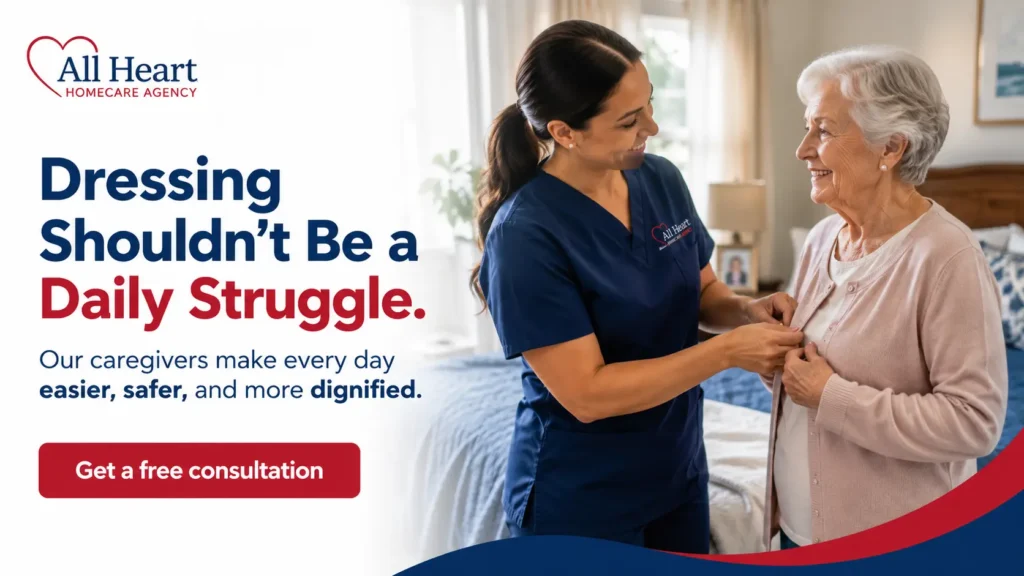
Stop facing the hardest part of the morning alone. Contact us today for a free consultation and let us build a plan around your loved one’s needs.
Schedule your free consultation and get matched with a caregiver this week.
How All Heart Homecare Keeps Dressing Safe and Dignified
Dressing is personal, and it deserves a caregiver who treats it that way. All Heart Homecare Agency was built on a single promise: care for one as you would care for your own loved one. That standard guides every aide we send into a home, whether the task is buttoning a shirt for someone with arthritis or fully assisting a bedbound client.
Families across all five boroughs choose us because we pair clinical skill with genuine compassion, back it with 24/7 on-call support and free transportation to medical appointments, and tailor every plan to the person rather than a template. For clients with complex conditions, our adult private duty nursing team adds skilled clinical oversight to everyday personal care. The result is mornings that feel calm again and a loved one who keeps their comfort and their dignity.
You do not have to manage this alone. Contact us today for a free consultation and see how simple the right support can be.
Book your free consultation now and take the first step toward easier days.
Frequently Asked Questions About Adaptive Clothing and Dressing for Seniors
What is the easiest clothing for elderly people to put on?
Pull-on tops and bottoms with elastic waistbands, magnetic or snap front closures, and hook-and-loop shoes are the easiest. These styles remove buttons, zippers, and laces, which are the hardest fasteners for stiff or weak hands. Loose, stretchy fabrics also slide on with less pulling and far less discomfort.
How do you dress a senior with one weak or paralyzed arm?
Always dress the weaker arm first and undress it last. Guide the affected arm gently through the sleeve before the strong arm, supporting the joint as you go. Choose front-opening tops and stretchy fabrics so the weak side never has to twist or stretch into a tight sleeve.
Are there clothes for people with dementia who keep undressing?
Yes. Adaptive bodysuits, back-zip jumpsuits, and clothing with hidden or rear closures make it harder for a person to remove garments independently. Soft, comfortable fabrics reduce the irritation that often triggers undressing, and a consistent routine lowers the anxiety behind the behavior.
Where can I buy adaptive clothing for seniors?
Adaptive clothing is sold by specialty online retailers, several mainstream apparel brands with dedicated adaptive lines, and some medical supply stores. Search for terms like “open-back,” “magnetic closure,” or “side-opening” clothing. An occupational therapist or home care agency can also point you toward styles suited to a specific condition.
How do you keep an elderly person warm without heavy clothing?
Use thin, breathable layers rather than one bulky garment, since layers trap warmth and are easier to put on and remove. Lightweight thermal tops, fleece-lined leggings, warm socks, and a cape-style wrap add heat without restricting movement or adding weight that strains fragile joints.
Is adaptive clothing covered by insurance or Medicaid?
Standard adaptive clothing is usually considered a personal expense and is not directly covered by Medicare or Medicaid. Some specialized therapeutic garments may qualify under certain plans with a doctor’s order. Hands-on dressing assistance from a caregiver, by contrast, is often covered through Medicaid home care programs.