

Helping a parent or spouse wash for the first time can feel awkward, and worrying about a slip on a wet floor only adds to the stress.
Many families also second-guess how often a bath is really needed, or how to respond when a loved one pushes back because they value their privacy. The short answer is this: you bathe an elderly person safely by preparing the bathroom first, keeping the water warm but never hot, washing in a clean-to-dirty order, and staying close enough to steady them the entire time.
Most seniors do not need a full shower every day, and a calm, predictable routine matters far more than how often it happens. Get the setup and the washing order right, and bath time can become one of the safer, more comfortable parts of the day instead of the hardest.
Key takeaways
- A full bath or shower two to three times a week is enough for most seniors, with daily washing of the face, underarms, and groin in between.
- Falls are the biggest danger, so grab bars, a non-slip mat, and a shower chair should be in place before any water runs.
- Keep bathing water around 100°F, and set the home water heater no higher than 120°F to lower the risk of scald burns.
- Wash from clean to dirty, starting at the face and finishing with the private areas, to avoid spreading bacteria.
- When a full bath is not safe or wanted, sponge baths, no-rinse products, and towel baths keep skin clean with far less effort.
What Safe Bathing For an Elderly Person Involves
Bathing later in life is about more than getting clean. As we age, skin grows thinner and drier, balance becomes less reliable, and a task that was once automatic now carries real risk. Safe bathing balances three things at once: hygiene, skin protection, and physical safety, without stripping away a person’s sense of dignity.
That safety piece is not a small concern. Falls are the leading cause of injury for adults aged 65 and older, and the bathroom, with its slick tile and hard edges, is where many of them happen.
This is why many families bring in shower assistance rather than risk a serious accident at home.
The goal is to wash thoroughly and gently while keeping the person warm, steady, and respected throughout. A good routine moves at the bather’s pace, exposes parts of the body only when they are being washed, and treats the whole thing as ordinary personal care rather than something to dread.
When those pieces come together, the bath stops feeling like a battle.
How Often Should an Elderly Person Bathe?
A complete bath or shower two to three times a week is plenty for most older adults. Skin produces less oil with age, so daily scrubbing with soap and hot water tends to cause dryness, itching, and cracking rather than better hygiene. Between full baths, a quick daily wash of the face, hands, underarms, and groin keeps a person fresh and comfortable.
There are reasons to wash more often, of course. Incontinence, heavy sweating, wounds, or certain skin conditions can call for daily cleaning of specific areas, even if a full bath stays on the two-to-three-times schedule.
The right number also depends on the person in front of you. Someone with intensive daily needs may benefit from around-the-clock care, while a family wanting a daily rinse outside insurance limits sometimes arranges private pay help.
The frequency should serve the person’s skin and comfort, not a rigid calendar.
Safety Setup for Seniors Before the Bath
Most bathing accidents are set in motion before anyone steps near the water. A few minutes spent preparing the room and gathering supplies removes the need to leave a wet, unsteady person alone to grab a forgotten towel.
Walk through the setup the same way every time so nothing gets missed.
Have these basics in place before you start:
- Grab bars: Install them by the toilet and inside the tub or shower, anchored into studs rather than suction-cupped to tile.
- Non-slip surfaces: Use a rubber mat or adhesive strips inside the tub and a bath mat on the floor outside it.
- A shower chair or transfer bench: Sitting removes most of the fall risk for anyone with shaky balance or low stamina.
- A handheld showerhead: This lets you direct water exactly where it is needed without asking the person to turn or reach.
- Supplies within arm’s reach: Soap, washcloths, shampoo, two towels, and a fresh change of clothes laid out in advance.
- A warm room: Older adults chill quickly, so close the door and warm the bathroom before undressing begins.
Water temperature deserves its own check. Aim for bathing water around 100°F, which feels comfortably warm on the inside of your wrist but never hot.
The U.S. Consumer Product Safety Commission recommends setting a water heater to no more than 120 degrees because aging skin burns faster, and a senior may not pull away from scalding water quickly enough to protect themselves.
Step-by-Step Shower for the Elderly Process
With the room ready and the water tested, the wash itself follows a simple, repeatable order. Moving from the cleanest part of the body to the least clean keeps bacteria from spreading, and a steady sequence helps a confused or anxious person know what comes next.
Take it slowly and say each step out loud so there are no surprises.
1. Help Them Undress and Get in Safely
Let the person do as much as they can manage, stepping in only where they need a hand. Guide them onto the shower chair before any water flows, and keep one hand ready to steady them during the transfer. Drape a towel over the shoulders or lap for warmth and modesty until you reach each area.
2. Wash From the Face Down
Start with the face using a soft, soap-free cloth, then move to the neck, ears, and upper body. Work downward to the arms, chest, back, and legs, rinsing soap off as you go so it does not dry on the skin. Use gentle, circular strokes and pay attention to skin folds, where moisture and irritation tend to hide.
3. Clean the Private Areas Last
Save the groin and buttocks for the end, always wiping front to back to prevent infection. This order keeps the washcloth that touches the less clean areas away from the rest of the body. Offer a fresh cloth for this stage if you have one, and give the person the chance to do it themselves if they are able.
4. Rinse, Dry, and Moisturize
Rinse every trace of soap away, since residue left in skin folds causes itching and breakdown. Pat the skin dry rather than rubbing, taking extra care between the toes, under the breasts, and in other folds where dampness lingers. Finish with a fragrance-free moisturizer to protect dry, fragile skin, and check for any new redness or sores while you do.
| Step | What to do | Safety tip |
| Get in | Seat them on the shower chair before water runs | Keep one hand on them during the transfer |
| Face and upper body | Wash the face first, then neck, arms, and chest | Use a soap-free cloth on the face |
| Lower body | Move down to the back, legs, and feet | Mind skin folds where irritation hides |
| Private areas | Clean groin and buttocks last, front to back | Use a separate, fresh washcloth |
| Rinse | Remove all soap, especially in folds | Warm water only, around 100°F |
| Dry | Pat dry, focusing on folds and between toes | Never rub thin, fragile skin |
| Moisturize | Apply fragrance-free lotion | Check for new redness or sores |
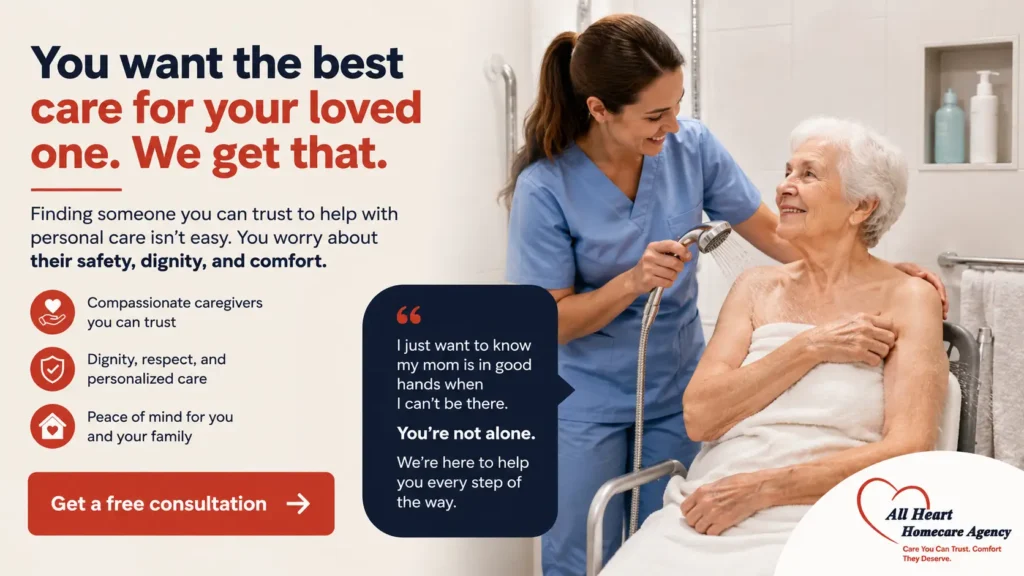
Bathing a loved one safely takes steady footing, patience, and the strength to support someone in and out of a slippery tub, and that is more than many family caregivers can manage alone day after day.
All Heart Homecare Agency has spent over 14 years helping NYC families with exactly this kind of hands-on care. Our certified aides are trained in safe transfers and gentle bathing, screened through rigorous background checks, and matched with clients who speak English, Spanish, or Russian so communication is never a barrier. With offices in Brooklyn and Manhattan, we support families across all five boroughs.
Contact us today for a free consultation.
Let us take the worry out of bath time so you can focus on your loved one.
Alternative Methods When a Full Bath Isn’t Possible
There are days when a full bath simply will not work. The person may be too weak, too unsteady, recovering from surgery, or too distressed to tolerate the tub, and forcing the issue helps no one.
Several gentler methods keep skin clean and comfortable until a full bath is realistic again.
- Sponge bath: Wash one area at a time at the sink or in a chair, using a basin of warm water and keeping the rest of the body covered for warmth.
- Bed bath: For someone who cannot get up, wash and dry one section at a time on the bed, turning them gently to reach the back.
- No-rinse products: No-rinse body washes and rinse-free shampoo caps clean without water and work well for quick freshening or bedbound care.
- Towel bath: Wrap the person in warm, damp towels treated with no-rinse cleanser, then wipe and dry section by section for a soothing full-body clean.
These approaches are not a lesser substitute.
They are practical tools that protect skin and dignity on hard days, and many families rotate between them and full baths, sometimes leaning on a home health aide for the heaviest care.
Handling Resistance and Keeping Bath Time Calm
Refusing a bath is one of the most common struggles families face, especially with dementia.
The resistance usually comes from a real place: fear of falling, feeling cold or exposed, embarrassment about needing help, or confusion about what is happening. Meeting that emotion, rather than arguing with it, is what turns the situation around.
A few approaches lower the tension:
- Keep a consistent time and routine so the bath feels familiar and predictable.
- Warm the room and have towels ready so the person is never left shivering.
- Explain each step in simple, calm language before you do it.
- Offer choices, such as a shower or a sponge bath, to restore a sense of control.
- Protect modesty by keeping a towel draped over areas you are not actively washing.
Dignity is tied closely to a person’s mental well-being, and a rushed or forceful bath can leave a loved one feeling humiliated long after the water drains.
For seniors with dementia care needs or significant mobility limits, trained support can be the difference between a daily fight and a calm routine.
When mobility is the main barrier, disability home care and skilled aides can handle transfers that are unsafe to attempt alone, and many families managing this alongside work find that bringing in in-home care protects the relationship as much as the body.
Why All Heart Care Makes Bathing Safer at Home
A safe bath comes down to the right setup, a gentle routine, and steady hands, and that last part is where families most often need backup. All Heart Homecare Agency has spent more than 14 years giving NYC seniors that support, earning recognition such as Dime’s Best of Brooklyn and a place among Crain’s Best Places to Work. Our certified aides are fully licensed, BBB accredited, and trained to handle safe transfers, sensitive personal care, and the patience that bath time often demands.
We match each client with a caregiver who speaks their language, offer free transportation to medical appointments, and keep 24/7 on-call support, so help is always within reach. Whether your loved one needs a few hours a week or daily assistance, we build the plan around them.
Contact us today for a free consultation. Let us help your loved one stay clean, safe, and comfortable at home.