Licensed home care serving all five NYC boroughs
We speak your language:
Licensed home care serving all five NYC boroughs
We speak your language:

 Verified Client
 Verified Client
By submitting this form, you agree to our Privacy Policy and Terms & Conditions.
By submitting this form, you agree to our Privacy Policy and Terms & Conditions.

Trusted by thousands of families across New York City

Providing compassionate home care throughout NYC

Certified caregivers and trained care professionals
Yes. New York Community Medicaid covers home health aides, personal care, homemaker services, and other essential in-home support for eligible residents, often at little or no cost. These services help seniors and individuals with disabilities remain safe, independent, and comfortable in their own homes instead of moving to a nursing facility. At All Heart Homecare, we guide families through Medicaid eligibility, assist with the application process, and provide compassionate, personalized home care tailored to each individual’s needs.
The Medicaid program is a government-funded healthcare initiative that provides medical coverage and long-term care services for eligible individuals and families with limited income and resources. In New York, it operates as the New York State Medicaid program, administered locally through city agencies to serve residents across all five boroughs.
Community Medicaid is a specific category within the Medicaid program that focuses on delivering services to individuals who need long-term care but prefer to receive it in their homes or a community-based setting instead of a nursing facility. This option supports independence while keeping families together.
We at All Heart Homecare understand how confusing Medicaid assistance in Brooklyn and across NYC can feel, which is why we offer specialized services to help you navigate the Medicaid system, confirm eligibility, and connect with the right coverage for your loved one.


Support With Everyday Household Tasks
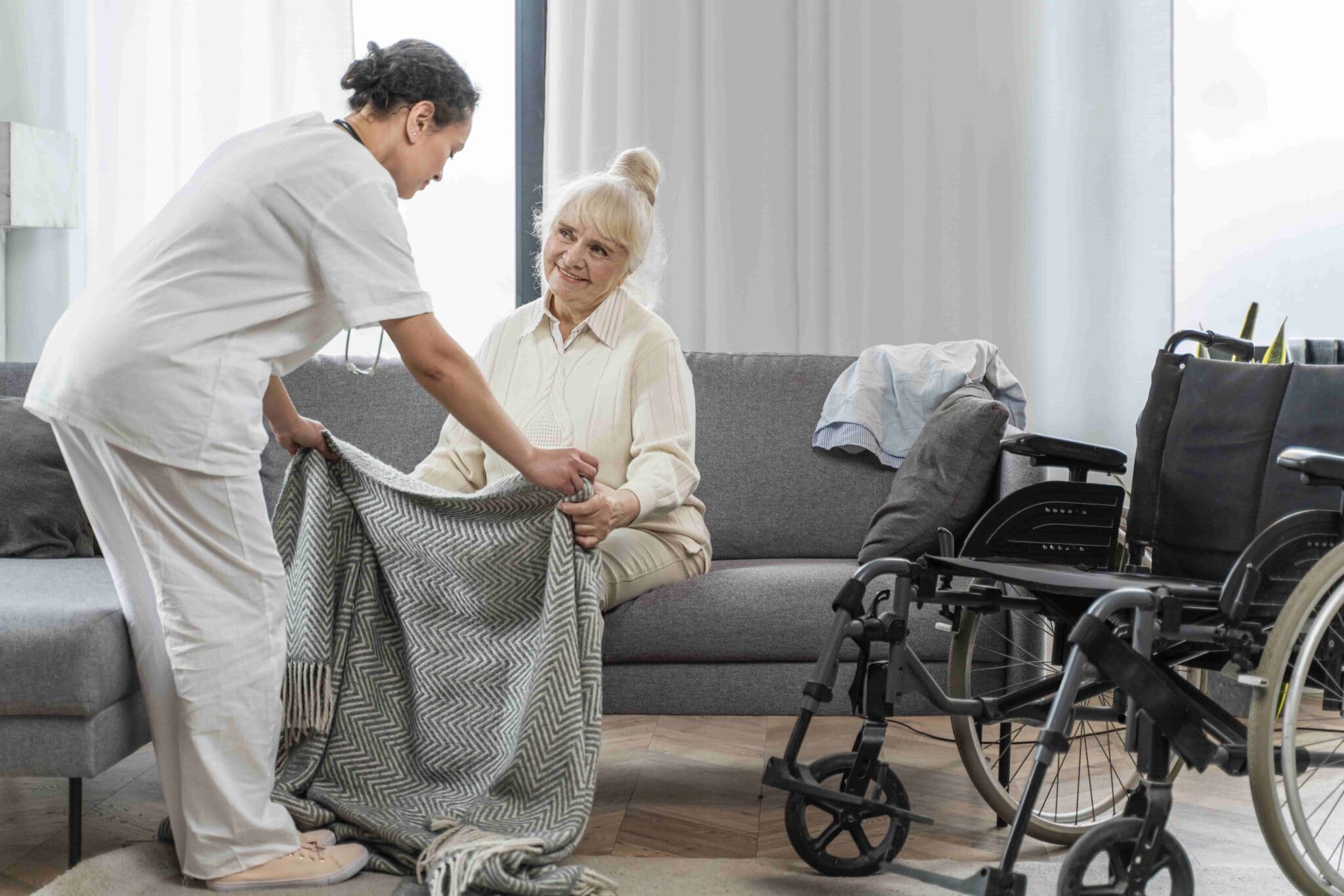
Medicaid may cover homemaker services that help individuals maintain a safe and comfortable home environment. Services can include meal preparation, light housekeeping, laundry assistance, and companionship to support independent living.
Skilled Care Delivered at Home
Home health services may include nursing care, health monitoring, therapy support, and other medically necessary services provided in the comfort of your home under a physician’s guidance.
Assistance With Daily Living Activities
Medicaid can help cover personal care services such as bathing, grooming, dressing, toileting, and mobility assistance, helping individuals remain safe and independent at home.
To be eligible for Community Medicaid, individuals must meet specific criteria such as:
Unfortunately, the detailed income and asset rules tied to the Medicaid program often lead eligible individuals to believe they do not qualify for the help they need.
Strict medicaid program integrity checks are in place to protect the system, but those same rules can make the application process feel overwhelming for families facing it for the first time. We are here to change that.
For more than 14 years, families throughout New York City have trusted
All Heart Homecare to care for their loved ones with compassion, professionalism, and reliability.
Our commitment to quality care has earned us recognition across Brooklyn and the trust of thousands of families who rely on our caregivers every day.

Proudly serving families across Brooklyn, Queens, Manhattan, the Bronx, and Staten Island.
We understand how many questions come with the Medicaid Program. Here are answers to help guide you.
The four main types of Medicaid in New York are:
You may qualify for the New York State Medicaid program if you are an NYC resident with limited income and resources, and you are a U.S. citizen or qualifying non-citizen. Eligibility also extends to seniors, people with disabilities, pregnant women, children, and low-income families who meet the state’s financial criteria.
You can apply for medicaid assistance in Brooklyn through NY State of Health online, by mail, or in person at a Human Resources Administration office. Seniors and people with disabilities usually apply through HRA directly. All Heart Homecare can walk you through the paperwork and required documentation.
For most eligible New Yorkers, the Medicaid program is free, with no monthly premium or deductible for covered services. Some enrollees with higher incomes may have a small spend-down or co-payment, but home care, doctor visits, hospital stays, and prescriptions are generally covered at no cost when you meet eligibility rules.
In 2026, a single applicant for Community Medicaid in New York can generally have a monthly income around $1,800 and resources near $32,000, though exact figures are updated yearly by the state. Couples and families have higher limits, and certain deductions may reduce countable income.
If your income exceeds the limit, you may still qualify through New York’s Medicaid Excess Income (Spend-Down) program, which lets you “spend down” the overage on medical costs each month. Pooled income trusts are another legal option many seniors use to protect income and qualify for home care.
New York is widely considered to offer the best Medicaid plan in NY for home and community care, thanks to programs like NHTD, and Community Medicaid that keep people at home. The “best” plan depends on your needs, so comparing covered services matters more than plan names alone.
Sign up for our newsletter to receive helpful resources, caregiving advice, and updates on how we can support your loved ones.
You do not have to navigate this alone. Our team is here to support you, answer your questions, and help you find the right care for your loved one.
Reach out today and a member of our team will contact you shortly.
By submitting this form, you agree to our Privacy Policy and Terms & Conditions.